

























































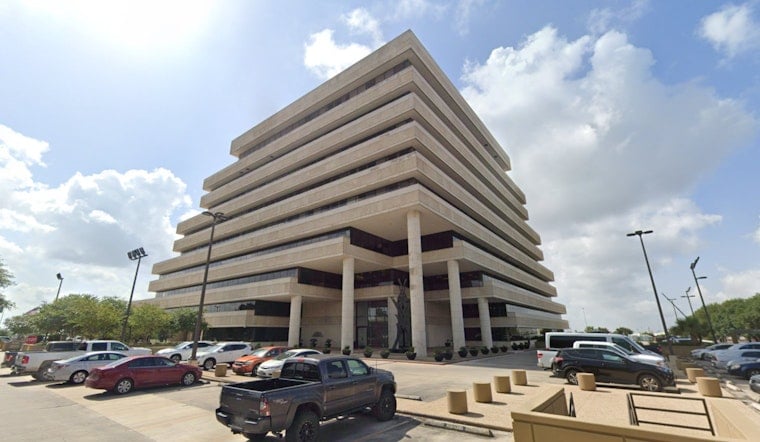
A 34-year-old Pflugerville woman was sentenced Wednesday to 21 months in federal prison after admitting she used a stolen Social Security number belonging to a minor to file fraudulent Paycheck Protection Program loan applications during the pandemic. Her scheme spanned three loans filed under two different business names. The sentence was handed down in federal court in Waco, within the Western District of Texas.
According to the U.S. Attorney's Office for the Western District of Texas, Jackson submitted her first fraudulent application on March 10, 2021, under the business name Logo Boosters, opening a bank account with the minor's stolen identity and receiving $16,628 after submitting a falsified Schedule C claiming nearly $80,000 in net profit. Records showed Jackson had not filed a legitimate 2019 tax return.
Less than two weeks later, prosecutors say, Jackson filed a second fraudulent application on March 24, 2021, this time doing business as WCS Consulting, again using the minor's stolen identity to open a new account. Between that loan and a third, her fraud reached $43,980 before she filed for full loan forgiveness in October 2021.
A Pattern of Identity Theft That Predated the Pandemic
Investigators with the same office discovered that Jackson had used the minor's stolen Social Security number once before, in 2016, to obtain a vehicle loan — evidence, prosecutors said, that she adapted an existing identity theft scheme to exploit pandemic relief funds years later.
Why a 2021 Crime Is Still Reaching Court in 2026
Cases like Jackson's continue to surface five years after the loans were issued because of the statute of limitations attached to different federal fraud charges. Standard wire fraud counts must be brought within five years, but bank fraud charges carry a ten-year window, according to the Kirlew Law Firm — a timeline that allows federal prosecutors to pursue PPP fraud cases through 2031.
That extended window has coincided with improved detection tools. The Hoyer Law Group notes that federal task forces now use data analytics from the Pandemic Response Accountability Committee to cross-reference IRS tax records and Social Security numbers against SBA loan databases, a method that can surface identity theft in small-dollar applications years after the money went out.
A $200 Billion Problem Nationally
Jackson's case is a small piece of a much larger national picture. The Small Business Administration's Office of Inspector General has estimated that more than $200 billion — roughly 17% of all distributed COVID-19 EIDL and PPP relief funds — went to potentially fraudulent applicants, according to Forbes. Watchdogs have attributed the high fraud rate to the program's reliance on applicant self-certification.
The Paycheck Protection Program was created under the CARES Act in March 2020 and ultimately distributed more than $800 billion in forgivable loans meant to keep small-business payrolls afloat, according to the U.S. Senate Committee on Small Business and Entrepreneurship. Its emergency speed requirements prioritized getting money out the door over verifying documents upfront, a design flaw that left it vulnerable to falsified tax schedules like the one prosecutors say Jackson submitted.
Central Texas's Broader Crackdown on Pandemic Fraud
Jackson's sentence adds to a string of Western District of Texas prosecutions tied to pandemic relief programs. In October 2024, Hoodline reported that a Georgetown couple received decades in prison for PPP fraud after running a $3 million scheme built on dormant business identities — a sharp contrast in scale to Jackson's roughly $44,000 case.
The district has also pursued civil remedies against larger businesses. The U.S. Department of Justice announced a $680,000 False Claims Act settlement with asset manager Lafayette RE Management in December 2024, following a separate $425,710 settlement with Austin-based Freedom Solar earlier that year — civil actions that frequently stem from whistleblower lawsuits rather than criminal charges.




