

























































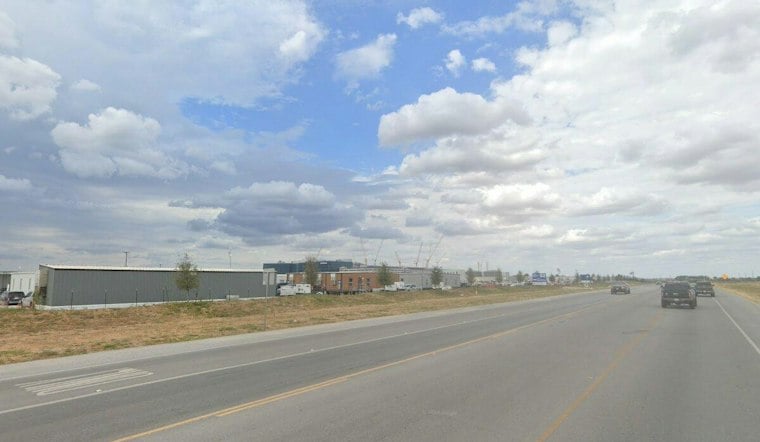
Skybox and Prologis have filed an application to build a fourth data center at their sprawling Hutto campus, a single-story, 846,300-square-foot core-and-shell building planned at 3399 County Road 132 in Williamson County. The $550 million project, dubbed Skybox Hutto 4, is slated for construction between January 2027 and October 2028, and it would be the largest of the four buildings the company has proposed in the city so far.
The filing, submitted to the Texas Department of Licensing and Regulation, was first reported by Data Center Dynamics. The site sits in Hutto, roughly 28 miles northeast of Austin, where Hutto Data Center Campus LLC, an entity affiliated with Prologis, owns the land. Skybox has steadily built out the location since filing plans for Hutto 1 in October 2023, followed by Hutto 2 in April 2024 and Hutto 3 in May 2024, according to the outlet's reporting.
Hutto 1 and Hutto 2 are each listed at 235,720 square feet, while Hutto 3 comes in at 492,350 square feet; all three are planned as two-story buildings. Hutto 4, by contrast, is designed as a single-story shell nearly double the size of Hutto 3, underscoring how quickly the campus has scaled since Skybox and Prologis first partnered in early 2021 to convert an empty Prologis-owned warehouse in Chicago into a data center, per the same outlet.
A Multi-Billion-Dollar Campus Takes Shape
Together, the four buildings are part of what's known as the Skybox and Prologis PowerCampus, planned to deliver 600 megawatts of IT capacity across 3.88 million square feet. The Real Deal reported in July 2023 that the full campus represents a cumulative investment of between $5 billion and $10 billion across up to six planned buildings, making it one of the largest planned data center developments in Central Texas, according to The Real Deal.
The PowerCampus sits inside Hutto's 1,400-acre Megasite along U.S. Route 79, a corridor that also includes Titan Development's 188-acre Hutto Mega TechCenter and lies a short distance from Samsung's $17 billion semiconductor plant in neighboring Taylor, according to the East Wilco Insider. Hutto City Council approved a development agreement and a Chapter 312 tax abatement for the project in July 2023 after annexing and rezoning the land, per the Central Texas Data Center Tracker. Skybox also has projects underway in Dallas, Houston, Wichita Falls and elsewhere in Austin, while Iron Mountain and Colovore are separately developing their own sites in Hutto, according to Data Center Dynamics' reporting.
Power Demands Reshape the Grid Nearby
Feeding a campus this size has required major investment from the region's utilities. Oncor Electric Delivery Co. and the Lower Colorado River Authority acquired roughly 70 acres adjacent to the PowerCampus to build two dedicated 300-megawatt substations supporting the facility's demands, the Taylor Press reported. Prologis executives have told investors the company has now secured 1.4 gigawatts of data center power capacity across its global portfolio, with a long-term goal of 10 gigawatts over the next decade, according to CRE Pro Network.
State Regulators Tighten the Rules Mid-Buildout
The filing lands just as Texas has moved to rein in the rapid pace of data center development statewide. On September 21, Governor Greg Abbott directed the Texas Commission on Environmental Quality to freeze environmental and air quality permits for data center projects until ERCOT and the Texas Water Development Board complete statewide grid reliability and water consumption audits, according to Troutman Pepper Locke. Hoodline previously covered the freeze's statewide reach in connection with a Fort Worth data center project.
Days earlier, on September 18, the Public Utility Commission of Texas adopted a rule requiring large power loads of 75 megawatts or more in the ERCOT region to post $50,000 per megawatt in financial security before beginning grid interconnection studies. The regulation stems from Senate Bill 6, enacted to protect retail electric ratepayers from stranded transmission infrastructure costs, according to White & Case LLP. Together, the two measures signal a markedly different regulatory climate than the one Hutto officials navigated when they first courted the PowerCampus in 2023.
Growth Pains in a Fast-Expanding Suburb
The regulatory shift arrives as Hutto itself grapples with the strain of rapid growth. The city ranked as the 13th fastest-growing U.S. municipality with at least 20,000 residents in Census Bureau data released in May 2025, adding 3,681 residents in a single year for a 9.4% growth rate as its population expanded from 27,577 in 2020 to more than 46,000, according to the U.S. Census Bureau. Williamson County's own 2025 growth estimates project the county's population will more than double, from roughly 727,480 residents to 1.6 million by 2050, ranking it among the top 10 fastest-growing counties in the nation.
That surge has already reshaped Hutto's finances. Rapid industrial construction and suburban expansion prompted municipal water and wastewater rate increases in June 2024 and October 2025 to help fund a new $198 million wastewater treatment plant, and city leaders have faced public pushback over street maintenance and water capacity demands as the Megasite corridor industrializes, per the East Wilco Insider. Hoodline has previously reported on the broader strain facing eastern Williamson County's growth corridor, including a barn fire near Hutto's CR 138 that drew four fire departments amid drought conditions.
Whether Skybox Hutto 4 will ultimately require state-level environmental sign-off affected by the new freeze, or how the PUCT's financial security requirements might apply to its grid interconnection, remains to be seen as the project moves through the permitting process over the next two years.





