

























































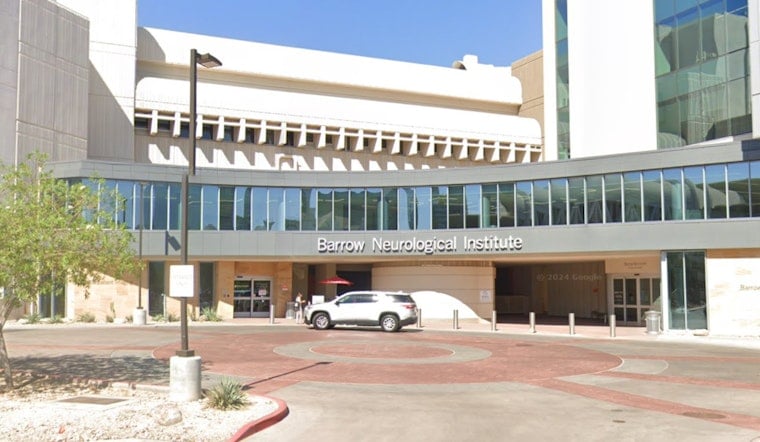
Barrow Neurological Institute in Phoenix has landed a $5 million grant from the Arizona Department of Health Services to run what its own researchers describe as the first United States clinical trial using ibogaine, a psychedelic compound, to treat traumatic brain injuries. The institute plans to enroll its first participant in 2027, following a lengthy setup process that includes brain imaging studies on every patient before and after treatment.
Dr. Susan Criswell, Barrow's chief medical officer for clinical research, said the institute will investigate ibogaine as a potential therapy for the long-term effects of neurologic injury, according to KTAR News 92.3 FM. Criswell said many people with traumatic brain injuries experience incomplete recovery or lingering symptoms even six months after their injury, and that ibogaine research might help. Those lingering effects can include difficulties with memory, executive functioning, cognition and thinking, as well as depression, anxiety and PTSD, per the outlet's reporting.
Ibogaine is a naturally occurring compound in the psychedelic, or psychoplastogen, category. Barrow will use a synthesized version of the drug, administered via pill, and will conduct MRI and EEG studies on participants before dosing and again after a follow-up period, with participants tracked for at least six months following administration. The trial itself is designed to run for five years.
Who's Running the Study
The trial's principal investigator is Dr. Anna Burke, a neuropsychiatrist and chair of dementia research at Barrow, according to a statement reported by Dignity Health Arizona. She is joined by co-investigators including Barrow CEO Dr. Michael T. Lawton and researchers from Arizona State University. The study is designed as a double-blind, placebo-controlled trial evaluating 40 participants with chronic TBI symptoms.
The $5 million traces back to House Bill 2871, introduced in February 2025 by Rep. Justin Wilmeth, R-Phoenix, which passed as part of Arizona's fiscal year 2026 budget signed in June 2025, per the Reason Foundation. Hoodline previously covered the House's approval of that funding, and reported earlier on Wilmeth's original proposal. The Reason Foundation notes that Arizona joined Texas as one of the first states to allocate public funds for ibogaine clinical trials.
Former U.S. Senator Kyrsten Sinema testified in support of HB2871 at the Arizona Capitol in early 2025 as a private citizen, according to KJZZ. She committed to raising $5 million in matching private funds for whichever facility received the state grant, since the grant criteria required the recipient to demonstrate matching funds from non-state gifts, grants, or donations.
A Legal Gray Area With Foreign Precedent
Ibogaine remains listed as a Schedule I controlled substance under federal law, designating it as having high abuse potential and no accepted medical use. That classification requires trial sponsors like Barrow to secure FDA Investigational New Drug clearance and DEA site registrations before administering the compound to any human participant, according to MindScape Retreat. Those federal restrictions have historically pushed many U.S. veterans to seek unregulated ibogaine treatment abroad, particularly in Mexico.
International studies of ibogaine have shown improvements in PTSD symptoms, cognitive function and quality of life among veterans, per KTAR's reporting. A landmark Stanford Medicine study published in Nature Medicine in January 2024 found that magnesium-ibogaine therapy produced significant, sustained reductions in PTSD, depression, anxiety and disability among 30 Special Operations veterans with mild traumatic brain injuries, according to Stanford Medicine. Researchers in that study co-administered magnesium with ibogaine specifically to protect against potential cardiac arrhythmias, resulting in zero serious cardiovascular events.
An April 2026 federal executive order directed agencies including the FDA and DEA to streamline review processes and support clinical trial infrastructure for psychedelic compounds, specifically naming ibogaine, according to the White House. Hoodline reported on the administration's draft push on ibogaine in April, and Texas has separately committed $50 million toward its own ibogaine research, a move Hoodline covered as Texas backing ibogaine.
How Ibogaine Is Believed to Work
Ibogaine functions as a neuroplastogen, interacting with serotonergic, dopaminergic, and cholinergic brain systems to promote neuroplasticity and the structural repair of damaged neural circuits, according to FirstWord Pharma. Unlike daily psychotropic medications, neuroplastogens are designed to induce long-term structural brain changes after limited administration rather than requiring ongoing daily dosing.
The scale of the problem the trial is aimed at is considerable. Traumatic brain injuries contribute to more than 214,000 hospitalizations and nearly 69,000 deaths annually in the United States, according to the Centers for Disease Control and Prevention, with falls and firearm-related injuries accounting for the majority of cases. In Arizona specifically, more than 1,200 residents die each year from traumatic brain injuries, with firearms, falls, and motor vehicle crashes cited as the primary causes, according to a report from the Arizona Department of Health Services.
Cardiac Risk Remains the Central Safety Concern
Clinical medical literature highlights that ibogaine carries significant cardiac risks, specifically QTc interval prolongation that can trigger fatal ventricular arrhythmias if not strictly monitored, according to Drugs.com. Pre-existing cardiovascular conditions or concurrent drug interactions can significantly increase the risk of severe cardiac events during treatment, which is why Barrow's protocol calls for MRI and EEG monitoring around each dose. The risks are not merely theoretical: Hoodline has reported on a Colorado case in which a Broomfield man was sentenced to four years in prison for fatally distributing ibogaine outside of any regulated clinical setting.
For now, Barrow's trial exists on paper and in the regulatory pipeline rather than in patients. With enrollment not expected until 2027, the five-year study will need to navigate the same cardiac safety concerns that have made ibogaine both a promising and a dangerous compound outside of tightly controlled research settings.




