

























































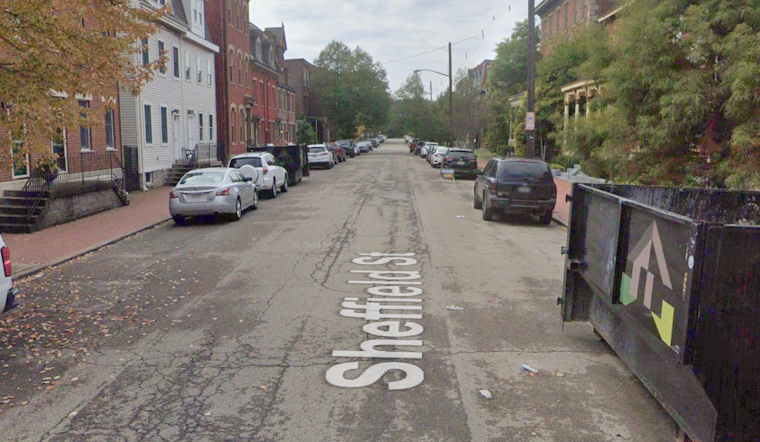
A Pittsburgh man is behind bars after police say he stabbed a dog named Champ multiple times during an argument inside an apartment on Sheffield Street in the city's Manchester neighborhood on the North Side. Corey Hayward was taken into custody following the attack, which left the dog with multiple deep lacerations, officials say.
According to WTAE, the confrontation began after Champ's owner, a woman inside the apartment, locked the dog in a bathroom before her argument with Hayward escalated. Hayward opened the bathroom door mid-argument and taunted the dog, the outlet reports, before he was found kneeling on the front stoop of the home, holding Champ down. He then swung a blade in front of the dog and stabbed him multiple times, telling officers afterward that the dog needed to be put down.
Champ Suffers Deep Lacerations, Owner Flees for Help
Champ's owner ran from the apartment after seeing him bleeding, and asked a neighbor to call 911 because she did not have a vehicle of her own. Animal control officers responded and transported Champ to an emergency hospital; the criminal complaint states that the owner abandoned the dog to animal control so he could receive treatment.
Champ's owner later told officers that Hayward had been intoxicated and was making statements about the devil during the confrontation. Officers described her as visibly upset, crying and screaming, in the aftermath of the attack.
Suspect Says Dog Attacked Him First; Police Call Him the Aggressor
Hayward told investigators that Champ attacked him first after he let the dog out of the bathroom, though he gave no reason for opening the door in the first place, according to the police interview. Authorities identified Hayward as the aggressor in the incident and took him into custody. He now faces a charge of aggravated cruelty to animals in connection with the stabbing.
Pennsylvania's Libre's Law Sets Steep Penalties for the Charge
Under Pennsylvania's Crimes Code, aggravated cruelty to animals is defined as intentionally or knowingly torturing an animal or inflicting serious bodily injury or death upon it, according to the Unified Judicial System of Pennsylvania. A conviction on the charge, a third-degree felony, carries a potential penalty of up to seven years in prison and fines reaching $15,000. That felony classification dates back to Libre's Law, or Act 10 of 2017, which elevated intentional torture and severe physical abuse from summary offenses or misdemeanors to felony status. State court records show that more than 72,000 animal abuse offenses have been processed in Pennsylvania courts since the law took effect through July 2026.
Manchester's Historic Streets Meet a City Response
Sheffield Street sits within the Manchester Historic District on Pittsburgh's North Side, a residential neighborhood known for its preserved 19th-century Victorian architecture, according to the Pittsburgh History & Landmarks Foundation. It was there that police and city animal control officers converged on the apartment call.
The City of Pittsburgh Bureau of Animal Care & Control handles emergency response for domestic animal incidents and assists police during active cruelty investigations. The bureau typically works with contracted shelters, including Humane Animal Rescue of Pittsburgh, to receive and treat injured or confiscated pets, though the group's two low-cost veterinary centers generally refer high-trauma injuries like Champ's lacerations to specialized emergency animal hospitals.
What Comes Next for Champ
Pennsylvania law mandates the forfeiture of a victimized animal upon a felony animal-abuse conviction and allows courts to order restitution for emergency veterinary costs, according to the Animal Legal Defense Fund. Local domestic-violence resources such as the Women's Center & Shelter of Greater Pittsburgh maintain dedicated pet suites to safeguard animals caught up in volatile home situations, though it isn't clear whether that kind of resource played any role in this case. Champ's current condition, whether his owner will formally relinquish custody or pursue restitution, and whether Hayward's claim of self-defense or any intoxication will factor into his defense all remain unresolved as the case moves toward a preliminary hearing.





