

























































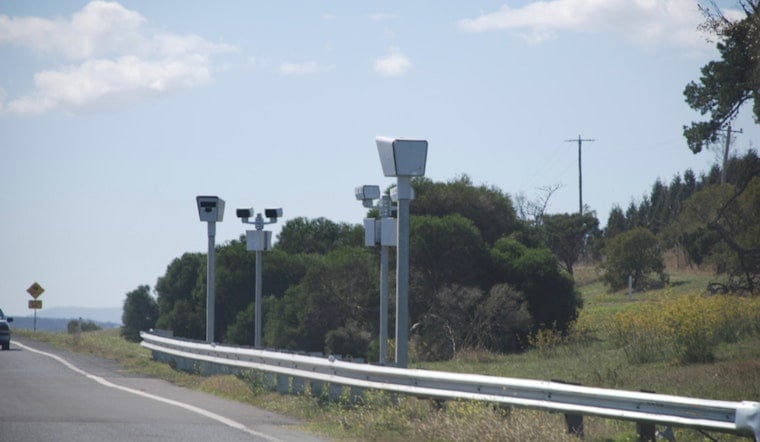
Drivers in Poughkeepsie are about to find out just how closely the city is watching. New state-authorized laws will place red-light cameras at up to nine intersections and speed cameras across three school zones, with violations triggering a $50 fine.
The crackdown traces back to Governor Kathy Hochul, who on August 14 signed Assembly Bill A10391 into law, granting the City of Poughkeepsie authority to run a red-light camera demonstration program at as many as nine intersections, according to the New York State Assembly. A companion measure, Senate Bill S9454 introduced by Senator Robert Rolison, created a new section of state traffic law, Section 1180-c, that establishes the legal groundwork for the city's school speed zone camera program, per the New York State Senate. As News12 New York reports, the new laws are meant to curb dangerous driving on city streets and near schools, with dangerous-driving violations set to incur a $50 fine.
Neither camera program materialized out of nowhere. The Poughkeepsie Common Council voted 9-0 on January 21 to pass Resolution R-26-11, formally asking state lawmakers to introduce enabling legislation for both red-light and speed cameras, according to the City of Poughkeepsie. That unanimous Home Rule request set the legislative wheels in motion that culminated in this month's state sign-offs.
A Citywide Speed Limit Drop Arrives Just Before School Starts
The camera rollout isn't happening in isolation. Poughkeepsie is lowering its citywide default speed limit from 30 mph to 25 mph effective September 1, timing the change to land just before the new school year begins, following a crash data evaluation by county planners, Mid Hudson News reports. State-owned arterial highways running through the city are exempt from that municipal reduction, the outlet notes.
The speed limit change is part of a broader traffic safety initiative that Public Works Commissioner Chris Gent presented to the Common Council in May, which outlined plans for hundreds of new 25 mph signs, seasonal speed humps in school zones, and the automated speed cameras now heading to three school zones, per the same Mid Hudson News account.
Crash Data Behind the Push
The urgency behind Poughkeepsie's new rules is rooted in worsening county-wide numbers. Dutchess County recorded 29,493 motor vehicle crashes between 2021 and 2024, with annual fatal crashes jumping 65%, from 20 in 2021 to 33 in 2024, according to an analysis cited by the Law Offices of Sobo & Sobo. Rear-end collisions made up 23% of all reported crashes in the county over that span, the highest rear-end crash share anywhere in the Hudson Valley region, the same analysis found.
Poughkeepsie itself has been a focal point within those county figures. The city logged 24 alcohol-related traffic crashes in 2025, the highest total of any municipality in Dutchess County, according to regional safety figures Hoodline previously reported tied to a Taconic DWI case. Community input echoes the concern: outreach polling for the Dutchess County Transportation Safety Action Plan found that residents named speeding, intersection hazards, and vulnerable road user safety as their top traffic concerns, per the Dutchess County Government.
How the Enforcement Will Actually Work
State figures cited when Governor Hochul's office expanded red-light camera authority statewide in October 2024 found that automated red-light enforcement cut red-light running by 73% and reduced T-bone intersection crashes by 65% at monitored locations. Those numbers helped justify extending camera authority to municipalities like Poughkeepsie beyond New York City, which first got the technology in 1994.
Under the state enabling legislation, red-light cameras are required to avoid capturing identifiable images of vehicle occupants, which sets up the program as a civil owner-liability system rather than a moving violation attached to a driver's license. That distinction means a $50 fine goes to the vehicle's registered owner regardless of who was actually behind the wheel at the time of the violation.





