

























































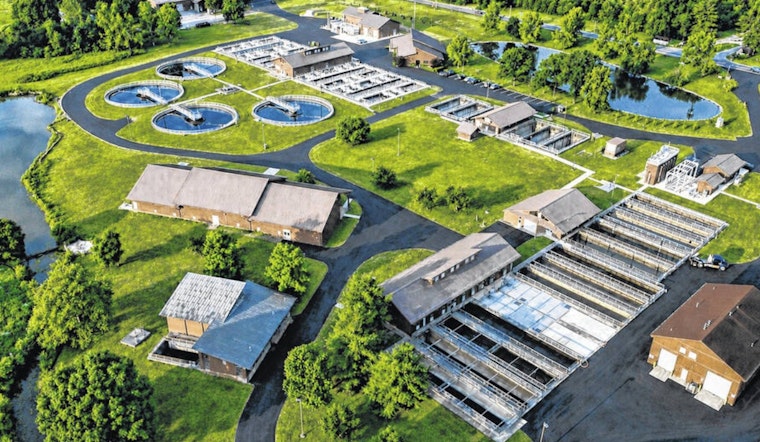
Delaware County officials cut the ribbon Monday on a renovated and expanded sewage treatment plant in Powell, capping a four-year, $46 million construction effort meant to keep pace with one of Ohio's fastest-growing counties. The Olentangy Environmental Control Center, which now processes far more wastewater than before, is expected to help the county continue absorbing new residential and commercial growth for years to come.
The project broke ground in September 2022 with an initial budget estimate of $40 million, but total costs climbed to $46 million during construction because of nationwide material and supply chain challenges, according to The Columbus Dispatch. County officials and staff gathered at the Powell facility to celebrate the milestone, according to the same report. The Delaware County Regional Sewer District says the upgrade received a $5 million grant from the Ohio Department of Development through its Ohio BUILDS Water Infrastructure Grant Program, funding that helped offset the cost burden on local taxpayers.
How the County Controlled Costs on a Ballooning Budget
Despite the $6 million overrun, the county says it actually came out ahead by using an approach called Progressive Design Build with Arcadis U.S., Inc. and Peterson Construction Company — a method that let engineering and construction teams collaborate early instead of waiting for a traditional post-design bidding process. The sewer district estimates that approach saved roughly $12 million and expanded the project's capacity by 20%, making the Olentangy plant one of the first public-sector projects in Ohio to use the collaborative delivery model.
The facility at 10333 Olentangy River Road has a long history in Delaware County's growth story. It originally opened in 1979 with a capacity of just 1.5 million gallons per day as the county's first large-scale wastewater facility, was replaced on the same site in 1994, and has now been renovated again this year, per the sewer district's account. Operating modifications approved through the upgrade expanded the plant's wet-weather processing capacity to approximately 24 million gallons per day, according to the Ohio Environmental Protection Agency, while legacy tertiary sand filters were converted to cloth disk filtration systems — changes designed to help prevent untreated wastewater overflows during severe storms.
Working Around a Bald Eagle's Nest
Expanding the plant's footprint by 29 acres wasn't simple, since the site sits along the environmentally sensitive Olentangy Scenic River. Environmental permitting investigations documented an active bald eagle nest in the expansion area, according to Coldwater Consulting LLC, and mandatory avoidance measures were put in place to minimize disturbance near the state-designated Scenic River's strict riparian setbacks.
The plant provides sewage treatment for the City of Powell, portions of Dublin, and Liberty, Orange, Berlin, and Concord Townships, with service concentrated along the Sawmill Parkway and U.S. Route 23 corridors, per the Ohio EPA. Those corridors have become some of the busiest commercial and residential growth zones in southern Delaware County, and county officials said during their April State of the County address that the plant's expansion directly supports the creation of 100 new local jobs alongside expanding commercial developments.
A County Straining Under Rapid Growth
The upgrade reflects just how fast Delaware County has been growing. Census data compiled by USAFacts shows the county's population jumped 25% between 2015 and 2025, adding 5,200 residents from 2024 to 2025 alone to reach an estimated population exceeding 240,000 — consistently placing it among the fastest-growing counties in Ohio over the past two decades.
That growth pressure has been a recurring theme in the county's planning. Hoodline previously reported that Delaware County's five-year economic development strategy prioritizes coordinating sewer, water, and power infrastructure with key development corridors, an effort that pairs with municipal projects like the City of Delaware's construction of nearly 250,000 square feet of new industrial space. The newly expanded Olentangy plant fits squarely into that broader push to keep utility capacity ahead of the county's pad-ready commercial sites, even as planners continue balancing that growth against strict state environmental standards along the Olentangy River.


