

























































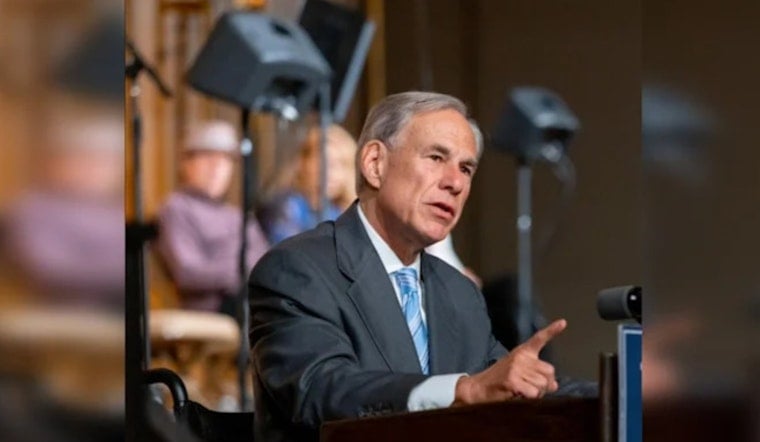
San Antonio and Austin residents may soon get something their power bills have never offered: a choice. Gov. Greg Abbott is set Tuesday to unveil a plan that would push city-owned utilities including CPS Energy and Austin Energy to open their retail electricity territories to competition, promising lower bills but also a major fight over local control. The proposal could turn a long-settled feature of Central Texas utility life into a statewide campaign-year showdown.
The governor’s office gave KSAT an advance look before Tuesday’s 2 p.m. news conference. The plan would let customers choose a retail electricity provider, while Abbott’s office says more than 5 million Texans currently live in areas with only one municipal power provider and that Austin and San Antonio account for more than 60% of that group.
What Abbott Is Promising San Antonio Ratepayers
According to the proposal outlined by KSAT, residential customers in San Antonio could save an average of 13% on electric bills, while Austin customers could see 10% average savings. Commercial customers, including small businesses, are projected to save 20%, with the plan saying some annual savings could reach $3,000; those are projections from Abbott’s team, not guaranteed reductions.
Abbott’s plan would also bar city utilities from adding charges unrelated to electric delivery and prohibit utility profits from being used as a city slush fund. That language aims squarely at the municipal-finance side of the debate, where utility revenue can support city operations as well as the power system itself.
Today, the monopoly label is shorthand for a specific legal arrangement, not a claim that CPS Energy or Austin Energy has no oversight. CPS Energy’s filing says the utility is the exclusive retail provider in its service area because San Antonio has not opted into competition, while Austin Energy says it has chosen to stay out of Texas retail deregulation and serves customers inside its designated territory.
Texas Has A Recent Test Case
The closest recent precedent is Lubbock. In 2024, ERCOT completed the transfer of 109,577 Lubbock Power & Light premises to competitive retail electric providers, while LP&L remained responsible for delivering power over the local infrastructure, according to the utility’s customer guide.
That distinction matters: customers may shop for the company selling electricity, but the poles, wires and outage response do not suddenly become a free-for-all. For San Antonio, the question is whether a transition built for a smaller municipal system can be imposed on a utility that also owns generation and serves a sprawling regional territory.
The Legal And Political Fight Could Outlast Tuesday’s Speech
CPS Energy’s financial filing says the San Antonio City Council and the utility’s board currently control whether the system opts into retail competition. The same filing says city bond ordinances require rates and charges to remain high enough to cover operating costs and debt service, suggesting that any forced transition could involve more than simply opening a provider-shopping website.
The governor has already made household energy costs a broader policy target. In June, the Office of the Texas Governor directed the Public Utility Commission of Texas and ERCOT to shield residential customers from infrastructure costs tied to data center growth, while saying Abbott would seek legislative changes to codify additional protections.
For San Antonio ratepayers, the immediate takeaway is that no provider-switching bonanza begins Tuesday. The first fight may be over who gets to control the switch in the first place: the cities, the utilities, the Legislature or state regulators.




