

























































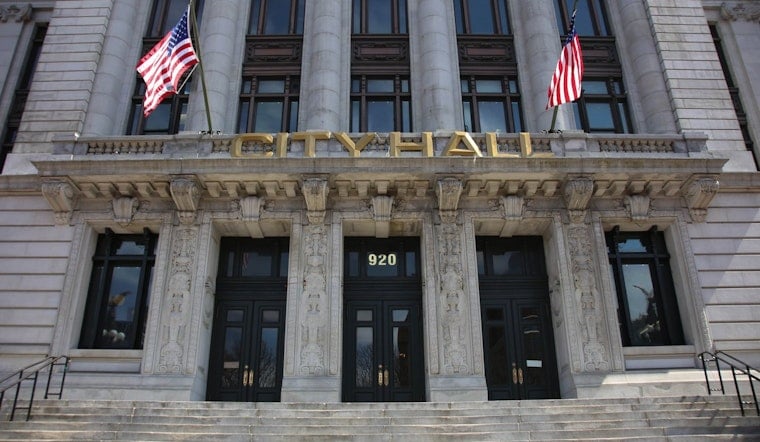
Newark's City Council voted unanimously on August 5 to approve the private sale of six largely dilapidated city-owned properties slated for redevelopment, while questions remained about the availability of basic details about the deal. The properties include 34 Wright Street, 850 South 19th Street, 307 South 18th Street, 483 Leslie Street, 55 Kent Street, and 650 South 11th Street.
In its reporting on 256-262 Lyons Avenue, Jersey Digs reported that Newark residents pushed back over what they described as a lack of transparency in city land sales and tax incentive deals. The outlet reported that it could not locate the exhibits referenced in the underlying law as of August 14, even though the ordinance itself had been posted publicly on the city's Legistar system. That gap between the published ordinance text and the missing supporting exhibits sits at the center of residents' complaints. The available materials do not establish whether Newark's Department of Economic and Housing Development maintains a PDF labeled "List of City-Owned Properties."
Brandi Daniel, a legislative administrator in Newark's Department of Economic and Housing Development, told the council the city intended to sell six properties, but the available materials do not provide individual sale prices. Daniel said an informational session about the proposal had been held back in January. Council member Patrick Council, however, said the ordinance exhibits had been made readily available, a claim residents disputed by pointing to their inability to find individual addresses and prices posted on the city's own agenda system.
Residents Demand Answers on Pricing and Priority
The available materials describe rental affordability at 50% of Area Median Income. The City of Newark rent-limit PDF does not establish a specific income figure or monthly rent amount in the available materials. The available materials do not establish how the cited NJ.gov analysis defines low-income housing. The available materials do not establish which New Jersey agency monitors properties with tax credit financing. Newark-based developers are also given priority over developers from outside the city under the measure, and officials said more than 100 developers had shown interest in the properties.
The available materials do not establish whether residents living next to the sold properties would receive first priority in future private sales, whether the Department of Housing and Economic Development would engage the public further on the procurement process, whether properties being sold would be listed directly in future council agendas, whether a city administration official would submit testimony about the legislation, or whether Council member Michael Silva attended the meeting or voted on the legislation.
A Familiar Pattern of Discounted Sales
One prior Newark redevelopment example is the Krueger-Scott Mansion. The 40-room mansion at 601 Dr. Martin Luther King Jr. Blvd, along with adjacent lots, was part of a redevelopment project that broke ground in September 2020, according to the Local Initiatives Support Corporation. Ownership passed to Newark after the death of beauty culture entrepreneur Louise Scott. Built in 1888 by brewing magnate Gottfried Krueger, the property has since become Newark Makerhoods, a project combining co-working offices, 66 residential apartments, 10 maker retail shops, and commercial kitchens for local micro-entrepreneurs, per Apartments.com.
It's not the only prior deal that has drawn scrutiny. In September 2020, the city proposed to privately sell 256-262 Lyons Avenue, assessed at $310,500, for just $46,040 to a local developer building a 32-unit mixed-income project, according to Jersey Digs' earlier reporting. Community advocates frequently point to gaps like these between tax assessments and actual sale prices when alleging that city land is being sold below market value.
Why the City Has Room to Sell Privately
The available materials do not establish how New Jersey law treats private sales of public property for redevelopment or affordable housing; the cited Stewart Title material does not resolve that question. In January 2023, Mayor Ras Baraka and the Municipal Council enacted an ordinance requiring 30-year affordability deed restrictions on sales of up to 50% of city-owned properties, a rule meant to stop corporate entities from buying public parcels and converting them into high-rent housing.
Patch reported that almost half of Newark real-estate sales involved institutional buyers, but the available materials do not identify the title of the referenced report. Newark also operates the Newark Land Bank. The available materials do not establish when it was established, its legal basis, or who manages it.
The Stakes for Newark Renters
The affordability push isn't happening in a vacuum. The available materials do not establish the share of Newark renters who are rent-burdened or the median annual income for renter households. Against that backdrop, residents' insistence on seeing exact addresses and prices before a council vote reflects a broader anxiety that the city's affordability goals could be undercut if oversight of the sale process itself remains murky.





