

























































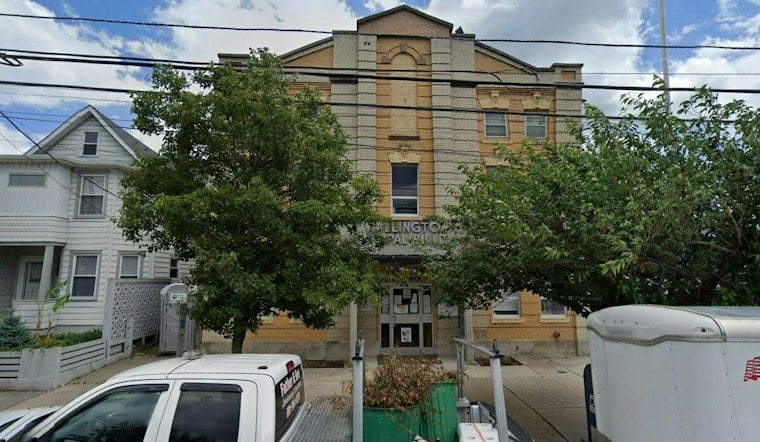
Wallington officials say they are scrapping language that would have allowed a data center on the site of the borough's old Farmland Dairies plant, reversing course after residents packed meetings for weeks demanding answers about traffic, noise and utility strain. The about-face comes after a proposed ordinance that would have let a developer seek approval for a data center on 33 acres along Main Avenue drew sustained pushback from neighbors near the town's entrance.
Mayor Melissa Dabal said the vote on the proposed amendment was never meant to approve data-center construction, and that the real goal was adding an additional warehouse while reducing overall square footage compared with the current plan, according to NJ.com. She has denied that the borough was changing its zoning to make way for data centers, insisting the plan before officials was for four permitted-use warehouses with no proposal before the planning board or the mayor and council to convert those warehouses into data centers.
The site at 460-520 Main Avenue sits near homes and the border with Wood-Ridge, with the NJ Transit Pascack Valley line running along its eastern edge separating it from the neighboring borough. Wallington designated the former dairy plant an area in need of redevelopment back in January 2023 and adopted a redevelopment plan for it in October 2024. The dairy plant itself processed milk until 2014, according to borough documents, before it was later demolished.
A Scrapped Amendment and a Postponed Hearing
The proposed amendment that triggered the uproar was dated August 4, prepared by borough planning consultants at the direction of the mayor and council. It would have set rules for data-center building heights, utility capacity, cooling equipment, emergency generators and noise, and defined data centers broadly to include cloud-computing facilities and server farms. Notably, the amendment named no operator or AI tenant for a potential facility and specified no expected power or water requirements, according to NJ.com's reporting.
Residents showed up at borough meetings in mid-September to ask pointed questions about traffic, stormwater, utilities and what could actually be built on the site. The planning board postponed its review of whether the amended plan conformed with the borough's master plan, and a public hearing that had been advertised for that same period never took place. An ordinance tied to the plan was also absent from a later council agenda, and Ordinance 2026-21 was eventually pulled from the governing body's agenda entirely.
Szymon Sikorski, a Wallington resident who compiled public records and documented the proceedings, said the scale of the proposal was frightening. Dabal accused a politically motivated group of spreading false and misleading information about the ordinance ahead of the election, but Sikorski denied his objection had anything to do with politics, saying he was not running for office.
Why Wallington Wants the Tax Ratables
The pressure to redevelop the old dairy site isn't abstract for Wallington's budget. Before it closed in 2013, the Farmland Dairies processing plant was one of the borough's largest commercial water consumers and generated roughly $680,000 a year in municipal property taxes, according to a historical account from Bergen County's United Way. Dabal has said redevelopment would generate additional tax revenue and improve the appearance of the area near the town entrance, calling it a project that could transform the entrance and bring substantial ratables to the borough.
Officials now say they plan to remove any mention of data centers from the redevelopment plan altogether, with a revised ordinance scheduled for introduction. Borough officials have said that version will still go through planning board review, public hearings and a governing-body vote once it's formally introduced, per NJ.com's reporting.
A Regional Pattern Taking Shape in Bergen County
Wallington's reversal lands amid a broader wave of New Jersey towns slamming the door on data centers altogether. Neighboring East Rutherford adopted Ordinance 2026-12 in June, prohibiting data centers across all municipal zoning districts outside areas governed by the Hackensack Meadowlands Development Commission, according to Server Country. In Bergen County, Cresskill's Borough Council voted in August to enact a complete townwide ban in all zoning districts, part of what Programs.com describes as New Jersey leading the nation in permanent municipal data center bans, with towns like North Plainfield, Pennsville, Collingswood and Vernon enacting similar restrictions through 2026.
The Bergen County backlash echoes what played out in Fair Lawn, where a commercial listing for the former 39-acre Nabisco factory site advertised data center capability of up to 240 megawatts, even though the planning board had only approved a 644,000-square-foot warehouse, as Hoodline previously reported. Similar fights have played out beyond North Jersey, too: in South Brunswick, hundreds of residents and Princeton officials formally objected this month to a draft state air permit that would allow 12 backup diesel generators at a data center under construction there.
Grid Strain and Developer Pushback Raise the Stakes
The regional energy backdrop helps explain why residents are on edge. PJM Interconnection's July 2026 Base Residual Auction cleared at its maximum price cap of $325 per megawatt-day for the 2028/2029 delivery year, leaving a 6,831-megawatt reliability shortfall driven largely by projected data center demand, according to Utility Dive. New Jersey has responded at the state level: Governor Mikie Sherrill signed legislation creating a dedicated utility ratepayer class for data centers using more than 50 megawatts, aimed at ensuring large facilities pay for grid upgrades instead of shifting those costs onto residential customers.
Enforcement has followed, too. The state's Department of Environmental Protection fined operator DataOne $1.07 million in September for running 62 unpermitted natural gas generators at its 300-megawatt AI data center site in Vineland, the largest environmental penalty ever levied against a data center in New Jersey, according to WHYY.
Developers aren't backing down quietly elsewhere in the state. Hexa Builders filed a 20-count lawsuit in June seeking $300 million in damages from Monroe Township after that municipality banned data centers, arguing the facilities transmit electronic expression protected under the First Amendment. Monroe's planning board had granted preliminary approval in January for two warehouses totaling 1.6 million square feet on roughly 95 acres along Black Horse Pike, and the township had amended that site's redevelopment plan to allow data centers before reversing course and banning them outright, prompting Hexa's accusation that officials changed zoning rules specifically to block its project.
New Jersey currently has more than 75 operating data centers, according to an NJ.com map, with most clustered as smaller facilities in older corporate and industrial areas of North Jersey. Bergen County alone has at least six data-center sites, the same mapping shows, even as newer AI-scale projects increasingly spread into communities with little or no prior industry presence — towns like Wallington, now trying to decide what comes next for 33 acres along Main Avenue.





