

























































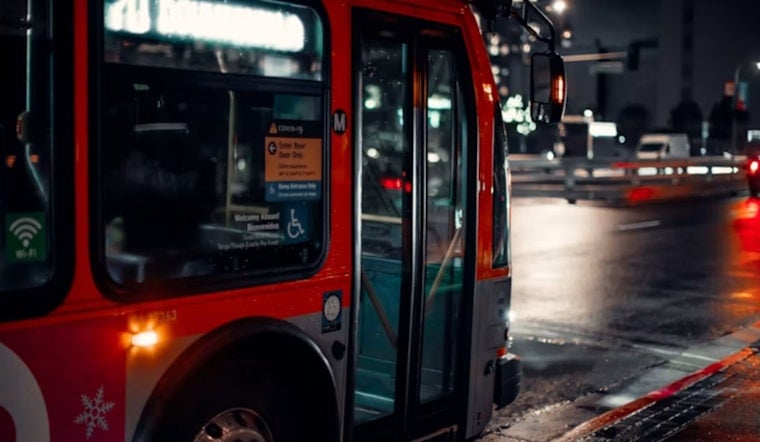
Bryan Eubanks rides the bus twice a day, every day, just to get to work and back home. Now the Pinellas Suncoast Transit Authority is proposing to eliminate Route 58, one of the two routes he depends on, along with five other bus and shuttle services across Pinellas County as part of a sweeping FY27 budget proposal.
PSTA has floated eliminating Route 16, Route 58, Route 90, ADA paratransit service, the Grouper airport shuttle, and the Snapper Safety Harbor-Clearwater on-demand service, according to Tampa Bay 28. The agency says the proposed cuts are driven by both budget pressures and low ridership on the affected lines. Route 16 connects riders to Gateway Mall, Meadowlawn Middle School, Northeast High School, Mirror Lake Library, and downtown St. Petersburg, while Route 58 links Seminole City Center, SPC Seminole, Osceola High School, Bardmoor Hospital, and the PSTA Complex, according to PSTA's public hearing notice. Route 90 serves Bay Point Plaza, Corey Avenue, and the beach resort corridor.
For Eubanks, the stakes are personal. He told the station that losing the routes would affect his job, his rent, and his overall livelihood, and that Route 58 in particular “has been a huge help.” He said losing the bus routes would make his life significantly more difficult.
Fare Hikes Would Hit Riders Beyond the Route Cuts
The route eliminations aren't the only cost increase on the table. PSTA is also considering raising onboard credit card fares by 11 cents, per Tampa Bay 28's reporting. The agency's public hearing notice adds further detail: Transportation Disadvantaged bus pass copays would climb from $11 to $13, Grouper airport shuttle fares would rise from $8 to $10, and ferry services would gain a fuel-price fare escalator, according to PSTA's own hearing documents.
Kristen Ehrlich, who works with Connect Pinellas, said losing a bus route could mean losing a job or access to groceries or school for riders who depend on the system. Connect Pinellas has asked residents and bus riders to contact PSTA directly about the possible cuts, and Ehrlich has encouraged people to reach out to county and state leaders to push for greater investment in the transit agency.
Why Property Taxes Drive the Budget Squeeze
The pressure on PSTA's budget traces back largely to how the agency is funded. Local property taxes collected through a countywide millage rate generate roughly 61% of PSTA's overall operating budget, according to Connect Pinellas, while passenger fares account for less than 10% of operating funds. That makes the agency's finances unusually sensitive to shifts in property tax policy.
Notably, the PSTA Board of Directors voted in September 2025 to lower its millage rate for FY2026 to 0.7300 mills, down from 0.7342 in 2025 and 0.7500 in 2024, putting the agency's property tax rate at its lowest level in 15 years. Board leadership framed the reduction as careful stewardship of taxpayer dollars while trying to preserve core services, according to PSTA. A separate statewide threat also looms: a Florida constitutional amendment passed by the legislature in June and headed to the November 2026 ballot would expand homestead property tax exemptions, which state fiscal analysts estimate could cut local government property tax revenues statewide by $4.6 billion in its first year and $8.4 billion in its second, per the Tax Foundation. The measure needs 60% voter approval to pass.
Federal support isn't offering much relief either. The federal FY 2027 budget request proposed cutting national public transit spending by 23% to $16.3 billion and passenger rail funding by 82% to $2.8 billion under the Surface Transportation Authorization Act, Connect Pinellas reports. Those federal capital grants have previously helped fund major PSTA projects, including the $21.8 million SunRunner rapid transit line.
Expansion Continues Even as Local Routes Face the Chopping Block
The proposed cuts come as PSTA simultaneously pushes forward with higher-profile regional projects. The agency announced in July that it will launch a new 727 Express bus line in October, offering direct daily service between downtown St. Petersburg and Tampa International Airport via the Howard Frankland Bridge express lanes, according to Mass Transit. Hoodline previously reported on PSTA's cross-bay express plans, and the agency also took over management of the Cross-Bay Ferry earlier this year after receiving federal transit funds.
Route 90 itself was the subject of recent contract friction. In June, PSTA agreed to absorb an $87,679 contract difference out of a small budgeted surplus to maintain a $220,600 municipal service agreement with St. Pete Beach covering Route 90, paratransit access, and Mobility on Demand, according to The Gabber Newspaper. That route connects St. Pete Beach to mainland Pinellas County.
Meanwhile, the City of St. Petersburg has tried to shield its lowest-income riders from rising costs. In April, the city allocated an additional $75,000 to PSTA's Transportation Disadvantaged program to fully cover bus fares for qualifying St. Pete residents living at or below 200% of the federal poverty level, building on a partnership the city first established with PSTA in 2023.
Route 58 Has Survived the Chopping Block Before
This isn't the first time Route 58 has faced elimination. In September 2023, the PSTA board spared the route during a $500,000 budget deficit after public outcry from workers who rely on the line to reach industrial jobs along Bryan Dairy Road, according to WUSF. Board members chose to make internal administrative cuts that year instead of eliminating the workforce route.
That history makes the upcoming public hearings a critical opportunity for riders like Eubanks, who rides Routes 18 and 58 to get to and from work, to make their case again. PSTA will hold two public hearings, on Aug. 19 and Aug. 26, before the board takes a final vote on the proposed service reductions. PSTA has said it will make its decisions after hearing from the public at those sessions.





