

























































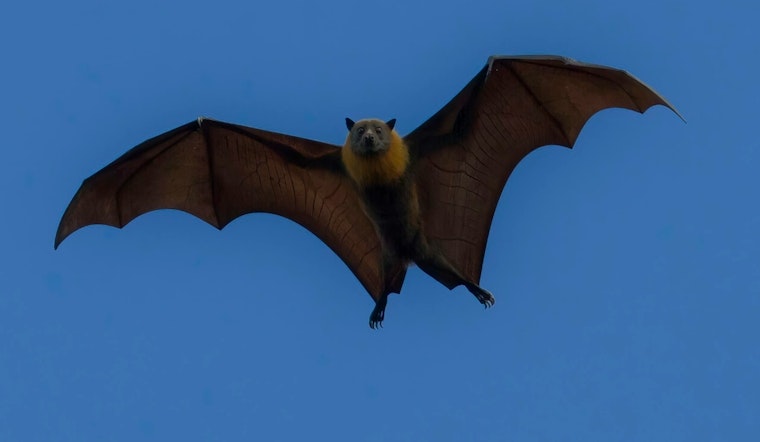
A bat in a room with a sleeping person, an unattended child or an impaired individual should be treated as a possible rabies exposure because bat bites can be difficult to detect. South Carolina public health guidance says people should not touch bats or other wild or stray animals with bare hands, and a bat that may have exposed a person or pet should not be released because it cannot later be tested for rabies. Instead, the animal should be safely trapped in a sealed container without being touched, according to the South Carolina Department of Public Health.
Anyone whose broken skin or mucous membranes came into contact with saliva, brain tissue or nervous-system tissue from an infected animal should wash the area with soap and water and seek medical attention. The Centers for Disease Control and Prevention recommends immediate wound washing for unvaccinated people exposed to rabies, followed by one dose of human rabies immune globulin and a four-dose vaccine series on days 0, 3, 7 and 14. Medical reference guidance from the Nebraska Department of Health and Human Services says that treatment can cost more than $3,000 per patient, although manufacturer assistance programs are available for people who are uninsured or underinsured.
The latest exposures
The most direct human exposure in this week's South Carolina cases involved a rabid bat found near Headlands Drive and Oyster Rake Lane in Hilton Head. One person was exposed and referred to a healthcare provider; the bat was the second rabies-positive animal confirmed in Beaufort County this year.
Pets were exposed in two other bat incidents. A bat near Wylie Court and East Hill Drive in Easley exposed two cats and was the third rabies-positive animal confirmed in Pickens County this year. In Greenwood, a bat found near Miller and Ridge roads exposed one dog and was the sixth confirmed case in that county in 2026.
Livestock faced the largest reported exposure count in the group. A rabid skunk found near Cedar Falls and Sweet Water roads in Fountain Inn exposed two dogs, two cats and nine goats, marking Greenville County's fifth rabies-positive animal confirmed in 2026. As reported by WYFF, all of the exposed pets will be quarantined under the South Carolina Rabies Control Act.
The goats present a separate regulatory problem: state guidance says there is no USDA-approved rabies vaccine for goats or swine. Unvaccinated livestock therefore face strict quarantine risk when they encounter an infected wild animal. Livestock should be vaccinated whenever a USDA-approved vaccine is available for the species, while goats and swine that frequently contact humans or are considered valuable should still be vaccinated even though no USDA-approved option currently exists for them.
How the cases were confirmed
The four animals tested positive across four South Carolina counties this week after being submitted for testing on August 21, with laboratory results returning on August 25. The group consisted of the Fountain Inn skunk and bats found in Easley, Greenwood and Hilton Head. Terri McCollister, identified in the report alongside digital content producer Zach Rainey, said bats can carry rabies but that not every bat is infected. Rabies cannot be diagnosed simply by looking at an animal and must be confirmed in a laboratory.
Officials identify daytime activity, unusual locations or an apparent inability to fly as signs that a bat may be rabid. The cases bring the state's 2026 total to 78, while the four-county exposures include dogs, cats, goats and one person.
A wider run of cases
This week's results follow a rabid horse in Aiken County that exposed 13 people a week earlier, part of a broader run of confirmed cases in Anderson and Charleston counties that Hoodline covered in its report on the Aiken horse case. Pickens County has logged four confirmed rabies cases in 2025 and has fresh 2026 activity after two separate rabid skunk incidents there in March exposed a horse and sent one person for medical evaluation.
South Carolina reported 101 confirmed rabies cases in 2025 and has averaged roughly 136 positive cases per year since 2002. Raccoons have historically accounted for more than half of annual cases and skunks about 15 percent, according to the Greenville Journal. The South Carolina Department of Public Health's rabies surveillance spreadsheet provides positive cases by animal and county for 2002-2025, with separate data available for each year. More than 90% of animal rabies cases reported annually to the CDC now occur in wildlife, according to the South Carolina Department of Public Health. According to the Centers for Disease Control and Prevention, wild animals account for more than 90% of reported rabies cases, with bats at 35%, raccoons at 29% and skunks at 17%.
Vaccination and reporting rules
South Carolina law requires dogs, cats and ferrets to be vaccinated against rabies and revaccinated often enough to maintain continuous protection. Failing to vaccinate a pet is a misdemeanor under Section 47-5-200 of the Rabies Control Act and may carry fines or jail time.
Greenville County Animal Care Services says its affordable spay/neuter program requires rabies vaccination for dogs and cats 3 months and older.
Anyone who believes they or a pet has been exposed can reach the DPH Charleston office at (843) 953-4713 or the Upstate Greenville-Spartanburg office at (864) 372-3270 during business hours, 8:30 a.m. to 5 p.m. Monday through Friday. After hours or on holidays, DPH can be reached at (888) 847-0902, option 2. All wild and domestic animal bites must be reported to local DPH offices by the end of the next working day, and biting dogs, cats or ferrets face a mandatory 10-day quarantine under state law.
The CDC says 1.4 million Americans receive healthcare for a possible rabies exposure each year, while 100,000 receive post-exposure prophylaxis. A CDC analysis reported that rabies post-exposure prophylaxis averages $3,800 per patient, with costs ranging from $1,200 to $6,500.





