

























































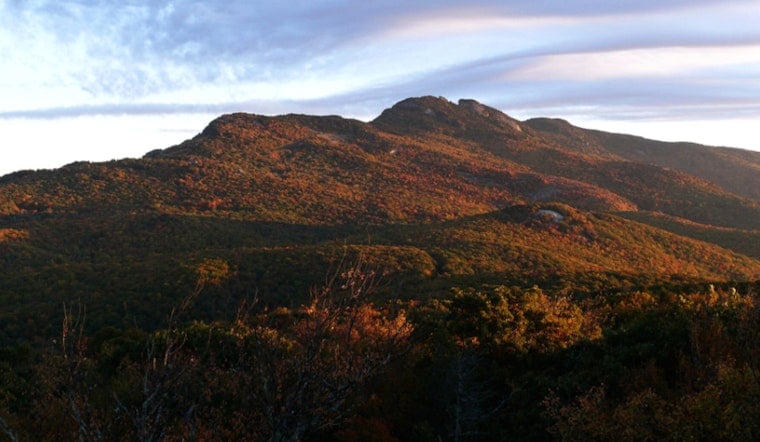
Two Raleigh firefighters were airlifted more than 200 miles from their home city to Grandfather Mountain, where they were lowered by helicopter to reach a hiker injured in a fall of about 50 feet. Raleigh Fire Department Captain Daniel Richardson and senior firefighter Jason Ceisner carried out the hoist rescue near the mountain's technical ridgeline in Avery County, pulling the hiker to safety before handing off care to a medical flight crew.
The hiker suffered a significant fall, according to the Linville-Central Rescue Squad, which coordinated the response on the ground. As reported by CBS 17, rescue officials determined that a hoist operation was the fastest way to get the hiker to definitive medical care, bypassing what would have been a slow and dangerous ground carry-out. Once the hiker reached the hoist, they were flown to a nearby landing zone and transferred to a medical helicopter operated by Highlands Emergency Air Rescue & Transport, which then transported them to a hospital for treatment.
Why a Raleigh Crew Answered a Mountain Call
Richardson and Ceisner are members of North Carolina Task Force 8, a regional all-hazards search and rescue team drawing personnel from the Raleigh Fire Department, Durham Fire Department, Chapel Hill Fire Department, and Wake County EMS, according to NC-TF 8 Urban Search and Rescue. The task force, which serves the Raleigh, Durham and Chapel Hill area under normal circumstances, was selected for the mountain rescue per state officials, and NC-TF 8 later praised both firefighters for their work. North Carolina Emergency Management provided a helicopter aquatic rescue team and task force resources for the operation, while North Carolina State Highway Patrol aviation crews flew the helicopter itself.
That state aviation-and-rescue partnership operates under the banner of the North Carolina Helicopter Aquatic Rescue Team, which pairs State Highway Patrol or National Guard aircraft with local fire and rescue technicians trained in high-angle rope and aquatic hoist work, per NC DPS. Founded in 2004, the program celebrated its 20th anniversary in 2024 and now maintains more than 30 certified rescue technicians across a dozen participating agencies statewide, the same agency notes. During major disaster responses such as Hurricane Helene in late 2024, NC HART teams performed over 500 total rescue missions, including 165 complex aerial hoist extractions, according to the North Carolina National Guard.
A Notoriously Technical Stretch of Trail
The rescue unfolded along the Grandfather Trail's ridgeline spanning MacRae Peak, Attic Window, and Calloway Peak — a route considered one of the most technical hikes in the eastern United States, relying on fixed ladders, steel cables, and sheer cliff maneuvers, according to Explore Asheville. Hikers and locals often call it the “chutes and ladders” hike because of its rugged terrain. Calloway Peak tops out at 5,964 feet, with MacRae Peak standing at 5,845 feet, creating steep drop-offs and volatile alpine weather that make ground extractions from that elevation a slow, hours-long process over rocky ground.
It is not the first time a fall on this stretch has required an airlift. In March 2026, emergency crews and NC HART rescued a hiker who fell from a ladder near MacRae Peak at roughly 5,800 feet, using a combination of rope lowers and a helicopter hoist, as reported by WSOC TV. That earlier incident underscores how frequently the ladder sections on Grandfather Mountain produce high-angle rescue calls.
A Long List of Responding Agencies
Saturday's response drew a wide roster of local and regional agencies working alongside the state task force. Linville-Central Rescue Squad thanked everyone who assisted, listing NC Mountain Rescue Team 1, the Grandfather Mountain Stewardship Foundation, NC-TF 8 Urban Search and Rescue, and North Carolina Emergency Management among the assisting groups. Also listed as responding were the Linville Volunteer Fire Department, EMS Avery, Avery County Emergency Management, Crossnore Volunteer Fire Department, Banner Elk Volunteer Fire & Rescue, and Grandfather Mountain State Park, while Banner Elk Rescue also responded to the call.
The Linville-Central Rescue Squad has provided wilderness, mountain, and technical rope rescue operations across Avery County for more than 50 years as an all-volunteer agency, managing initial patient access and triage in rural mountain areas before state air assets arrive. Raleigh's own urban search and rescue capability traces back to the aftermath of the September 11, 2001 terrorist attacks, when $100,000 in federal grant funding administered through North Carolina Emergency Management helped launch formal regional task force training beginning in 2002. Firefighters assigned to that team, as Hoodline has previously reported, complete between 50 and 100 hours of specialized annual training in high-angle rope, swiftwater, and structural collapse operations — the same skill set Richardson and Ceisner relied on above MacRae Peak. The extent of the hiker's injuries and current medical condition had not been disclosed as of publication.





