

























































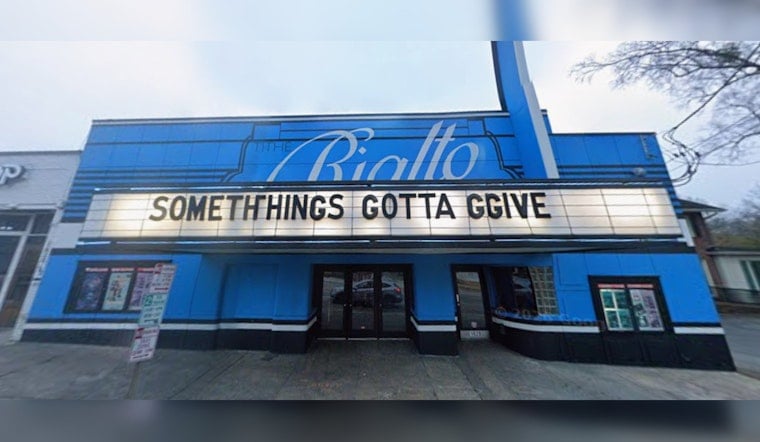
Moviegoers filled Raleigh's Rialto Theatre in Five Points on Saturday for the 2nd Annual Triangle Native American Film Festival, a daylong celebration running from 11 a.m. to 6:30 p.m. that spotlighted films made by and starring Native American directors and actors. The lineup mixed animated shorts, documentaries and feature-length films exploring both historical and modern Native experiences, with genres ranging from drama and romance to thriller.
The Triangle Native American Society, which organized the event, said storytelling has long played a critical role in Indigenous communities, according to ABC11. The nonprofit, founded in 1984 and recognized by the State of North Carolina in 2000 as the governing urban Indian organization for Wake, Durham, Orange, Johnston and Chatham counties, according to the Triangle Native American Society, designed the festival to increase awareness of Indigenous stories and address ongoing challenges tied to visibility and representation.
TNAS Executive Director Jesalyn Keziah, an enrolled member of the Lumbee Tribe of North Carolina, said festivals like this one can share joyful stories that celebrate Indigenous communities rather than focusing only on painful history. She added that Native communities continue to face a lack of visibility and knowledge of stories told by Native people themselves, per the same account. Keziah, who earned her Master of Social Work from UNC-Chapel Hill, brings 15 years of statewide community engagement experience to the role, according to TNAS.
A Homecoming for Festival Co-Organizer
Festival co-organizer Trey Roberts, who grew up in Haliwa, North Carolina, said bringing Indigenous films to Raleigh carried personal significance for him. Roberts traces his roots to the ancestral homelands of the Haliwa-Saponi Indian Tribe in Halifax and Warren counties, a state-recognized tribe with more than 4,000 citizens centered in Hollister, North Carolina, according to Duke University Gardens. He said he had not seen Indigenous or Native people represented in film while growing up, which fueled his own desire to enter the film industry. Storytelling matters to Indigenous communities, Roberts said, and film offers another way to tell Native stories.
The festival opened with Cowlitz writer Joey Clift's eight-minute animated short “Pow!,” which qualified for 2026 Oscar consideration and blends three distinct visual art styles, including 19th-century Plains ledger art, according to Cartoon Brew. The lineup also included “Seeds” by Mohawk filmmaker Kaniehtiio Horn, who wrote, directed and starred in the comedy-thriller in her feature directorial debut. The film premiered at the 2024 Toronto International Film Festival and went on to win the 2025 imagineNATIVE After Dark Award, exploring themes of Indigenous food sovereignty and land defense.
From Pow Wows to Reservation Stories
Other festival selections included “Sweet Summer Pow Wow” by Darrel Dennis, “Reservation Redemption” by Brenda Fisher and Blake Pickens, “Borders” by Kenneth Thomas Shirley and Adam Michael Conte, and “A Sacred Thread,” presented by PBS North Carolina. Organizers advised viewer discretion for films containing mature themes. Attendee Polly Cox said she valued seeing more accurate Native representation on screen, per ABC11's report.
VIP ticket holders received Indigenous culinary offerings prepared by Wesley Clark of Atkowa Catering, paired with wines from Locklear Vineyard and Winery, a Lumbee-owned business based in Robeson County. Locklear Wines was established by Lumbee entrepreneur Charlie Locklear as Eastern North Carolina's pioneering Native-owned vineyard, according to WALTER Magazine. General admission and VIP ticket packages ranged from $18.50 to $53.50 across six main screening blocks throughout the day.
A Historic Venue for a Growing Population
The Rialto Theatre itself carries its own layered history. It originally opened in 1936 as the Colony Theatre before being renamed the Rialto in 1983, and it reopened in 2023 under local ownership led by Hayes Permar, making it Raleigh's oldest operating independent neighborhood cinema, according to reporting on the reopening.
The festival's backdrop is a state with a substantial and often under-recognized Indigenous population. North Carolina is home to more than 130,000 Native American and Alaska Native residents, according to 2020 U.S. Census data cited by the North Carolina Office of State Budget and Management, representing the second-largest Indigenous population east of the Mississippi River. The state recognizes eight distinct tribes, including the Lumbee, Eastern Band of Cherokee, Haliwa-Saponi, Coharie, Meherrin, Occaneechi Band of Saponi, Sappony and Waccamaw Siouan.
TNAS has a history of partnering with local government on Indigenous recognition efforts. In August 2020, the organization worked with the City of Raleigh and the Dix Park Conservancy to perform the city's first official Native land acknowledgment and blessing ceremony at Dorothea Dix Park, according to WALTER Magazine. The society said film provides a platform for sharing Native experiences and promotes Indigenous culture, education and community engagement. TNAS plans to host additional events throughout the rest of 2026.



