

























































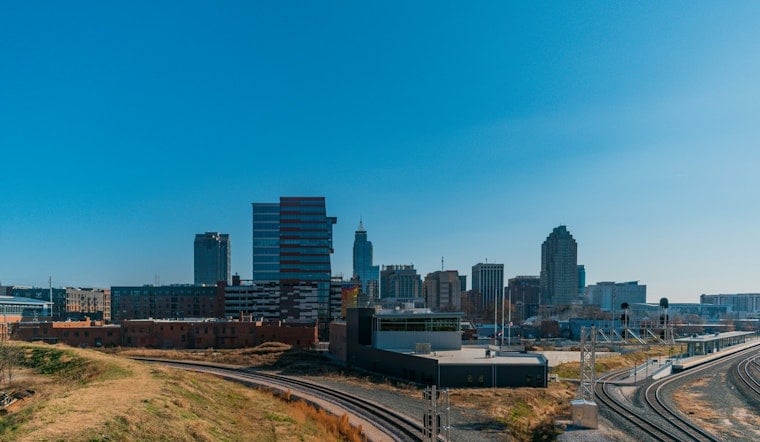
Raleigh-Cary has pulled off something no other major American metro has managed: according to new data from the National Association of REALTORS, it is the only large U.S. market whose commercial real estate demand score is stronger now than it was back in 2022, at the peak of the pandemic migration boom. St. George, Utah, meanwhile, has emerged as the single strongest market of any size in the entire country, outranking all 306 metropolitan areas the index evaluated.
A New Way to Measure Where Demand Is Headed
The findings come from NAR's newly released Commercial Real Estate Demand Index, a forward-looking tool that uses Bureau of Labor Statistics and Census Bureau data to project future space needs rather than simply tallying current vacancy or completed leases, according to CNBC. The index scores office, industrial, retail and multifamily sectors separately, then rolls them into a composite baseline of 100 representing an average metro, with industrial and multifamily each weighted at 28 percent and office and retail each weighted at 22 percent, per the National Association of REALTORS. Office demand is measured through professional and business services employment growth, retail through retail trade and leisure and hospitality hiring, industrial through manufacturing, transportation and warehousing employment growth, and multifamily through population growth and domestic and international net migration.
St. George posted an overall score of 128 in the August 2026 index, the CNBC report notes, while Fayetteville-Springdale-Rogers, Arkansas, and Huntsville, Alabama, tied for second nationally at 125, according to GlobeSt. NAR principal economist and director of real estate research Nadia Evangelou said St. George's top ranking reflects broader momentum rather than any single factor, pointing to the metro's very strong population growth and in-migration and the nation's strongest office employment growth, per CNBC. The metro also carries above-average industrial demand, the outlet reports.
Raleigh's Rare Multi-Year Climb
Raleigh-Cary's index score climbed to 121 in August 2026, up from 114 in 2022 and 117 in 2024, making it the top-performing market among the nation's 50 largest metros and lifting North Carolina's statewide average to 106, GlobeSt reports. That trajectory sets Raleigh apart as the only major U.S. market that CNBC identifies as stronger now than during the 2022 pandemic migration peak, even as large coastal markets are generally weaker than fast-growing Sun Belt and smaller markets, per Evangelou's comments to the outlet.
The gains on paper have not erased Raleigh's office-space glut. Office vacancy in the metro held at 21.9 percent as of Q2 2026 even amid the strong demand scores, as corporate tenants concentrated leasing in modern Class A buildings while older inventory struggled, Hoodline previously reported, citing the Triangle Business Journal. Raleigh's broader hiring boom in professional services and healthcare has also outpaced its housing market, per PNC Bank data cited in a separate Hoodline report.
Sun Belt Winners, Coastal Retreats
South Carolina posted an average score of 110 across its five metros to rank as the top state overall, while Florida's statewide average fell from 115 in 2022 to 110 in 2026 as post-pandemic migration patterns normalized, according to GlobeSt. That state-level shift tracks with metro-specific declines CNBC identified in Miami, Naples and Austin, all of which have fallen markedly in the index since 2022. Fayetteville, Arkansas, is seeing broad-based growth across sectors, CNBC reports, and it also ranked first nationwide for retail demand, followed by Gainesville, Georgia; Auburn-Opelika, Alabama; Napa, California; and Bangor, Maine, per the National Association of REALTORS.
On the industrial side, Fairbanks, Alaska, and Salem, Oregon, each ranked highest for industrial demand, according to CNBC, with the National Association of REALTORS' sector breakdown also naming Olympia-Lacey-Tumwater, Washington; Lexington Park, Maryland; and Baton Rouge, Louisiana, among the strongest industrial markets. Huntsville, Alabama, has one of the nation's strongest multifamily scores, per CNBC. Evangelou told the outlet that small and mid-sized markets provide some of the best opportunities for investors, and that the index is designed to identify markets where momentum and demand are building before that shift shows up in traditional metrics.
Growth on Paper Meets Debt Market Pressure
St. George's retail surge is visible on the ground: the metro welcomed its second Costco warehouse in the Desert Color area this past March to serve a regional population that has grown to nearly 200,000, according to local planning records cited in Scotsman Guide reporting that Hoodline previously covered in its account of shoppers lining up for the store's opening.
Even so, the same forward-looking momentum driving these rankings sits alongside real financial strain in commercial debt markets. Trepp reported that the national CMBS office delinquency rate hit an all-time high of 12.34 percent in January 2026, driven by debt maturity defaults concentrated in older Class B and C office properties. The Mortgage Bankers Association has separately estimated that roughly $875 billion in commercial and multifamily mortgage debt is scheduled to mature in 2026, creating refinancing headwinds across every property sector regardless of how strong a metro's underlying job growth looks on NAR's index.



