

























































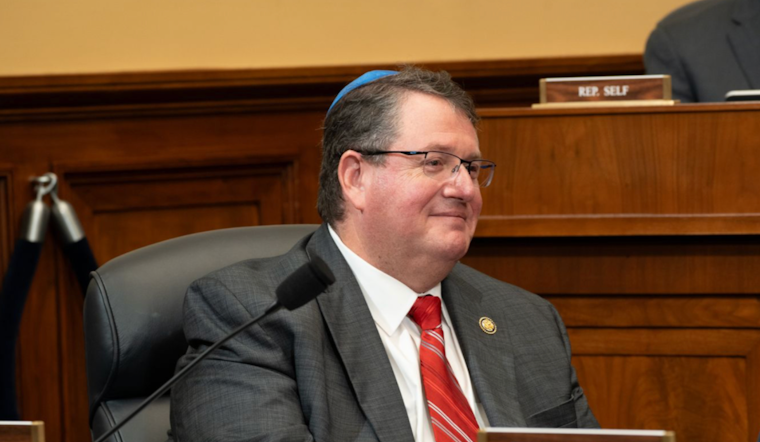
Ocala’s fire-truck industry is getting a $23.5 million jolt just as Florida’s property-tax fight moves toward the November ballot. For Rep. Randy Fine, the E-ONE expansion offers a tangible economic-growth talking point while affordability and local-government funding remain politically combustible.
Fine used an interview with WKMG ClickOrlando to say he helped secure the money for E-ONE’s Ocala project, which is expected to create more than 100 jobs in Marion County. His congressional office identifies him as the Republican representative for Florida’s 6th District, which includes Marion County.
E-ONE Expansion Targets More Fire Truck Production
E-ONE, an Ocala-based emergency-vehicle manufacturer, says the project will add an 80,000-square-foot expansion to its aerial manufacturing campus. According to E-ONE, the investment is expected to increase aerial production by about 35%, reduce customer wait times and add 100 jobs to a workforce that currently numbers 1,134 employees.
The company says construction will proceed in four phases and should be finished by spring 2027. Plans include expanded assembly, fabrication and paint operations, a dedicated ladder-manufacturing center and a second test pit at the Ocala campus.
Property-Tax Proposal Puts Local Services In The Crossfire
The economic announcement arrives alongside a sweeping property-tax proposal that Florida lawmakers approved for the 2026 general-election ballot. A Florida Senate summary says the measure would provide a non-school homestead exemption of up to $150,000 beginning in 2027 and up to $250,000 beginning in 2028 for qualifying residents, but it must receive at least 60% voter approval.
Fine told WKMG ClickOrlando that property-tax policy is controlled by the state, not Congress, and that Washington would not replace local revenue lost through tax cuts. The governor’s office says related legislation signed in June is intended to limit local tax increases and prepare for the amendment’s November 2026 vote, while requiring local governments to examine spending before adopting budgets.
Fine said affordability is the dominant concern he hears from constituents, along with complaints about roads, wastewater, stormwater projects and beach protection. He also blamed illegal immigration for driving up housing, education, healthcare and insurance costs, a claim presented in the interview as his position rather than a settled explanation for Florida’s affordability problems.
Election Calendar Adds Pressure To The Message
Florida’s political timetable is tight: the state’s mandatory early-voting period runs from August 8 through August 15, followed by the primary election on August 18, according to the Florida Department of State. That leaves Fine and other state and federal candidates little time to make the case that job creation, tax relief and reliable local services can coexist without somebody eventually getting stuck with the bill.





