

























































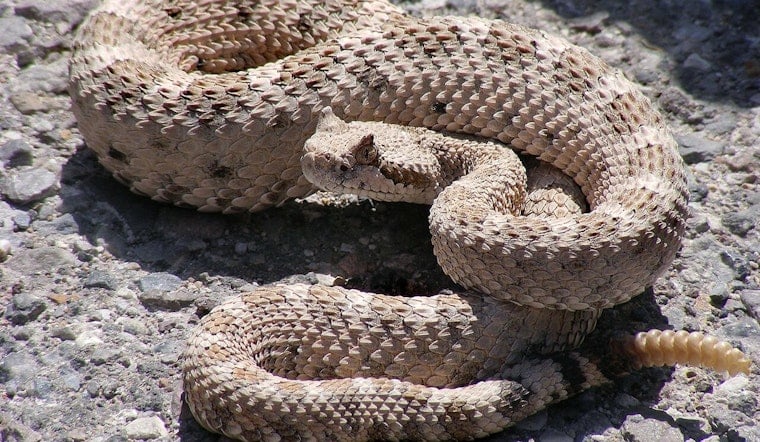
A stand-up comedian and TV host wading in the ocean at Crystal Cove State Beach felt a strange tickle on his foot last week — and turned to find a rattlesnake surfacing from the surf just inches away. Nicky Paris was visiting the beach south of Newport Beach for the first time when the snake slithered out of the sea and onto the sand, and the video he posted of the encounter has since gone viral across the country.
Paris posted the footage on August 19, showing the snake moving through the sand as he alerted two other women nearby, according to The Press Democrat. The snake headed toward his towel and the brush leading up into the hills before Paris packed up his belongings and left. He said he did not feel scared during the encounter, telling the outlet it almost felt like he had been set up to be murdered by technology, since he had recently fed kangaroos in Australia and Crystal Cove had come up as a quick Los Angeles-area getaway recommendation from ChatGPT.
Paris said he felt he was essentially at the snake's house, and he urged other beachgoers to look down and stay aware of their surroundings. The California Department of Fish and Wildlife, per the same account, warned people not to grab sticks floating in the water, since rattlesnakes are capable swimmers and can be mistaken for driftwood. This is not the first time a rattlesnake has crossed paths with beachgoers at Crystal Cove — a grandmother needed treatment after being struck by a snake there in 2016, the report noted.
Why Snakes Are Showing Up on the Sand
Crystal Cove's coastal bluffs are home to two rattlesnake species — the Southern Pacific rattlesnake and the Red Diamond rattlesnake — both of which naturally migrate down the steep coastal slopes onto beach sand and into the ocean's tide zones, according to World Atlas. The park protects a rare stretch of Coastal Sage Scrub habitat that has been reduced to somewhere between 10 and 30 percent of its historic range statewide due to urban development, per the Crystal Cove Conservancy. That habitat compression is pushing native wildlife into closer contact with heavily visited beach parks up and down the coast.
The pattern extends well beyond Crystal Cove this year. Wildlife officials at Orange County's Bolsa Chica Ecological Reserve in Huntington Beach issued their own public safety warnings back in March after a surge of rattlesnake sightings along coastal wetland paths, as covered by CBS LA. Early-season heat waves that year accelerated snakes emerging from their winter dens months ahead of schedule, driving the reptiles from bluffs and canyons down toward shoreline trails throughout Orange and Ventura counties.
A Deadly Reminder From Earlier This Year
The risks tied to Southern California's rattlesnake activity are not hypothetical. In March, 25-year-old Costa Mesa resident Julian Hernandez died following a rattlesnake bite after falling off his bike into brush along Irvine's Quail Hill trail — an area that had not recorded a rattlesnake bite in over a decade, as Hoodline reported in its coverage of the Quail Hill tragedy. The case underscored how quickly a routine trip to a familiar trail can turn dangerous when venom complications set in.
Statewide, the California Poison Control System recorded a sharp early-season surge in rattlesnake interactions in 2026, fielding 77 rattlesnake exposure calls and logging three fatal bites by mid-May — triple the state's typical average of about one death per year, according to the Business Journal. In a typical year, the poison control system fields between 300 and 800 rattlesnake exposure calls statewide, a small fraction of the 7,000 to 8,000 venomous snakebites reported across the entire country annually.
What To Know if You Encounter One
Not every bite delivers venom. The California Department of Fish and Wildlife estimates that 25 to 50 percent of rattlesnake bites to humans are so-called dry bites, where no venom is injected, since snakes conserve their venom for hunting and can take up to three weeks to replenish it after a strike. Rattlesnakes generally view people as predators rather than prey and only bite defensively when startled or cornered.
Treatment for a venomous bite is neither simple nor cheap. Antivenom runs roughly $2,500 per vial, and severe envenomation cases can require a multi-vial series along with intensive care to manage sudden drops in blood pressure and tissue damage, per UC San Diego Today. California law allows residents to take or kill up to two rattlesnakes of most species on private land without a license, but the Red Diamond rattlesnake found at Crystal Cove is a protected state Species of Special Concern that cannot legally be killed, according to the UC Statewide IPM Program.
Pets face even steeper odds than people do. Domestic animals in Southern California's foothill and coastal communities are bitten roughly 20 times more often than humans, with pet-safety researchers estimating up to 300 pet bites annually in nearby foothill regions, according to The Snake School. For now, Paris's viral clip stands as a reminder that at a place like Crystal Cove, the water and the sand aren't necessarily separate from the wildlife that calls the bluffs above home.



