

























































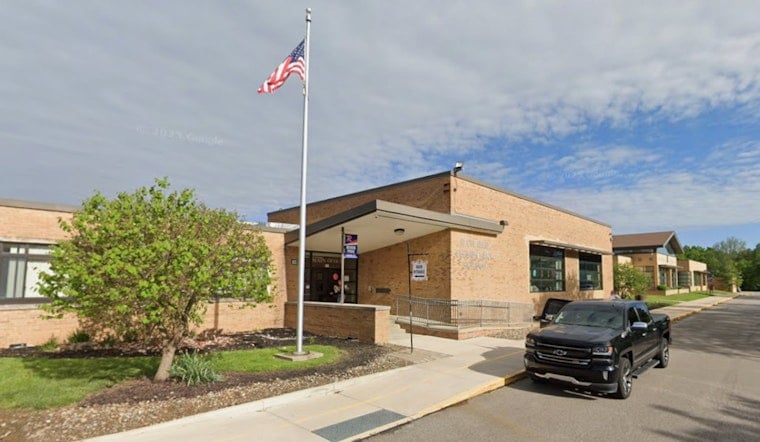
Revere Local Schools could see its financial reserves shrink by more than $15 million over the next five years, with deficit spending projected to begin as soon as 2028, according to a five-year forecast presented to the district's board of education Tuesday. Treasurer Rick Berdine told board members the district faces a squeeze driven largely by new state property tax laws that will strip away millions in expected revenue growth, even as the district remains academically strong and financially stable for now.
The forecast, presented in Richfield, projects Revere will post a $980,000 deficit and $24.49 million in reserves by 2028, according to Cleveland.com. That shortfall is expected to grow steadily each year, reaching a $3 million deficit and $21.4 million in reserves by 2029, a $4.81 million deficit and $16.65 million in reserves by 2030, and finally a $6.66 million deficit with just $9.9 million left in reserves by 2031. The district currently holds about $34.5 million in cash and investments as of the end of July, according to its financial report, and is not facing an immediate financial crisis.
New State Tax Laws Erase Expected Revenue Growth
The root of Revere's projected squeeze traces back to a trio of Ohio laws — House Bill 129, House Bill 186, and House Bill 335 — all enacted in December 2025 and effective this past March. House Bill 129 changed how fixed-sum levies are treated when calculating tax rates above the state's 20-mill floor, a shift that, per Vorys, is moving roughly 237 Ohio school districts off that floor and restricting how much unvoted tax revenue can grow. House Bill 335, meanwhile, caps growth in certain property-tax revenue to inflation rather than allowing it to track rising property values, a change Ohio's Legislative Service Commission estimates will cut inside-millage collections for schools and local governments statewide by between $620 million and $763 million across tax years 2026 through 2028, according to analysis from Policy Matters Ohio.
For Revere specifically, Berdine said the cumulative effect of these changes will cost the district $5.5 million in projected cash over the forecast period. Where the district historically received an average annual real-estate revenue increase of about $1.6 million, it now projects that figure will shrink to roughly $389,000 a year — a difference of about $1.2 million annually. Overall, Revere's annual revenue growth is expected to fall to just 0.95% through fiscal 2031, even though revenue had climbed by an average of 6.28% annually over the past five years.
A District That Has Avoided the Ballot Box Since 2011
Property taxes account for about 72% of Revere Local Schools' total revenue, which makes the district especially exposed to the new state caps. Revere last asked voters for new operating money in 2011 — a levy district leaders originally expected to last seven to nine years but managed to stretch for more than 14 years through 2026, a run considerably longer than the three-to-five-year cycle typical for Ohio school districts seeking new operating funds.
Despite the looming shortfall, Berdine struck a measured tone with the board, saying the sky is not falling. He noted the district has been proactive by tackling large-scale repairs to free up money from its permanent improvement fund, and said a new operating levy may be discussed around 2028 — around the same time the forecast shows deficit spending beginning in earnest. Without additional revenue, the district projects it would have about $10 million in cash left by 2031, with the shortfall that year equaling 12.8% of revenue, up from just 1.9% of revenue in 2028.
Spending Pressures Compound the Revenue Squeeze
Revenue isn't the only side of the ledger moving in the wrong direction. Revere expects expenses to rise by an average of 4.29% annually through fiscal 2031, with employee salaries the largest contributor to spending, followed closely by benefits. District spending overall climbed from $34.8 million in 2017 to $45.5 million in 2026. To balance the 2031 budget without new revenue, the district could need a spending reduction of $6.66 million — or it would need a 9.34% revenue increase that year just to break even.
Notably, the current five-year revenue forecast is actually down 0.63% compared with Revere's 2021 forecast, suggesting the district's underlying financial trajectory hasn't shifted dramatically — it's the state's tax policy changes layered on top that are driving the projected reserve decline. Berdine's forecast still shows a $782,349 surplus and $25.47 million in year-end cash reserves for 2027, and the district expects about $25.5 million in cash at the end of fiscal 2027, underscoring that the crunch is a multi-year trend rather than an immediate emergency.
Part of a Wider Regional Pattern
Revere's situation echoes what's already playing out elsewhere in Summit County. Districts including Barberton, Tallmadge, and Stow-Munroe Falls have faced budget crises this year that forced local ballot measures to head off multi-million dollar cuts, staff layoffs, and busing eliminations, as Hoodline has reported in coverage of the Tallmadge tax fight and the Barberton levy battle. Those fights stem from the same statewide legislative shift now working its way through Revere's books.
Even as it navigates the financial headwinds, Revere Local Schools continues to post strong academic results, earning an overall 5-star rating — the highest possible score — on its 2024-2025 State Report Card, including 5 stars in student achievement. The Revere Board of Education serves families in Bath Township and Richfield, and the district's recent history includes a $68.2 million bond issue approved by voters in November 2016 that funded a new Revere High School and new Bath Elementary School, a capital project that wrapped up in early 2021 within $9,000 of its original budget. That track record of disciplined project management may factor into how the community responds if and when Revere returns to voters for new operating funds around 2028.



