

























































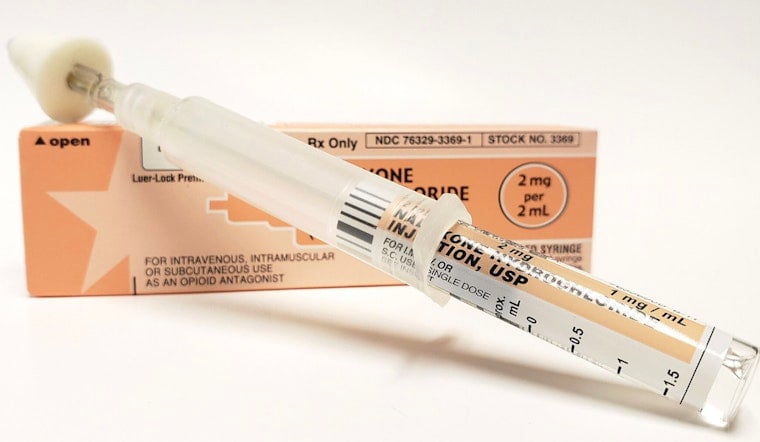
A young man in Rye stopped breathing during a suspected drug overdose on Saturday, and a City of Rye police officer who found him unresponsive and unreactive to stimuli administered Narcan on the spot, reviving him within moments. The man regained consciousness and began breathing again, according to officials, who say the officer's fast response saved his life.
The City of Rye Department of Public Safety reported that the officer responded to a reported overdose in Rye on Saturday and found the young man not breathing and unresponsive to stimuli, according to officials cited by Daily Voice. The officer administered Narcan, also known as naloxone, and the man began breathing again and regained consciousness soon after, per the same account. Daily Voice reporter Ben Crnic first reported the incident.
Why Rye Officers Carry Naloxone on Patrol
Rye police officers carry Narcan and are trained to recognize and respond to suspected opioid overdoses, the report notes. That capability traces back more than a decade: Westchester County launched an initiative in May 2014 to equip county and municipal first responders, including departments like Rye's, with Narcan nasal spray to reverse overdoses in the field, according to Westchester County. The legal authority for officers to carry and administer the drug stems from New York's Opioid Overdose Prevention Program, established under Public Health Law Section 3309 in 2006, which created a statewide registry of training programs and liability protections for non-medical responders, per the New York State Department of Health.
The exact substance involved in Saturday's overdose has not been confirmed in public statements from the department. Also unconfirmed is the young man's condition following the immediate revival or any follow-up medical care he may have received.
A Broader Safety Net Around Overdose Emergencies
New York's 911 Good Samaritan Law offers a separate layer of protection that can encourage bystanders to call for help in the first place. Under that law, both the caller and the person experiencing an overdose are shielded from prosecution for possessing controlled substances up to A-2 felony levels, as well as paraphernalia, according to the New York State Department of Health. The law was designed to remove the legal fear that historically kept people from dialing 911 during an overdose.
Access to naloxone itself has also widened at the federal level in recent months. The FDA approved Narcan 4 mg nasal spray, the brand used by many police departments, for over-the-counter retail sale in March 2023, and this past June the agency approved Rextovy, another 4 mg naloxone nasal spray, as an additional nonprescription option, according to the U.S. Food and Drug Administration. The FDA also cited provisional national data showing overdose deaths falling from 111,451 in the 12-month period ending August 2023 to 68,632 in the 12-month period ending December 2025, even as synthetic opioids like illicit fentanyl remain involved in a significant share of remaining emergencies.
For Westchester residents who want to keep naloxone on hand at home, New York's Naloxone Co-payment Assistance Program allows insured people to receive up to $40 in co-payment coverage when purchasing it at participating pharmacies, per the NYC Department of Health and Mental Hygiene. Elsewhere in the county, the Yonkers Police Department spent August hosting public events offering free Narcan, overdose response training and recovery information, wrapping up with an International Overdose Awareness Day event on Monday, according to the Yonkers Times.
The Westchester County Department of Health has continued tracking substance use trends across the county's municipalities through its 2025 report on the opioid burden between 2016 and 2023, monitoring emergency department visits and overdose incidents to guide where resources are deployed. Saturday's rescue in Rye adds another local data point to that broader county-level picture, even as many specifics of the case remain unreleased.





