

























































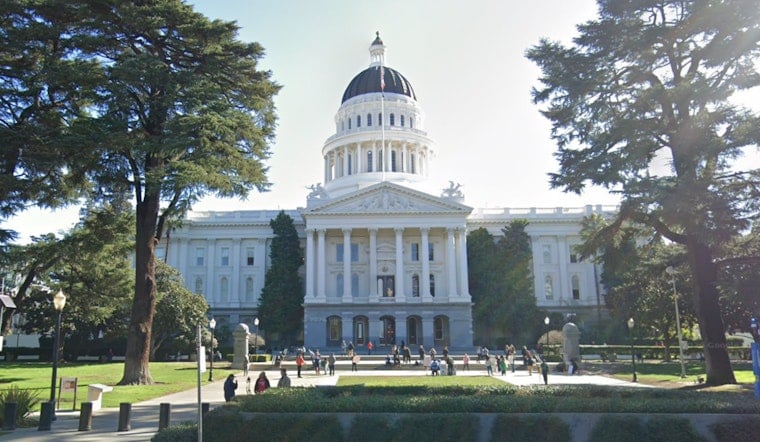
Free fingerprint scans, voter registration tables and personal testimonials filled a room at the California State Capitol on Tuesday, as the advocacy group TimeDone brought its record-clearing campaign to Sacramento. The event offered Live Scan fingerprinting checks that let attendees find out, on the spot, whether an old arrest or conviction still shows up on a criminal background check. Formerly incarcerated Californians took turns describing how a cleared record, or the lack of one, shaped their ability to find work, housing and stability.
TimeDone has advocated for policies that have given more than 10 million people nationwide the opportunity to clear an old record, according to the Sacramento Bee. Founded in 2018, the Oakland-based TimeDone says its own membership now includes almost 25,000 people living with a past arrest or conviction. TimeDone's national director, Saad Soliman, told the crowd that redemption and hope should be fundamental to policy, rather than punishment.
From Prison to the Capitol Podium
Marcus Woods, a TimeDone volunteer, spent 17 years in prison for a crime he said he did not commit, the newspaper reported. After his release, he applied for more than 100 jobs and received only rejections, he said. He now works with TimeDone to help others navigate the same barriers he once faced.
Terrence Stewart, now TimeDone's membership director, completed his associate, bachelor's and master's degrees after serving a criminal sentence, according to the same account. He cleared his own record at a past TimeDone clinic, but still ran into trouble renting an apartment for his family and applying for a coaching position at the YMCA his son attends. "Record changes, legal changes and life changes support redemption and safer communities," Stewart said.
Automatic Record Clearing, Without a Notification
California's Clean Slate laws already let the state seal certain arrest and conviction records automatically, without a court petition, under Assembly Bill 1076 and Senate Bill 731, according to the Collateral Consequences Resource Center. SB 731, signed in September 2022 and effective July 2023, made qualifying nonviolent felony convictions eligible for automatic sealing four years after a sentence is completed, as long as no new felony conviction occurs. In the program's first two years, the California Department of Justice automatically relieved nearly 12 million arrest and conviction records covering 6.8 million people, including 2.84 million conviction records dating back to 1973, per the Committee on Revision of the Penal Code.
The California Policy Lab estimates that roughly 2.5 million residents convicted between 2010 and 2021 are eligible for that relief, with nearly 70% expected to reach a complete clean slate showing nothing on a standard background check, according to the California Policy Lab. Because the state isn't required to notify people once their records are sealed, the lab found that many eligible Californians have no idea their history no longer appears on background checks unless they request a Live Scan record check. That's the gap Tuesday's Live Scan fingerprinting checks were designed to close, letting attendees confirm on the spot whether their own records were already clear.
The Economic and Public Safety Case for Expungement
A University of Michigan study published in the Harvard Law Review found that people who receive a criminal record expungement see wages rise more than 22% within a year, driven mostly by unemployed people finding jobs and underemployed people finding better-paying work. The same study found only 7.1% of expungement recipients were rearrested within five years, with violent rearrests falling to 6% — a rate below that of the general population. Researchers also found that before automatic relief existed, only 6.5% of eligible people ever completed the old petition-based expungement process within five years, held back by complex court filings, legal fees and a lack of information. Speakers at Tuesday's event said expungement decreases recidivism and makes communities safer.
TimeDone told the crowd that the U.S. loses up to $87 billion every year because of economic barriers facing people who were formerly arrested or convicted. In California alone, employment restrictions and other collateral consequences tied to old records cost the state an estimated $20 billion a year in lost economic output, according to The Justice Firm. Keeping someone in a California state prison for a year, meanwhile, costs the state more than $130,000, the Sacramento Bee reported.
Nearly One in Three Americans, and a Fight Over Federal Cuts
Nationally, TimeDone says people with a past criminal record number about 78 million — almost one in three American adults — and nine in ten of them are no longer in prison, in jail, or on probation or parole. Adults with past convictions face housing insecurity at high rates, according to TimeDone, and speakers said outdated laws continue to restrict people with records from obtaining jobs, stable housing and education. Solano County Workforce Development Board president David Hubble said 27% of people with old records are unemployed.
Much of Tuesday's frustration centered on H.R. 1, the federal budget law known as the One Big Beautiful Bill Act that President Donald Trump signed in 2025, which requires able-bodied adults to work, volunteer or train at least 80 hours a month to keep their CalFresh and Medicaid benefits. Speakers opposed the law, and Hubble said it takes food and insurance away from people with criminal records. Vallejo chapter leader Cameron Clark said formerly incarcerated people already lack a system to help them feed their families and participate in society. Another speaker, Isaac Bryan, linked California's affordability crisis directly to mass incarceration, saying the state's criminal justice system is unaffordable and unsustainable.
New State Bills Aim to Close the Gaps
Tinisch Hollins called for passage of four new state bills that TimeDone says would close remaining gaps in the record-clearing system. Assembly Bill 2384, authored by Assemblymember Josh Lowenthal, D-Long Beach, would let people convicted of eligible offenses petition a court to seal their records; Lowenthal said it would provide a meaningful second chance to pursue opportunities without the lifelong burden of a public criminal record. Senate Bill 1342, authored by Senator Maria Elena Durazo, D-Los Angeles, would remove procedural barriers from California's automatic record-clearance process.
Senate Bill 1057, authored by Senator Josh Becker, D-Menlo Park, would reform how California processes background checks and disciplinary actions for healthcare workers. Assembly Bill 910, authored by Assemblymember Mia Bonta, D-Alameda, would expand eligibility for survivors of human trafficking and violence to clear records tied to their own victimization.
What Comes Next
TimeDone said it plans to hold expungement events in five counties next month, extending Tuesday's push beyond the Capitol. State relief has limits, though: automatic sealing and expungements under California's Clean Slate laws aren't recognized by federal immigration authorities, meaning an expunged state record can still be considered in a deportation or citizenship case, according to the Anti-Recidivism Coalition. TimeDone is itself a national initiative of the Oakland-based Alliance for Safety and Justice, a nonprofit that reported more than $60 million in revenue in fiscal year 2023, according to Cause IQ.





