

























































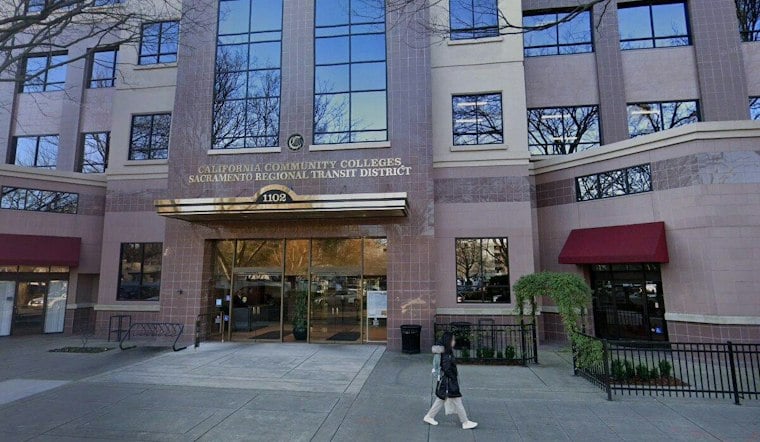
Students who finish an Associate Degree for Transfer at any of California's 116 community colleges now have a guaranteed path into a bachelor's degree program at Arizona State University, under a new statewide agreement announced this month. The deal, which covers all 60 transferable associate degrees offered across California's community colleges, maps them to nearly 100 ASU bachelor's programs and admits qualifying students directly into junior-level standing.
How the Guarantee Works
Under the partnership between ASU and California Community Colleges, students need only a cumulative 2.0 GPA to qualify for guaranteed admission, according to the Sacramento Bee. That threshold matches the standard benchmark for completing an Associate Degree for Transfer rather than imposing the kind of competitive GPA filtering common at California's more impacted campuses, per the California Community Colleges Chancellor's Office. Students entering under the aligned pathways need no more than 60 additional semester units to finish their bachelor's degree, the Chancellor's Office notes, a cap designed to prevent the credit loss and excess-unit accumulation that have historically slowed degree completion.
Eligible students can study fully online, in person at ASU's California locations, or in Arizona itself, though ASU officials expect most will choose the online route, the Bee reports. James Todd, speaking to the Bee, said the partnership expands flexible bachelor's pathways so students can study where they live and remain connected to family and community. California students enrolled in ASU's online programs pay no more than in-state tuition, and may also qualify for dedicated scholarship opportunities, while students who choose to study in person at ASU do not receive that same online-program tuition treatment or scholarship access, per the same report.
A Growing California Footprint
ASU already has a physical foothold in the state: in 2021, the university completed a $40 million restoration of the historic, Julia Morgan-designed Herald Examiner Building in downtown Los Angeles to open the ASU California Center Broadway, according to the DTLA Alliance. That facility gives California students an in-person learning option. Jeff DeFranco told the Bee that ASU's charter is to serve the world, framing the new agreement as an effort to serve neighboring California students specifically.
Roughly 25,000 California students enroll at ASU each year, the majority choosing online programs, and nearly 10,000 of ASU's students in the 2025–2026 academic year came from California community colleges, per the Bee's reporting. ASU officials expect the new partnership to grow the university's enrollment of Californians further, and said the goal is to increase the overall number of transferring students rather than pull existing transfers away from other institutions, the outlet notes. ASU, which has more than 200,000 students and is one of three universities in Arizona's public higher education system, has also expanded online bachelor's pathways this year for students from all 116 California community colleges.
Roots in a 2010 State Law
The Associate Degree for Transfer framework itself dates back to Senate Bill 1440, the Student Transfer Achievement Reform Act authored by then-state Sen. Alex Padilla and signed into law in 2010 by Gov. Arnold Schwarzenegger, according to the Legislative Analyst's Office. It was originally built to streamline transfers into the California State University system with a statewide guarantee, before later expanding to private and out-of-state institutions. The Association of Independent California Colleges and Universities has discussed ADT quotas.
The push to simplify California's transfer landscape has continued more recently, too. Assembly Bill 928 required the creation of Cal-GETC, a single lower-division general education pathway that has satisfied transfer requirements for both the CSU and UC systems since Fall 2025, per the Academic Senate for California Community Colleges.
Why the Timing Matters
California's community college system serves more than 2.2 million students across 116 colleges in 73 districts — the largest system of its kind in the country — after posting a 4.6% undergraduate enrollment gain in the 2024–25 academic year, according to the California Community Colleges Chancellor's Office. Yet a September 2024 audit from the California State Auditor found that only about one in five students who started community college between 2017 and 2019 intending to transfer actually completed a transfer to a four-year institution within four years, the Bee reports, citing the same audit. Each year, thousands of California community college students transfer to UC and CSU campuses, but that bottleneck has put pressure on state higher education leaders to widen flexible pathways, including ones that reach beyond state lines.
The California State University system has about 471,000 students across 22 campuses, even as individual CSU campuses continue to face financial strain following post-pandemic enrollment losses, according to CalMatters. CSU has publicly opposed legislation that would let community colleges offer more bachelor's degrees directly, arguing that transfer pathways remain the most effective way to expand access — a dispute Hoodline previously reported led to amended bills that community colleges said created more barriers than support for their growing bachelor's programs. CSU representatives did not respond to the Bee's request for comment on the ASU partnership.
How UC's Guarantee Compares
The University of California offers a Transfer Admission Guarantee at six campuses. A UC spokesperson told the Bee that one in three UC graduates began at a California community college, with those transfer students posting retention rates near 95%. The spokesperson also put transfer students' graduation rate near 90%.
Students at California community colleges can pursue degrees through pathways like ASU's new guarantee. Eligible coursework completed under the agreement can also apply toward more than 500 other in-person ASU bachelor's programs and over 200 ASU online options beyond the degrees directly mapped to community college coursework, giving students additional flexibility if their academic interests shift. ASU Online maintains the same academic standards, faculty, and degrees as its physical locations, and offers multiple start dates throughout the year, according to the Bee.





