

























































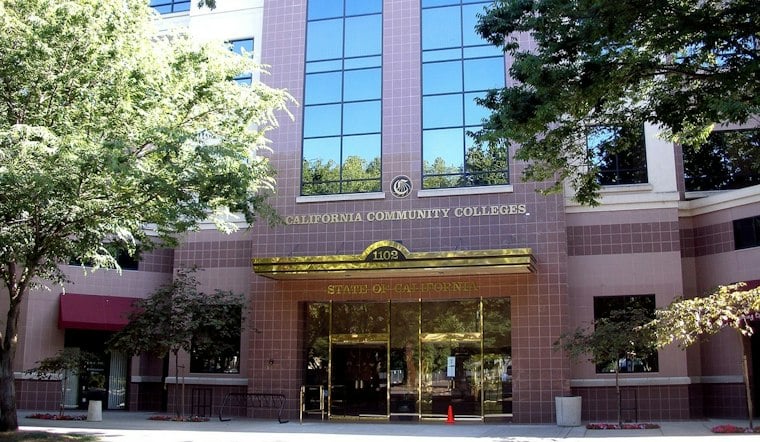
California community colleges just got the green light to offer a lot more bachelor's degrees, including some that overlap with CSU programs under limited circumstances. Gov. Gavin Newsom signed a pair of bills this month reshaping who gets to grant four-year degrees in the state, easing restrictions on community colleges while retaining the statewide prohibition on duplicating University of California programs.
A New Rulebook Replaces an Old Ban
The legislation, reported by the Los Angeles Times, replaces the previous restrictions on community colleges offering bachelor's degrees that already exist at CSU campuses in some circumstances, while retaining the statewide prohibition on duplicating University of California programs. Under the new framework, community colleges can offer overlapping degrees if the number of new programs is tied to regional workforce needs and each district's own performance record. The bills cleared the California Legislature earlier in September, and both the University of California and California State University withdrew their objections before final passage, according to the Times.
The underlying statutes, SB 960 and AB 2694, spell out narrow conditions for when a community college can move into CSU territory. Per legislative text reviewed by LegiScan, a district may only offer a degree that duplicates a CSU program if that CSU program sits outside the district's local admission service area, or, starting July 1, 2030, if the local CSU program has been designated impacted for at least three consecutive years. The law also requires proposed programs to meet regional workforce-needs requirements, according to CalMatters.
Tiers, Caps, and a Chancellor's Objection
The new system sorts community college districts into five tiers based on student completion and transfer outcomes measured against statewide averages. As detailed by CalMatters, those tiers authorize districts to offer between two and twelve total new bachelor's degrees starting in 2028, with no district allowed to submit more than three new degree proposals in a single year.
That tiered cap is what drew late opposition from Sonya Christian, chancellor of the California Community Colleges, who fought the two related bills in the final days of the legislative session. She warned the approved bills could create new barriers for colleges trying to establish degree programs, and in an Aug. 29 letter to state Sen. Christopher Cabaldon of West Sacramento, Christian argued that communities needing expanded access to affordable bachelor's degrees should not end up with the fewest options, according to the Times. Christian said her system remains committed to high-quality, affordable bachelor's degrees that meet workforce needs and will keep working with the Legislature and the administration on technical cleanup, with rural and single-college districts seen as facing the greatest potential impact from the tier system.
Lawmakers and University Systems Weigh In
SB 960 was authored by Cabaldon, while AB 2694 was written by Assemblymembers David A. Alvarez of San Diego and Blanca Pacheco of Downey. Cabaldon called community colleges one of the more nimble parts of California's higher education system, and Alvarez said many community college students are working adults, parents, caregivers and first-generation students rooted in their communities, per the Times.
CSU took a neutral position on the final versions of the bills, and a CSU spokesperson said the university system appreciates Newsom signing them into law, according to the Times' reporting. The new laws maintain a focus on documented regional workforce needs and coordination among CSU, UC and community colleges, and are expected to expand opportunities for place-bound and underserved students across the state. UC also took a neutral position in the end, with a UC spokesperson saying California's Master Plan should be reimagined for today's higher education needs.
That Master Plan dates to 1960, when the Donahoe Higher Education Act assigned each segment a distinct mission, restricting community colleges to two-year associate degrees and vocational training while reserving four-year bachelor's degrees for CSU and UC, according to background from the UC Office of the President. SB 960 and AB 2694 mark the most significant rewrite of that 66-year-old division of labor to date.
A Nursing Carve-Out Vetoed Again
Not every proposed expansion survived. Newsom vetoed AB 2301, authored by Assemblymember Esmeralda Soria, which would have created a pilot program letting up to 10 community college districts offer a Bachelor of Science in Nursing degree to address healthcare staffing shortages in underserved regions, per the Assembly Higher Education Committee. It was the third time since 2024 that Newsom has vetoed a similar nursing-degree measure, according to the Times.
Newsom said standalone nursing-degree programs at community colleges could undermine existing partnerships between community colleges and universities that already award those degrees. The governor instead pointed to state efforts to address nursing workforce shortages. Christian said affordable pathways to a nursing bachelor's degree remain important given the state's healthcare workforce shortages.
The current rules do leave one door open for overlap: a community college could offer a degree that overlaps with a nearby CSU program if state labor officials find an unfilled local job shortage, or if that CSU program has been difficult for students to access for years, per the Times.
Building on a Decade-Old Pilot
California's community college baccalaureate push did not start this year. Newsom signed AB 927 in 2021, permanently establishing the program after a 2014 pilot under SB 850 authorized 15 initial colleges and capped new degree approvals statewide at 30 per academic year, according to the California Community Colleges Chancellor's Office. Community colleges have since had more than 60 bachelor's degree programs approved statewide, spanning fields like respiratory care, cybersecurity and water resource management, the Times reported.
The affordability case for these programs is stark. A four-year bachelor's degree earned through a California community college costs roughly $10,560 total in tuition, compared with more than $6,000 per year in basic tuition and mandatory fees at CSU campuses, according to the California Community College Baccalaureate Association.
MiraCosta College in Oceanside offers a local example of how these programs can play out. It was among the original 15 community colleges authorized under the 2014 pilot, and its Bachelor of Science in Biomanufacturing has achieved graduate employment rates exceeding 90%, Hoodline previously reported on MiraCosta's $69M overhaul. With the new tiered system set to take effect statewide in 2028, districts across California will soon find out how much further that model can expand.





