

























































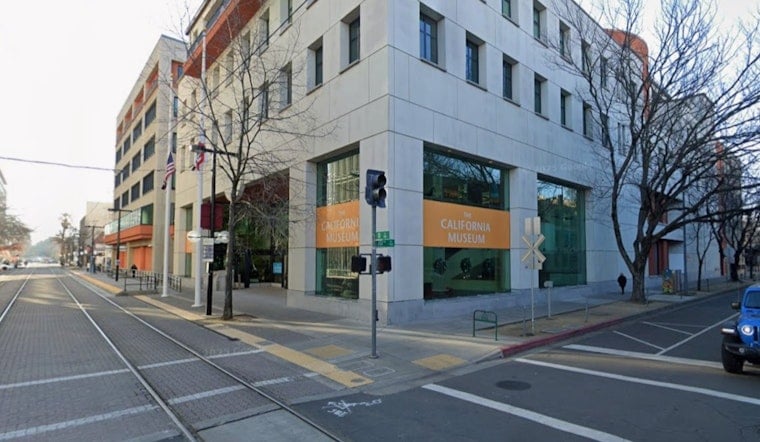
A new exhibit inside the California Museum in downtown Sacramento is putting seven decades of deportation history side by side, pairing grainy 1950s newsreel footage of federal roundups with video testimony from people detained by immigration agents just last year. Called Help Wanted/Leave Now, the show opened this week and includes the story of Vilma Palacios, a Honduran woman with no criminal record who was detained about a week before she was set to start a nursing job in New Orleans and spent six months fighting to stay in the country before agreeing to deportation.
The exhibit was proposed by Pablo Espinoza, who works in the California Assembly speaker's office, as a way to use the museum space to document what is described as America's largest-ever deportation campaign, according to Times of San Diego. Espinoza arrived in the United States from Ecuador on a student visa and previously worked at television stations in Texas, Fresno and Univision Sacramento before joining state government. He told the outlet that a detention like the one Palacios experienced could have happened to him and his son, saying, “That could have happened to me and my son because we look the part.”
A Deportation Campaign Named After a Slur
The exhibit's title nods to the Eisenhower administration's own language: federal officials in the 1950s used the racial epithet “wetback” as the official name for their deportation campaign. Under INS Commissioner General Joseph Swing, a retired Army lieutenant general appointed by President Dwight Eisenhower, the government launched what it called Operation Wetback in June 1954 using military-style roundups, claiming more than 1 million Mexican removals — though modern historical analysis, per Encyclopædia Britannica, estimates the real total closer to 300,000. The Times of San Diego reports the campaign is believed to have deported about 1 million people and focused on Latino communities across the Southwest, with immigrants rounded up indiscriminately based on appearance and accent, and the Eisenhower administration moving people quickly by packing them into boats and trucks.
The 1954 sweep didn't emerge from nowhere. The federal government had already expanded the Bracero Program, established in 1942 to address severe labor shortages during World War II, bringing laborers from Mexico into the country under a system later formalized through Public Law 78 in 1951, according to U.S. Citizenship and Immigration Services. The program created a legal pathway for farm labor even as workers outside that system remained vulnerable to expulsion. And it wasn't the first mass removal, either: during the 1930s Mexican Repatriation, federal and local governments forced between 500,000 and 2 million people of Mexican descent out of the country, with scholars estimating roughly 60% were U.S. citizens, per PBS SoCal.
A Child Deported, Then a Muralist Who Built Chicano Park
Among the exhibit's most striking stories is that of Victor Ochoa, deported to Mexico as a 7-year-old U.S. citizen in 1954 after his family, then living in East Los Angeles, was given three days to leave the United States voluntarily or await deportation. Ochoa attended schools in Tijuana before returning to San Diego, where he co-founded the Toltecas en Aztlán artists' collective and helped create Chicano Park in 1970, according to the Vilcek Foundation. He went on to become a leading Chicano movement muralist whose public art chronicled Mexican American identity and civil rights struggles.
Ochoa has since said the present-day crackdown feels meaner than the campaign that swept up his own family more than 70 years ago. His comparison sits at the center of the exhibit's premise: that this is not the first time the country has cycled between recruiting Mexican labor and then expelling it. Advocates cited by the Times of San Diego say today's immigration detainees have described crowded detention conditions and insufficient access to medical care, while text messages reviewed by the outlet indicate present-day immigration agents used slurs similar to those from the 1950s era during sweeps in Los Angeles last month.
From Nursing Job to Deportation to British Columbia
Palacios earned a degree from Louisiana State University and had a nursing job lined up when agents detained her, according to the Times of San Diego's reporting. After six months in detention fighting to remain in the country, she agreed to deportation to Honduras and has since moved to British Columbia for a hospital job. Her case appears in the exhibit alongside another personal loss tied to Espinoza's family: Adrian Espinoza died in 2024 at age 25, a detail woven into the broader narrative the exhibit tells about the human cost of immigration enforcement across generations.
The exhibit features video testimonies from people deported 71 years ago alongside people detained and deported within the past year, drawing a direct visual line between the two eras. Civil rights leader Dolores Huerta, 96, served on the exhibit's advisory council, and the show incorporates historic newsreel footage contributed by the University of North Texas archive documenting the 1954 operations. Huerta co-founded the organization that became the United Farm Workers and lived through the labor recruitment and expulsion cycles the museum now documents.
Then and Now: A Governor's Cooperation Versus a Sanctuary Law
The exhibit draws a pointed contrast between how California's government responded to deportation drives then and now. In 1954, Governor Goodwin Knight aligned state resources with the federal effort, and the director of the state's employment department wrote to the Eisenhower administration thanking officials for their “wetback drive,” according to CalMatters. Knight viewed unauthorized immigrants as a threat to American workers, arguing they depressed wages during the post-Korean War economic slowdown.
Today, California operates under Senate Bill 54, the California Values Act, passed in 2017, which restricts state and local law enforcement from using public resources to assist federal civil immigration enforcement except when individuals have specific violent or serious criminal convictions, per the ACLU of Southern California. That legal wall has pushed federal authorities to find workarounds: the U.S. Department of Justice's Operation Guardian Angel, launched in Southern California in May 2025, has obtained federal arrest warrants for incarcerated individuals to bypass state sanctuary protections, yielding 362 federal custody transfers through this month. President Trump has promised his immigration crackdown would exceed the 1950s campaign in scale, after saying in 2024 that immigrants were taking away American jobs.
Community Response Beyond the Museum Walls
The tension between federal enforcement and local protections has already reshaped daily routines in some California communities. Los Angeles educators organized community safe-passage walks and emergency response trainings this month following federal enforcement actions near local campuses, Hoodline previously reported, including an incident last August where agents handcuffed a disabled student outside Arleta High School that led to a $1 million administrative claim filed against federal agencies by the student's family.
Help Wanted/Leave Now runs at the California Museum in Sacramento through January 10, 2027, after which it is set to become a traveling exhibit shown at institutions across the country, according to CALÓ News. The exhibit was developed over more than a year to present a bilingual history of Mexican labor recruitment and deportation, offering visitors a chance to weigh a recurring pattern in American immigration policy against the raids still unfolding in California neighborhoods today.



