

























































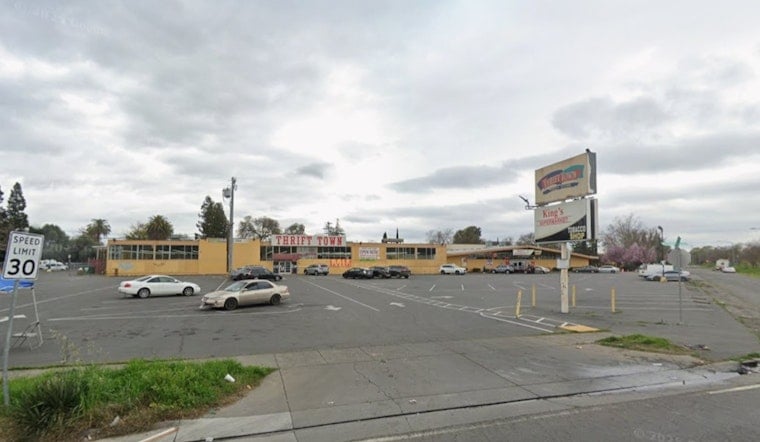
Valley Thrift Town, the Sacramento secondhand store forever tied to Greta Gerwig's Oscar-nominated film “Lady Bird,” will close its doors at the end of August after being sold to new owners who have not been publicly identified. The store, located at 410 El Camino Avenue, has been a fixture of the city's retail landscape and pop-culture map for years, but its run is now coming to an end.
According to The Sacramento Bee, the store was sold in July 2026, per store operator Neeko Lalkakos, though Lalkakos declined to identify the buyer or provide a reason for the sale. Lalkakos and his family, along with a group of employees, had purchased the business from original operator Norquist Salvage in 2021 and rebranded it as Valley Thrift Town after it had operated for decades simply as Thrift Town.
The store's connection to “Lady Bird” is central to its local fame. Gerwig's 2017 film, which starred Saoirse Ronan and was primarily filmed in Sacramento, included the thrift shop in key scenes where Ronan's character and her onscreen mother shop for a Thanksgiving outfit and a prom dress. The film's success turned the store into something of a pilgrimage site, with fans making self-guided stops there alongside other Sacramento film locations like the McKinley Park Rose Garden and Tower Theatre, according to Visit California.
A Store That Already Survived One Near-Death
This is not the first time the location has faced closure. The Bee's report notes that Thrift Town faced a sudden shutdown after a drop in business during the peak of the COVID-19 pandemic, when the chain also closed locations in El Sobrante, Carmichael and South Sacramento. The El Camino Avenue store went dark before Lalkakos and his group of employees bought it and reopened it in 2021 as Valley Thrift Town.
That reopening brought a resurgence in business, the outlet reports, with the store known locally for steep markdowns — clothing, shoes and bags discounted 85% off, jewelry cut 50%, and every book in stock priced at a flat one dollar. The shop has operated daily from 10 a.m. to 6 p.m. Those bargain-hunter habits helped rebuild the store's customer base after its pandemic-era brush with extinction, a turnaround that now makes its second, apparently final closure sting more for longtime shoppers.
The Sacramento closure fits into a longer pattern for the broader Thrift Town chain, which was founded in 1972 by Bud and LaVey Norquist along with Steve Moore and eventually grew to as many as 15 stores across California, Texas and New Mexico, according to Sortfolio. The chain's flagship 45-year-old Mission Street store in San Francisco closed permanently in March 2017 due to rising overhead and falling revenues, even after the property owner offered a rent reduction, as Capp Street Crap reported at the time. That San Francisco location had raised more than $23 million for charity during its run.
Thrift Chains Under Pressure Statewide
Sacramento saw its own contraction two years before the pandemic hit. Thrift Town shuttered its Fair Oaks Boulevard store in Carmichael and its Stockton Boulevard location in South Sacramento in early 2019, citing declining sales and rising operational expenses, with Goodwill later leasing the Carmichael building, per ABC10. At the time, management pointed to rising labor costs, higher costs of goods, and growing competition from digital resale platforms like ThredUp as forces squeezing physical thrift retail.
Those pressures have only intensified. Even as brick-and-mortar shops struggle, the secondhand market overall has boomed: Capital One Shopping and ThredUp estimate the U.S. secondhand market reached $56 billion in 2025 and $61 billion in 2026, with online resale growth driven heavily by Gen Z and Millennial shoppers — 83% of Gen Z consumers report thrifting or wanting to thrift. Physical thrift stores have still found some tailwind of their own; an IBISWorld report estimated the industry at $13.7 billion in 2026, growing roughly 2.0% annually as tariff-driven apparel price hikes of up to 40% pushed more price-conscious shoppers toward secondhand racks.
New State Rules Reshape the Textile Industry
California has also moved to reshape how used clothing flows through the state. In 2024, lawmakers enacted SB 707, the Responsible Textile Recovery Act, the nation's first extended producer responsibility law for textiles. Under the law, apparel brands and retailers must register with the state-approved organization Landbell USA by July 1, 2026, to help fund recycling and reuse infrastructure, according to CalRecycle, which selected the administering body in February 2026.
For now, Sacramento shoppers have only a few weeks left to browse the aisles that once stood in for a mother and daughter's shopping trip on the big screen. Hoodline previously ranked it among the city's best thrift stores, and once again flagged its “Lady Bird” cameo in a Halloween shopping guide. When Valley Thrift Town closes at the end of August, it will end an unusually long second act for a store that outlasted a pandemic scare, only to close under ownership that has yet to explain its plans.





