

























































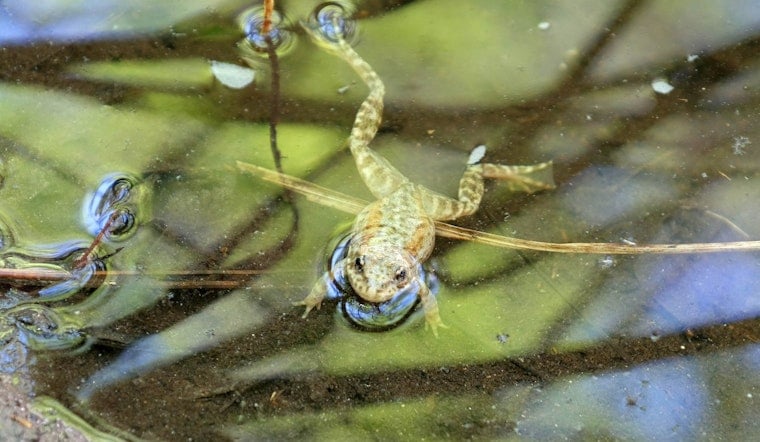
More than 3,000 endangered mountain yellow-legged frogs and tadpoles were released into the San Bernardino and San Jacinto mountains in 2026. The frogs, bred in captivity, now face the same gauntlet of threats — wildfire, disease, drought and introduced predators — while the species' wild population has declined by 98 percent.
The release was led by the San Diego Zoo Wildlife Alliance, working alongside a wide network of partners that includes the California Department of Fish and Wildlife, the U.S. Fish and Wildlife Service and the U.S. Geological Survey, according to Fox 5 San Diego & KUSI News. The frogs and tadpoles were bred through a conservation breeding and reintroduction program that has operated out of the Alliance's Beckman Center for Conservation Research since 2006. Since that program began, the Alliance has released more than 10,000 mountain yellow-legged frogs and tadpoles into high-elevation mountain habitats.
This year's push builds on a 2025 milestone: conservation organizations teamed up to release 350 mountain yellow-legged frogs at Bluff Lake in the San Bernardino Mountains, according to San Diego Zoo Wildlife Alliance. Omaha's Henry Doorly Zoo and Aquarium has also partnered on the effort, having participated in the Alliance's November 2023 release of more than 70 frogs into a San Bernardino Mountain lake — the first time the southern California population was reintroduced into a lake habitat instead of a mountain stream.
A Species Pushed to the Brink
The scale of this year's release only makes sense against the backdrop of how close the mountain yellow-legged frog came to disappearing entirely. The southern California distinct population segment of the species was listed as endangered under the federal Endangered Species Act in July 2002, with the U.S. Fish and Wildlife Service publishing a final recovery plan in December 2018. Research published in the USGS Publications Warehouse reported that wild populations had dropped to fewer than 200 adult frogs.
Part of what makes the species so vulnerable is its life cycle. Tadpoles are exposed to multi-year droughts and non-native predator fish like introduced trout, per the California Department of Fish and Wildlife. Adults do have one unusual defense: they emit a strong garlic-like odor when handled or threatened by predators, according to the Los Angeles Zoo and Botanical Gardens.
Science Race Against Chytrid Fungus
Disease remains one of the biggest hurdles standing between these frogs and long-term survival in the wild. Researchers at the San Diego Zoo Wildlife Alliance are testing a priming strategy that exposes frogs to the deadly chytrid fungus and then treats them with anti-fungal medication before release, an effort meant to prepare their immune systems for pathogens they will encounter once they're back in mountain habitats. The broader effort includes lake releases and experimental fungal treatments intended to boost post-release survival odds.
Even so, experts caution against reading the recent wave of large releases as a sign the crisis has passed. According to the IUCN Green List 2024 report, cited by Mongabay, scientists consider a full recovery of Southern California's mountain yellow-legged frogs unlikely within the next decade. Mass releases are being framed less as a finish line and more as an urgent effort to prevent complete extinction while threats like chytrid fungus, drought and invasive trout continue to persist.
A Regional Recovery Network
San Diego's effort isn't happening in isolation. A parallel recovery program led by the Los Angeles Zoo and the U.S. Geological Survey has released over 6,000 zoo-bred progeny into the neighboring San Gabriel Mountains since that project launched in 2007. Hoodline previously covered nearly 700 frogs released into those mountains in 2025 as part of that ongoing collaboration.
There's also a broader recovery effort underway. Scientists caution that the broader fight to save the species is far from finished.



