

























































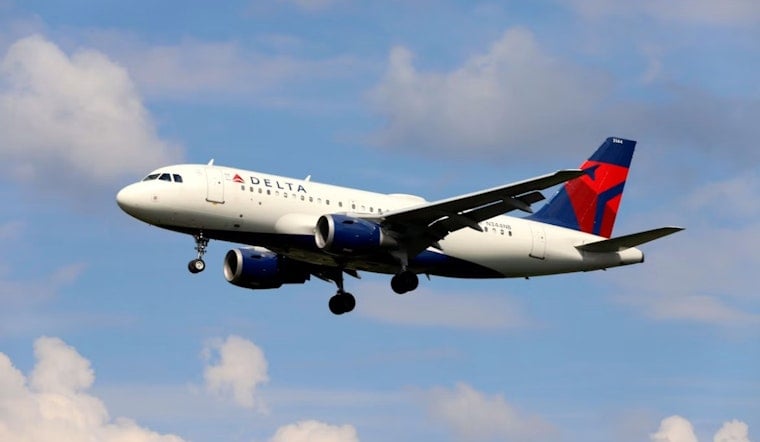
A Delta Air Lines captain flying from Los Angeles to Boston radioed Detroit Metro Tower himself Tuesday to say he was the one experiencing a medical emergency, then landed the Boeing 757 safely before heading to the hospital. The transcontinental flight, Delta 437, diverted to Detroit Metropolitan Airport after the captain fell ill mid-flight, and air traffic control audio captured him taking the unusual step of narrating his own condition over the radio.
“This is the captain, I'm the one that's ill. I'm gonna taxi the jet to the gate, and then I need to go to the hospital,” the captain told controllers before touching down on runway 22L, according to audio reported by One Mile at a Time. The aircraft, a Boeing 757-200 registered as N707TW, taxied without further trouble to gate A10 after landing. As CBS News Boston reported, the captain said over the radio that he needed to get to a hospital.
Delta confirmed the jet landed without incident and was re-crewed with a replacement pilot before continuing on to Boston, per KFBK News Radio. The station notes Detroit Metropolitan Wayne County Airport functions as a major Midwest hub for Delta, giving the airline the on-site crew resources and medical support needed to quickly resolve an inflight diversion like this one.
Two Pilots, One Safety Net
The captain's ability to remain in command and land the aircraft himself was not a matter of luck. Federal Aviation Administration rules under 14 CFR Part 121 require a minimum of two pilots on commercial flight decks specifically so a co-pilot can take over immediately if a captain becomes incapacitated, the same report notes. In this case, the captain was still able to fly and communicate, but the redundancy built into the cockpit meant the flight was never left without a qualified pilot at the controls.
That same redundancy played out differently just three months earlier. On May 23, a Delta Connection flight operated by Endeavor Air and bound for Detroit declared a medical emergency after its first officer briefly lost consciousness on final approach, forcing the captain to land the regional jet alone, according to AviationCircle. That aircraft also landed safely with no passenger injuries, a case Hoodline covered in May.
How Often Do Pilots Get Sick in the Air
Complete inflight pilot incapacitation is rare, but it is not unheard of. The FAA's Civil Aerospace Medical Institute maintains an Incapacitation Data Registry that has logged more than 1,100 cases of inflight pilot medical incapacitation and impairment across U.S. aviation history, according to the agency's own research. Just two months before the Delta 437 diversion, an Air Canada regional flight traveling from Newark to Halifax diverted to Boston Logan International Airport on June 25 after its captain suffered a medical emergency and was removed from the cockpit, leaving the first officer to complete the landing, as reported by KRDO.
Commercial captains are subject to strict, recurring medical screening meant to catch problems before they reach the cockpit. Under FAA Part 67 regulations, captains must hold a First-Class Medical Certificate, which requires re-examination every six months for pilots 40 and older, or every 12 months for pilots under 40, per the Federal Aviation Administration. Even so, those exams do not catch everything: FAA medical examination data compiled by Spitfire Elite shows First-Class applicants faced a 6.2% initial denial rate in 2023, a 23% increase from 2019 levels, driven mainly by cardiovascular, metabolic, and mental health conditions.
What specifically caused the Delta captain to fall ill during Tuesday's flight has not been disclosed, and it remains unclear whether the FAA will review the incident under its standard medical certification reporting protocols. What is clear is that the safeguards built into commercial aviation, from the two-pilot rule to Delta's hub infrastructure at Detroit, functioned as designed, and the flight reached the ground without injury to anyone aboard.





