

























































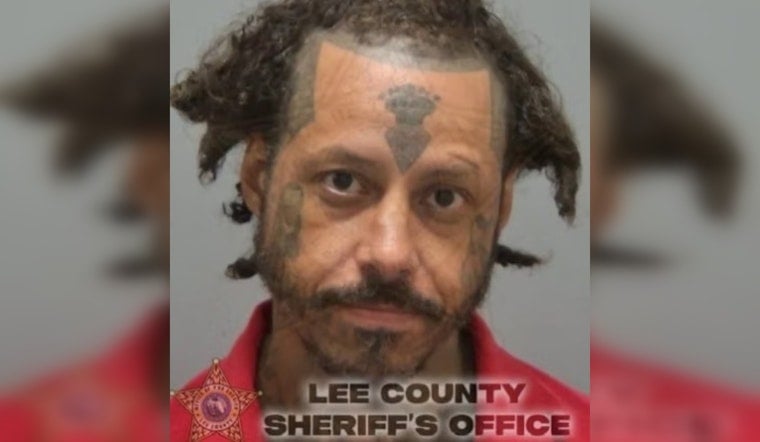
A hidden grave in the woods behind a South Fort Myers elections office has led to a murder arrest, nearly five months after skeletal remains were first discovered on the property. Lee County Sheriff's Office deputies say 44-year-old Gabriel Carlo Leon-Torres is now facing second-degree murder charges in connection with a death that began, quietly, as a missing person report.
According to the Tampa Free Press, investigators uncovered the skeletal remains behind the Lee County Elections Center facility, and the Lee County Sheriff's Office Major Crimes Unit arrested Leon-Torres in connection with the homicide. The Lee County Elections Center's South Fort Myers Branch Office sits at 13180 S. Cleveland Ave., where it functions as a primary administrative hub and early voting precinct for county residents, according to the Lee County Supervisor of Elections Office.
Major Crimes Unit deputies first opened a death investigation in the wooded area behind the elections center property on March 27, 2026, per Gulf Coast News. That means the case sat open for nearly five months before an arrest was announced. The Lee County Sheriff's Office publicly announced Leon-Torres's arrest on August 14, 2026, following DNA and forensic identification of the remains, as WINK News reported.
A Missing Person Report That Became a Homicide Case
The case originated with a report of a missing person, per the Tampa Free Press account, before it developed into an active homicide investigation. The District 21 Medical Examiner's Office, which serves Lee, Hendry, and Glades counties, confirmed the remains belonged to the reported missing man and classified the manner of death as a homicide, according to the same reporting. The medical examiner's office conducts forensic identification and cause-of-death determinations for homicide cases across the district, per the Florida Senate.
Leon-Torres now faces a charge of tampering with physical evidence in addition to second-degree murder, the Tampa Free Press reported. Under Florida Statute § 918.13, tampering with physical evidence by altering, concealing, or removing items to impair their availability to investigators is a third-degree felony punishable by up to five years in prison and a $5,000 fine, according to the Sammis Law Firm. Second-degree murder itself carries far steeper exposure: Florida Statute § 782.04(2) defines it as an unlawful killing carried out through an act imminently dangerous to another that demonstrates a depraved mind, without premeditation, and it is classified as a first-degree felony punishable by up to life in prison with a mandatory minimum of 16 and three-quarters years, per Richard Hornsby, Attorney at Law.
Sheriff Marceno Vows the Investigation Continues
Sheriff Carmine Marceno praised the investigators involved and said, per the Tampa Free Press, that they worked relentlessly to uncover the truth and build the case. He said the victim and his family deserve justice, and stressed that the case is far from over — the investigation, he said, will continue until every question is answered. Detectives are coordinating with the state attorney's office to process evidence and follow remaining leads, authorities said, and officials stated that additional updates will be provided as the investigation moves forward.
Leon-Torres arrives at this case with a lengthy criminal history. He has prior charges for kidnapping, narcotics-related offenses, and sexual battery, according to the Tampa Free Press reporting. His record also includes a federal conviction: in November 2015, a U.S. District judge in Tampa sentenced Gabriel Leon-Torres to seven years in federal prison for possessing firearms as a convicted felon, after he sold guns and illegal narcotics to an undercover informant, per the U.S. Department of Justice. Booking records also show he was arrested locally and booked into the Lee County Jail on April 19, 2023, according to Recently Booked.
A Busy Voting Site With No Ties to the Crime
Authorities have been explicit that the elections office itself has no connection to the crime — the wooded grave site simply happened to sit on the property. That distinction matters because the South Fort Myers Elections Center has been an active early voting precinct throughout the run-up to Florida's August 18, 2026 primary. More than 94,000 Lee County residents cast ballots by mail or in person across the county's twelve early voting sites through mid-August, according to the Fort Myers Beach Talk.
This is not the only case in which Lee County investigators have recently used forensic science to crack open a hidden-remains case. In July, local law enforcement confirmed that skeletal remains found by kayakers in a Cape Coral canal belonged to Rose Marie Gayhart, a woman missing since 1985, turning a 41-year-old cold case into an active homicide investigation, as Hoodline detailed in its report on the canal cold case breakthrough.
Several open questions remain unresolved in the Leon-Torres case. The identity of the victim, the exact relationship or prior connection between Leon-Torres and the man found behind the elections center, the specific cause and mechanism of death determined by the medical examiner, and how investigators built probable cause connecting Leon-Torres to the burial site have not been publicly detailed. Authorities have said only that more information will follow as the case against him proceeds.





