

























































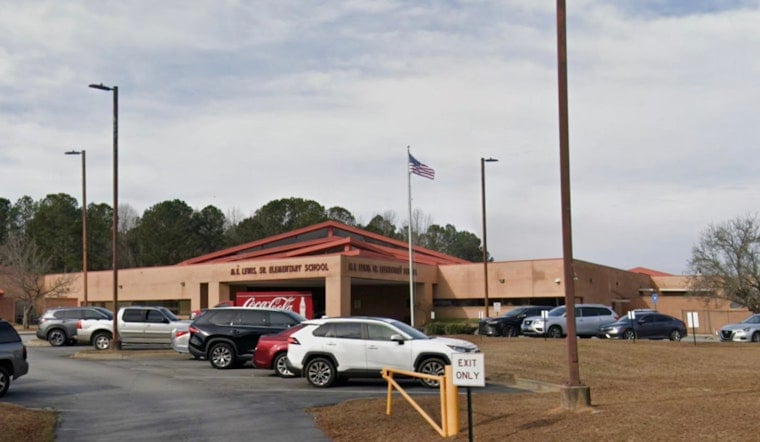
All schools and offices in the Hancock County School District closed Thursday and Friday after a suspected venomous snake was spotted inside one of the district's buildings and two black snakes were seen outside on a school campus. Interim Superintendent LaTrasha Palmer said the closures were ordered so licensed wildlife professionals could sweep every campus in the rural East Georgia district for snakes, squirrels, and other animals before students and staff return.
Palmer said she made the call jointly with the Hancock County Board of Education after the sightings, and framed it as a precaution rooted in the district's aging infrastructure. As reported by CBS News, the district's buildings are between 30 and 40 years old, and Palmer said she wanted to sweep the entire campus because of the district's rural setting and the age of its facilities. Officials say no wildlife has interacted with students or staff members. The district serves Marvin E. Lewis Elementary School, Hancock Central Middle School, and Hancock Central High School, with total enrollment of roughly 650 to 670 students, according to National Center for Education Statistics data.
What Triggered the District-Wide Sweep
The station's report notes that a potentially poisonous brown snake was reported inside a district building, while two black snakes were seen on one school campus outdoors, prompting officials to assess wildlife across the entire district rather than a single site. The district is working with licensed professionals to confirm the buildings are safe and plans to continue bringing in specialists to monitor the facilities even after classes resume. Per the same account, the district plans to send additional updates while resolving the environmental safety issue.
Not every snake spotted near a school is necessarily dangerous. Wildlife biologists with the Georgia Department of Natural Resources note that non-venomous native reptiles, such as DeKay's brown snakes and brown water snakes, are routinely mistaken for venomous copperheads, a mix-up that can trigger unnecessary alarm, according to the Georgia Department of Natural Resources. State wildlife records show Georgia is home to 47 native snake species, but only six or seven are venomous, with the Eastern Copperhead the most commonly encountered venomous species near human habitats in rural and suburban areas.
Why Non-Venomous Snakes Can't Just Be Killed
Any snake identified as non-venomous during the sweep can't simply be exterminated. Under Georgia Code O.C.G.A. § 27-1-28, all native non-venomous snakes are protected state wildlife, and capturing, killing, or harming them without specific state authorization is a misdemeanor punishable by fines up to $1,000, according to Georgia Department of Natural Resources guidance. That means any commercial wildlife control operators hired to inspect or clear Hancock County's campuses must hold a state-issued Nuisance Wildlife Control permit, which requires passing a state exam on humane trapping and relocation, per the Georgia Department of Natural Resources Law Enforcement Division.
Georgia Department of Agriculture rules governing pest management in public schools also restrict how aggressively crews can treat the buildings while students or staff might be present. Chemical pesticide applications are prohibited when people are in the buildings, and a minimum three-hour restricted entry interval follows any structural pest control treatment, according to Beyond Pesticides. That regulatory framework helps explain why the district opted for a full physical sweep and exclusion effort rather than a quick spraying while classes were paused.
An Aging District in a Struggling Rural County
Hancock County is a small, heavily wooded jurisdiction in central East Georgia with a population of approximately 8,682 residents. The county seat of Sparta, where the district is headquartered, has a 47% poverty rate and a median individual income of roughly $20,424, per U.S. Census Bureau data. Facility upkeep has been an ongoing concern for district leadership; during its April 2026 Board of Education retreat, Hancock County Schools met with SRJ Architects to review capital improvement projects and maintenance needs across its aging buildings, according to the district's own retreat materials.
Georgia law gives the district some breathing room to handle the closures without financial consequence. Under O.C.G.A. § 20-2-168(c)(3) and State Board of Education rules, local districts can cancel up to four instructional days per school year for emergencies or natural disruptions without scheduling make-up days or losing state funding, according to the Georgia Department of Education. If everything goes to plan, Hancock County schools are set to return to a normal schedule Monday.



