

























































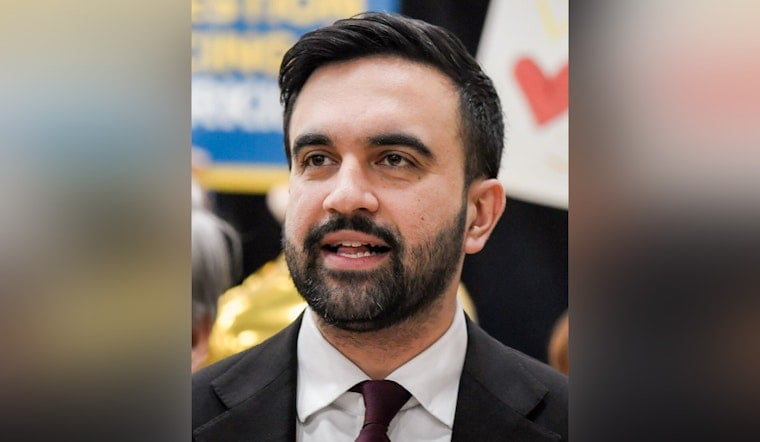
Mayor Zohran Mamdani has dismantled the Mayor’s Fund’s entire business-heavy advisory board, booting executives from Blackstone, Citigroup, REBNY, BD Hotels and GFP Real Estate in the sharpest sign yet that his administration wants City Hall’s private-sector philanthropy to look very different. The shake-up puts a crucial question in focus: can Mamdani remake the fund without weakening the business relationships that help pay for city programs?
According to New York Post, the advisory board was disbanded in full, removing Alex Katz of Blackstone, James Whelan of the Real Estate Board of New York, Edward Skyler of Citigroup, Richard Born of BD Hotels and Jeffrey Gural of GFP Real Estate. The move reportedly marks the first time in at least three mayoral administrations that the entire panel has been cleared out, with replacements expected later in 2026.
Mamdani’s Fund Overhaul Replaces Corporate Access
The move follows Mamdani’s April overhaul of the fund’s governing Board of Directors. The NYC Mayor’s Office said the new leadership would focus less on corporate leadership and more on working New Yorkers and community advocates, including a Bronx public school teacher and a UAW organizer who previously worked as a longshoreman.
The shake-up is not the same as removing the fund’s governing directors. The Mayor’s Fund says its mayor-appointed Board of Directors manages the organization, while a separate Advisory Board of civic and business leaders advises that board and helps connect it to private-sector partners.
That distinction matters because the fund is one of City Hall’s main public-private vehicles. It says it works with 50 city agencies and offices, 300 institutional funders and 100 community-based partners, and its history includes raising $107 million for families of rescue workers after 9/11 and $54.5 million for COVID-19 relief.
The Fund Has Millions At Stake
The fund’s official fiscal 2025 audit reported $16.4 million in total net position as of June 30, 2025, although most of that amount was restricted for specific purposes rather than sitting as unrestricted cash. The report also listed nearly $7.95 million in operating revenue from contributions and grants during the fiscal year, underscoring that donor relationships are an operational concern—not merely a City Hall optics exercise.
The current board listing reflects Mamdani’s preferred mix: it includes nonprofit leaders, a public-school educator, foundation executives, a labor organizer and his chief of staff, Elle Bisgaard-Church, as chair. The board’s composition makes the administration’s governing philosophy clear even as the separate business advisory panel awaits a replacement.
A New Test For City Hall’s Business Strategy
Mamdani’s bet is that philanthropy can be redirected toward affordability, child care, public services and other priorities without relying on the old network of corporate executives. For the business community, the unanswered question is whether being shown the door from an influential advisory role changes its willingness to fund programs tied to City Hall.
The administration has thanked the departing advisers and plans to name a new panel later this year, the Post reported. Until then, Mamdani has traded a familiar business-facing donor network for a more explicitly progressive model—and placed the city’s philanthropic pipeline at the center of that experiment.





