

























































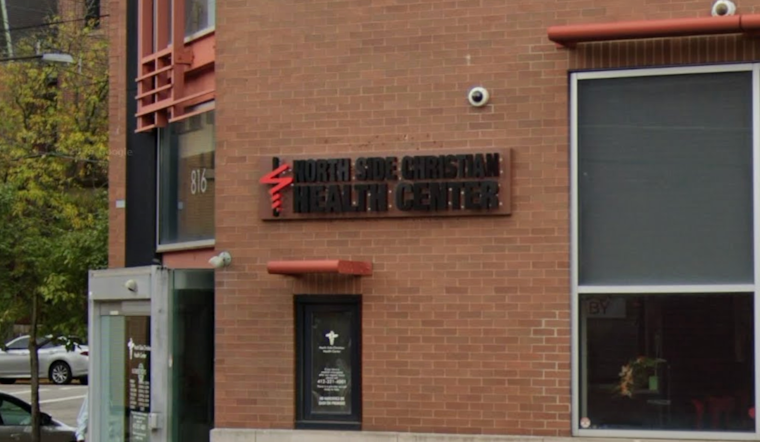
A North Side health center is betting that the next power outage will not have to interrupt care—or put a freezer full of vaccines at risk. North Side Christian Health Center has installed a solar-and-battery system designed to keep critical equipment, medical records, and patient services running during emergencies.
The Pittsburgh clinic is Pennsylvania’s first community health center to install its own solar battery system, according to WTAE. The system is expected to protect about $50,000 worth of vaccines, keep medicines refrigerated and preserve access to the center’s medical-record capabilities when grid power drops.
The Backup Is A Medical Safeguard, Not Just A Power Play
North Side Christian Health Center celebrated the project’s completion Monday with representatives from The Pittsburgh Foundation, Collective Energy, Direct Relief and Memorial Park Church, according to the health center’s event announcement. The center said the installation was funded entirely by private foundations and community organizations, turning a neighborhood partnership into infrastructure built for the next emergency.
Direct Relief provided a $175,000 resilient-power grant for the project, which is intended to protect temperature-sensitive medications and keep electronic health records accessible during outages. The organization says North Side Christian Health Center serves more than 3,800 patients each year, many of whom rely on the clinic as an affordable source of ongoing care.
Why Outage-Proofing Matters For A Pittsburgh Safety-Net Clinic
Solar panels paired with battery storage can give community health centers a cleaner backup option while helping them stay open through grid disruptions. The National Association of Community Health Centers describes these systems as a way to support energy independence and maintain reliable power for critical health services during outages.
That matters particularly here because North Side Christian Health Center says it treats patients regardless of insurance status and provides primary, dental, behavioral-health and food-access services to people across Pittsburgh’s Northside and nearby neighborhoods. A power failure at a clinic like this is not just an inconvenience; it can interrupt medication storage, shut down essential systems and force patients to find care elsewhere.
The new system will not make Pittsburgh’s electrical grid outage-proof, but it should make one local care provider harder to knock offline. For patients who already face financial or logistical barriers to care, keeping the lights—and the medical records—on is a fairly practical kind of innovation.





