

























































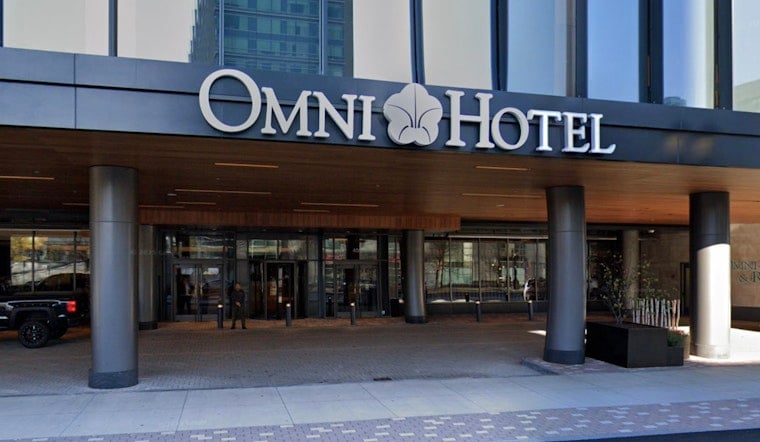
A New Jersey couple has filed a negligence lawsuit against the Omni Boston Hotel at the Seaport, claiming a restaurant server left an open cup of hot coffee directly in front of their 14-month-old son, who then suffered second-degree burns across his abdomen, thighs and ankle when the beverage spilled into his lap.
Ryan and Natalia Broderick, who reside in Wyckoff, New Jersey, filed the suit against the hotel at 450 Summer Street, as reported by Universal Hub. According to the suit, a restaurant employee placed an open vessel of hot coffee directly in front of the Brodericks' son, Henry, and within his immediate reach, then failed to safely position the drink or provide a sufficient warning before creating the danger. The case, filed in Suffolk Superior Court under case number 2684cv02538, alleges the hotel knew or should have known that hot coffee can cause serious and painful burns and that young children may reach for objects placed before them.
What Happened at the South Boston Hotel Restaurant
Boston EMS transported Henry to Massachusetts General Hospital, where, per the suit's account, he was diagnosed with a second-degree abdominal-wall burn, blistering, infection, and likely residual scarring or discoloration. The hospital treated him for second-degree partial-thickness burns to his abdomen, thighs and ankle, the filing states. MGH operates the Lester and Nancy Fraser Outpatient Burn Center and the Sumner M. Redstone Burn Center, working with Shriners Children's Boston to run New England's longest-running American Burn Association-verified pediatric burn center, according to Massachusetts General Hospital.
The lawsuit also charges that the hotel negligently failed to train restaurant staff on the risks posed by hot beverages to young children, the suit alleges. The Omni Boston Hotel at the Seaport is a $550 million, 1,054-room dual-tower property that opened in September 2021 as the largest new hotel project built in Boston in decades, operating seven food and beverage venues, according to a release from PR Newswire. It was built as a major convention headquarters property across from the Boston Convention and Exhibition Center.
Why a Toddler's Skin Burns So Much Faster
Young children under age 5 have significantly thinner skin than adults, and exposure to liquids heated to 140 degrees Fahrenheit can inflict a full-thickness third-degree burn requiring hospitalization in as little as three to five seconds, according to research from the Children's Hospital of Philadelphia. Commercial food service operations traditionally brew and serve hot coffee between 180 and 190 degrees Fahrenheit to meet industry flavor standards, even though medical consensus shows liquid at that temperature causes severe third-degree burns in under three seconds, per research from Public Citizen.
Scald burns from hot liquids or steam account for 58% to 61% of all pediatric burn admissions nationwide, with toddlers under age 5 facing the highest overall risk, per data from the American Burn Association. A study of national emergency database records published in the Journal of Burn Care & Research found that while pediatric burns from cooking appliances declined, scald injuries caused by toddlers grabbing or pulling non-appliance hot containers off tables increased by 80.7% over a ten-year period.
The Legal Fight Ahead
Massachusetts premises liability law classifies restaurant patrons as business invitees, meaning operators owe them the highest legal duty of care, including maintaining safe conditions, performing regular hazard checks and warning customers of non-obvious dangers, according to guidance from the Commonwealth of Massachusetts. The Omni Boston Hotel at the Seaport must answer the lawsuit by December 23, 2026.
Any recovery could hinge on the state's modified comparative negligence rule. Under Massachusetts General Laws Chapter 231, Section 85, an injured plaintiff can recover damages only if they are found 50% or less at fault for the incident — meaning that if a jury attributes 51% or more of the blame to the Brodericks for how closely they were supervising Henry, damages would be barred entirely, per the statute maintained by the 194th General Court of the Commonwealth of Massachusetts. Defense strategies in similar scald cases frequently invoke that 51% bar, arguing that a parent's failure to keep a child away from a beverage constitutes the primary negligence, while plaintiffs counter that placing an open vessel of 180-degree-plus coffee within a 14-month-old's direct reach breaches a restaurant's heightened duty to its guests.
Part of a Broader Wave of Hot Beverage Suits
The Broderick filing lands amid a mounting number of hot beverage injury lawsuits nationwide this year. An Allston cafe patron filed a similar hot-tea burn lawsuit on August 20, and separately, a San Diego oil executive sued Starbucks over hot tea burns to his genitals, while a flight attendant filed a federal suit in March over an exploding hot coffee package on an airline flight, Hoodline previously reported in its coverage of the Starbucks tea burn suit. That pattern of litigation traces back to the 1992 New Mexico case Liebeck v. McDonald's Restaurants, which established national legal precedent for hot beverage liability after a jury awarded punitive damages upon finding the chain knowingly served 180-to-190-degree coffee that caused severe third-degree burns, according to FindLaw.





