

























































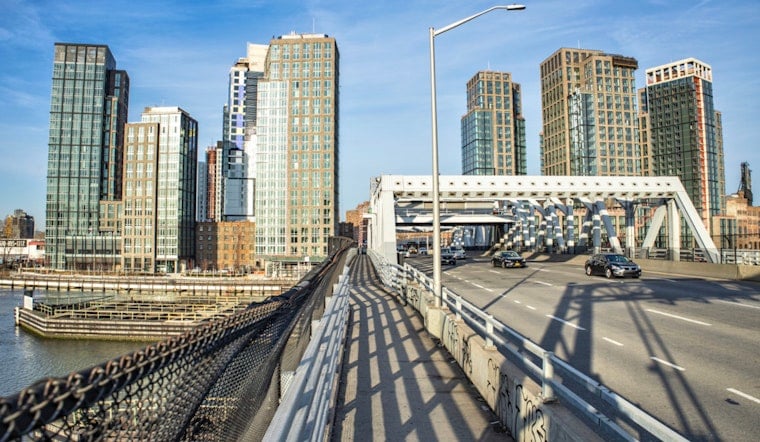
Cranes now rise over Mott Haven where burned-out lots once sat, and new apartment towers line the Harlem River in a stretch of the South Bronx that spent decades as shorthand for urban decay. The borough is undeniably changing, with fresh development sparking hope in some corners and deep anxiety in others over who actually gets to stay for it.
As reported by the Bronx Times, the borough is no longer burning the way it was during the 1970s, when arson fires gutted entire blocks and the Bronx became an international symbol of urban blight. That history still shadows the neighborhood's present, even as Mott Haven fills in with new apartment and office buildings that would have been unthinkable a generation ago.
Much of that history traces back to the Cross Bronx Expressway, built between 1948 and 1963 under urban planner Robert Moses. According to the U.S. Department of Transportation, the highway's construction displaced an estimated 40,000 residents and physically cut through established working-class communities, setting off decades of economic decline. The Bronx Times reports that the expressway drove out tens of thousands of people and was built straight across neighborhoods that had once been vibrant, contributing to poverty that lingers in Bronx communities today.
A Highway's Legacy Meets a New Repair Plan
Federal and city officials are now trying to undo some of that damage. The NYC Department of Transportation unveiled proposals in October 2024 to partially cap sections of the Cross Bronx Expressway with public parks and pedestrian decks, building on a planning study backed by a $2 million federal USDOT grant awarded in December 2022, according to NYC.gov. The highway has concentrated severe asthma and air quality problems in surrounding neighborhoods for more than 60 years, per the same city announcement.
Hoodline has previously reported on parents' health worries tied to the looming repair work, and a deadly pre-dawn crash in April underscored the safety hazards that still plague the corridor. Nearby, officials steered $15 million in congestion pricing toll revenue toward replacing nearly 1,000 diesel transport refrigeration units at the Hunts Point Produce Market with hybrid and electric models, a move Hoodline covered in April aimed at cutting the fine-particulate pollution that idling trucks have long generated in the area.
Billions in Towers and Trains, But Who Benefits?
The scale of new investment is hard to overstate. Brookfield Properties' $950 million Bankside development in Mott Haven spans 4.3 acres along the Harlem River and includes 1,350 apartments across seven towers, with market-rate units renting from $3,200 to over $4,500 a month, according to 6sqft. About 30% of Bankside's units were set aside as rent-stabilized, middle-income housing distributed through city housing lotteries, per the same report.
Transit is expanding just as aggressively. The MTA's $2.9 billion Penn Station Access project is building four new Metro-North stations in the East Bronx — at Hunts Point, Parkchester/Van Nest, Morris Park, and Co-op City — promising to cut commute times to Manhattan by up to 50 minutes, as reported by Engineering News-Record. Completion has slipped to 2030 after track-outage scheduling friction between the MTA and Amtrak caused multi-year timeline shifts, the outlet notes. In August 2024, the New York City Council approved the Bronx Metro-North Station Area Plan, pairing that transit build-out with $500 million meant to create nearly 7,000 new housing units — including 1,700 permanently income-restricted units — and an estimated 10,000 local jobs around the coming stations, according to the NYC Department of City Planning.
The Affordability Gap Behind the New Skyline
All that investment collides with a borough where affordability was already stretched thin. Bronx County's median household income sat at $48,676 in 2024 with a poverty rate of 27.8%, according to the U.S. Census Bureau — roughly half of New York State's statewide median of over $85,000. A 2025 housing study by the Institute of Global Politics found more than 57% of Bronx renter households spend over 30% of their monthly income on housing, while New York City's overall rental vacancy rate had dropped to 1.4% by 2023, the lowest level recorded since 1968.
Research from Herbert H. Lehman College found the Bronx consistently registers the lowest homeownership rate, lowest median income, and highest rate of SNAP benefit dependency among the city's five boroughs, with some South Bronx census tracts recording median individual incomes below $16,000. As the Bronx Times' reporting makes clear, new Bronx development has sparked gentrification that developers are pursuing with millions of dollars, aiming to generate more economic activity for the borough — even as that same development brings real challenges for longtime residents seeking affordable housing, since gentrification tends to push up rents and drive away people who have lived in the Bronx for decades.
SoBro, Piano District, and the Fight Over a Name
Nowhere is the tension more visible than in the branding battles over what to call these neighborhoods. Real estate marketers have pushed labels like “SoBro” and the “Piano District” to rebrand the South Bronx and attract new residents, according to the Bronx Times, but the effort has a fraught history. In 2015, developers hosted promotional events referencing 1970s arson fires and urban decay, sparking widespread local backlash and community boycotts, as detailed by the Observer. Mott Haven had actually been known historically for its 19th-century piano manufacturing industry, a detail advocates say gets lost when the neighborhood's harder history is used as marketing shorthand instead.
For community advocates, these rebranding efforts aren't harmless — they're seen as attempts to erase local history in service of attracting higher-income transplants. The Bronx Times' framing of the moment is direct: new development should leave no Bronx residents behind. Whether that's achievable remains an open question as luxury towers, new train stations, and cleaner produce-market trucks reshape a borough where, for many families, the rent increases arrive faster than the paychecks do.





