

























































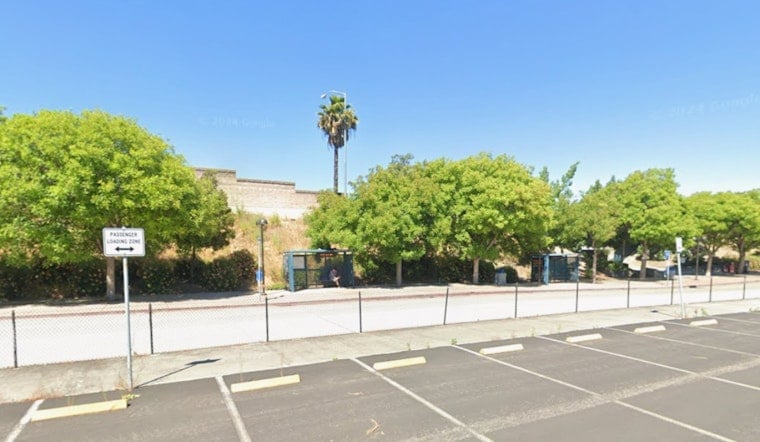
A developer that spent years planning market-rate apartments next to San Jose's Blossom Hill light rail station has filed new paperwork proposing something very different: 165 apartments for seniors, complete with assisted living and memory care services, on land the Santa Clara Valley Transportation Authority owns near the interchange of State Route 85 and Blossom Hill Road.
Republic Urban Properties, working alongside Swenson Builders and EAH Housing, submitted the preliminary senior housing proposal to the San Jose Planning Department, according to The Mercury News. Michael Van Every, president and managing partner of Republic Urban Properties, told the outlet the development team is seeking feedback from the city as it works through the concept, and he pointed to strong demand, noting a good market for senior assisted living in the area. The site sits at 605 Blossom Hill Road in South San Jose, a short walk from the Sunrise Plaza shopping center and Westfield Oakridge Mall, per details from EAH Housing.
A Long-Planned Site Changes Course
The VTA board picked Republic Urban Properties' joint venture, then known as Green Republic Blossom Hill LLC, back in March 2019 to redevelop the 7.59-acre parking lot at the station, and the parties signed a ground lease the following year. The city fully entitled a different vision for the site in August 2022, when the San Jose City Council approved a $118 million master plan calling for 328 total apartments — 239 market-rate units in a six-story building and 89 affordable units in a five-story building — plus more than 13,500 square feet of ground-floor retail.
That approved affordable component has not gone away. San Jose's Planning Director signed off on design tweaks to the 89-unit EAH Housing building in May, trimming its height from 70 feet to 63 feet and cutting parking from 51 spaces to 44, according to the report from the Registry. EAH Housing remains designated to build that deed-restricted building on its own parcel, with 21 studios, 28 one-bedroom, 27 two-bedroom, and 13 three-bedroom units set aside for households earning between 30% and 60% of Area Median Income.
What Happens to the Market-Rate Building
The Mercury News reports that a second apartment building is still being planned next to the proposed senior living site, meaning the market-rate component from the 2022 approval has not been formally scrapped even as the senior housing concept moves forward. The project site has, at various points, included proposals for two residential buildings near Blossom Hill Road, along with a smaller surface parking lot near the station itself. VTA has said it will lease the land beneath the buildings to the development group only if both residential projects move ahead.
That structure leaves an open question the dossier does not resolve: how the newly proposed senior building would interact with the standalone affordable family building, and whether the overall unit counts, ground-lease revenue, and VTA's affordability requirements would hold across the full 7.59-acre site. Under VTA's Transit-Oriented Communities Policy, updated in 2022 and 2024, at least 25% of housing units on VTA-owned land must be deed-restricted for households earning 60% or less of Area Median Income, with a portfolio-wide target of 40%, according to Mass Transit.
Riding Santa Clara County's Silver Tsunami
The pivot toward senior housing tracks with demographic pressure building across the county. Santa Clara County's population aged 65 and older reached roughly 300,600 residents, or 16.3% of the total population, by July 2025, with county health officials projecting more than a quarter of residents will be 60 or older by 2030, per the Los Gatan. Local planners have taken to calling the shift Silicon Valley's “Silver Tsunami.”
Cost pressures on older renters help explain why developers see an opening. A UMass Boston Elder Index analysis found the annual cost of living independently for older renter couples in the San Jose metro area hit $54,984 in 2020, the highest figure among all 100 major U.S. metros the study examined. Hoodline has previously reported on investor demand for South San Jose senior properties tied to this same demographic wave, including major acquisitions in Willow Glen and elsewhere in South San Jose.
Part of a Broader VTA Housing Push
Blossom Hill is one piece of a much larger VTA effort to turn underused parking lots into housing near transit. The agency's transit-oriented development portfolio spans 28 agency-owned properties totaling more than 200 acres across Santa Clara County, with over 1,600 residential units in construction or pre-development as of its FY 2026-2027 biennial budget. VTA relies on long-term ground-lease revenue from these projects to help offset transit operating costs.
Other stations show what a completed project looks like. In February, developers opened the 135-unit, 100% affordable Tamien Station Apartments at 1221 Lick Avenue in San Jose, a finished example of housing built on VTA land elsewhere in the city. San Jose has also moved forward on financing for another VTA-adjacent project, cutting an $8.4 million deal for affordable homes near the Capitol light rail station.
Traffic Safety Along the Corridor
Any added density at Blossom Hill Road arrives on a stretch of roadway the city has flagged for safety concerns. San Jose has designated Blossom Hill Road a Vision Zero Priority Safety Corridor because of a high concentration of severe and fatal traffic collisions, which account for roughly 46% of all killed or severely injured traffic victims citywide. City and regional traffic safety programs have focused on lane adjustments and crosswalk upgrades along the corridor, an issue that came into sharp focus after a pedestrian was critically injured in a late-night crash near Oakridge Mall earlier this month.
For now, the senior housing concept remains a preliminary filing under city review, with Van Every and his partners still gathering input from San Jose planners before any formal entitlement process begins. Whether the project ultimately replaces, supplements, or coexists with the market-rate building approved in 2022 is a question the current filings do not yet answer.




