

























































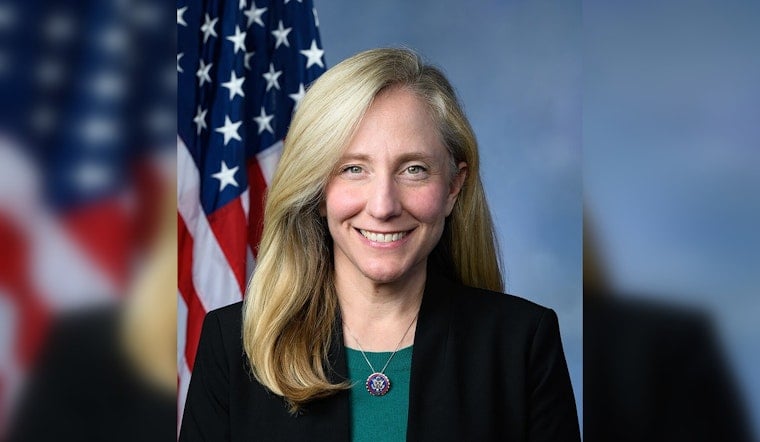
Governor Abigail Spanberger has ordered Virginia agencies to prevent eligible residents from losing Medicaid coverage and food assistance as sweeping federal rule changes take effect over the next several years. The directive, Executive Order 20, comes as state officials warn that nearly 300,000 Virginians could lose Medicaid coverage simply because new verification requirements shorten eligibility checks from once a year to twice a year for expansion adults.
The order, which Spanberger announced this week, is Virginia's attempt to soften the blow from the federal law known as the One Big Beautiful Bill Act, or H.R. 1, which Congress passed last summer and President Trump signed on July 4, 2025, according to the Office of the Governor. As reported by Virginia Mercury, the law reshapes Medicaid access, food stamp eligibility, and payment mechanisms across the state, and new eligibility requirements are set to change on January 1, 2027. Virginia Medicaid currently has nearly 2 million enrollees, and a substantial number of Virginians also receive food stamps through the Supplemental Nutrition Assistance Program.
New Paperwork, Not Just New Rules, Threatens Coverage
Marvin Figueroa, a state health official quoted in the Virginia Mercury report, said the state can help reduce unnecessary coverage losses but cannot promise to keep everyone covered. He said eligible people may lose coverage not because they no longer qualify, but because of missed forms, misunderstood notices, or difficult processes, and separately noted that some people will indeed lose coverage because federal law changes who qualifies in the first place.
Figueroa described the challenge of managing overlapping changes, saying the layered rules make planning difficult. He added that the administration will communicate early, publish data, and try to fix processes that are not working, according to the same report. Virginia Medicaid enrollees will be subject to new work requirements and additional verification paperwork each year, while lawful immigrants in the state are also expected to lose Medicaid coverage under the new federal law, per the outlet.
What Executive Order 20 Actually Does
Executive Order 20 directs state agencies to expand connections to employment, volunteer, apprenticeship, job training, and educational opportunities for residents who now face work requirements. It also calls for plain-language outreach to beneficiaries subject to the new eligibility rules, public-private partnerships, and regional communications aimed at reaching vulnerable populations who might otherwise fall through the cracks.
The order also directs collaboration between agencies to steer certain populations toward a state-level subsidy for Affordable Care Act insurance, since Virginia created a program to make up for ACA subsidies that Congress allowed to expire this year. According to the governor's office, the state's 2026–2028 biennial budget backs this effort with $500 million in safety-net investments — $150 million for the ACA Marketplace premium assistance program, $225 million for a Federal Contingency Fund, and $15 million for Federally Qualified Health Centers, free clinics, and outreach staff. Virginia has also created a dashboard to track health and social services data and connect residents to resources, the Virginia Mercury report notes.
Billions in Losses Loom for State and Hospitals
State budget officials project Virginia will face between $2 billion and $6 billion annually in lost revenue starting in 2028, as federal administrative cost shifts, reduced provider reimbursements, and declining public program enrollment take full effect, according to Cardinal News. Spanberger has said the provider tax change pulls back dollars that had gone to hospitals, and H.R. 1 will scale down the provider tax mechanism hospitals have used to support some Medicaid coverage in the state.
The Virginia Hospital & Healthcare Association estimates H.R. 1's restrictions on provider assessments and state-directed payments could reduce funding to Virginia hospitals by more than $2 billion annually, with participating facilities losing an average of 16% of net revenue, per Virginia Scope. A separate threat looms from proposed Centers for Medicare & Medicaid Services regulations published in May 2026, which health officials estimate could slash state-directed Medicaid payments to Virginia hospitals by $31 billion over a decade by capping payments at 100% of Medicare rates, as detailed by a report examining the CMS proposal. Julian Walker has said the proposed rules go well beyond what H.R. 1 prescribed.
Virginia hospitals predict billions in reductions to state Medicaid funding if those proposed CMS rules are adopted, and a state watchdog report found that 13 rural hospitals may face higher risk of closure over time. Virginia hospitals have already trimmed some services in the past year, and free clinics and Federally Qualified Health Centers are bracing to absorb more uninsured patients, even as some clinics have closed in the past year — with H.R. 1 cited as a factor in both the closures and the service reductions.
SNAP Costs Shift to the State in October
Beyond healthcare, H.R. 1 also drops federal funding for SNAP administration, forcing Virginia to cover 75% of administrative expenses starting in October, up from the historical 50% state share that had previously split costs evenly between state and federal coffers. That shift adds immediate budget pressure on state social service agencies just as Virginia's departments of social services are working to streamline processes to prevent eligible people from losing health insurance or food benefits, according to 13News Now.
The Cost-Shifting Chain Spanberger Warns About
Spanberger has said keeping people covered is paramount to preventing healthcare cost burdens from growing further, warning that uninsured residents are more likely to put off preventative care and instead turn to emergency rooms, which can strain hospital budgets. Those emergency room visits can in turn lead to higher private-market insurance rates for everyone, a dynamic WVTF reported the governor connected directly to rising commercial premiums.
Before Virginia expanded Medicaid in 2019, state hospitals absorbed more than $713 million annually in uncompensated charity care based on 2018 figures, according to C-VILLE Weekly — a baseline that illustrates what could be at stake for hospital finances if safety-net rolls shrink again. The state's administration says it remains in touch with providers and regional social service workers as it tries to manage the rollout.
Virginia's approach mirrors a broader pattern taking shape nationally. Democratic governors in multiple states are issuing similar executive actions and standing up state-level subsidies to cushion residents against the same federal safety-net reductions, according to Pluribus News. Even so, Virginia officials acknowledge the state's $500 million in budgeted safety-net spending cannot fully offset the federal cuts expected to deepen after 2028.



