

























































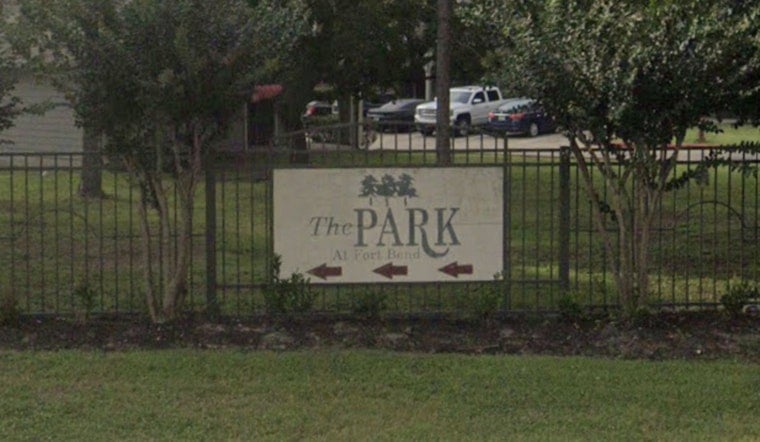
A 25-year-old apartment complex in Stafford is in the middle of a $24 million overhaul that will convert townhomes into single-story flats, add security upgrades, and lock in affordable rents for the next 30 years. Park at Fort Bend, a 250-unit property built in 2001 and spread across 20 buildings, is undergoing the renovation under Blackstone Real Estate's affordable housing division, April Housing.
The project is being financed in part through up to $55 million in tax-exempt multifamily housing revenue bonds, which Fort Bend County public records show the Fort Bend County Housing Finance Corporation authorized to fund the acquisition, rehabilitation, and equipping of the property at 3001 Dove Country Drive. As reported by REBusinessOnline, the renovation includes new appliances, countertops, flooring and fixtures inside units, along with upgrades to the resident clubhouse, fitness center, and pool area. Stafford sits as a southwestern suburb of Houston, and the property's two- and three-bedroom units are reserved for households earning 60 percent or less of the area median income.
Accessibility and Security Improvements Take Center Stage
A press release from April Housing detailed specific upgrades that weren't part of earlier announcements, including converting 10 townhome units into single-story flats to address accessibility needs. The scope also includes installing smart meters, adding a shaded playground, and introducing an ADA-accessible pool lift. Renovations are expected to take about 18 months, according to the outlet's report, and the capital improvements will extend the property's affordability status for the next 30 years.
State registry data offers a window into the construction side of the project. Project registration records with the Texas Department of Licensing and Regulation, per Zabalist, list an estimated construction cost value of $17 million for the physical alterations at Park at Fort Bend, with architectural design led by Benton Design Group. Texas requires commercial renovation projects valued over $50,000 to register for state accessibility standards compliance, making the filing a routine but telling marker of the project's scale.
Part of a Larger Blackstone-Backed Portfolio Play
April Housing was created by Blackstone Real Estate in February 2022 after the firm acquired a nation-spanning portfolio of more than 90,000 affordable housing units subject to Low-Income Housing Tax Credit regulations, according to background reported by the Commercial Observer. The company has since built a track record of using tax-exempt bond resyndications to keep older affordable properties from converting to market-rate rents once their original tax credit covenants expire. In August 2024, the outlet reported that April Housing completed its first tranche of Texas resyndications across four properties in Austin, Dallas, and Fort Worth, preserving 898 units under 30-year affordability extensions.
The Stafford project fits into a broader pattern of activity across the Houston region. In April, April Housing began a $20 million renovation of Baypointe Apartments in Webster, partnering with the Harris County Housing Finance Corporation to extend affordability for 236 families for 30 years, as detailed by Community Impact. That deal marked the company's first resyndication in the greater Houston area.
Elsewhere in Texas, the Same Playbook
April Housing has run similar projects in North Texas as well. The company completed a $20 million renovation of the 220-unit Waterford at Goldmark Apartments in North Dallas in July, while simultaneously launching a $21.5 million preservation effort at the 240-unit Mayfield Park complex in Arlington, according to the company's own announcements. Hoodline previously reported on Denton's affordable expansion plans, where April Housing applied for a property tax exemption to add 252 new units — a separate effort from the Stafford resyndication, since that project would add net new supply rather than preserve existing units.
Why Preservation Matters in a Tight Market
The stakes behind these renovations are tied to a severe regional shortage. The National Low Income Housing Coalition's 2026 Gap Report found that the Houston metro area offers only 17 affordable and available rental homes for every 100 extremely low-income renter households, making it the third-worst urban shortage in the nation, according to Texas Housers. Statewide, Axios Houston reported in July that Texas faces an overall deficit of roughly 864,000 affordable rental homes for households earning 50 percent or less of the area median income.
Cost pressures on renters have also intensified. The Rice University Kinder Institute for Urban Research reported in June that about 60 percent of Houston-area households rent their homes, while median homeowner insurance costs in Harris County jumped 17 percent in a single year. Because resyndication deals like the one at Park at Fort Bend don't add net new units to the regional supply, their value lies instead in preventing existing income-restricted properties from reverting to market-rate rents once their original affordability covenants run out.



