

























































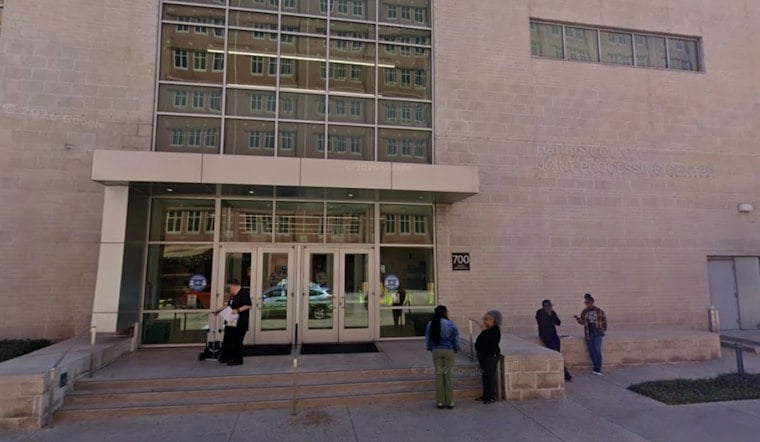
A federal judge has refused to tear up Harris County's misdemeanor bail reform system, keeping in place a policy that lets most people arrested on low-level charges walk free without posting cash. U.S. District Judge Lee H. Rosenthal denied a request from Texas Attorney General Ken Paxton to vacate the settlement, meaning the county's no-cash-bail approach for misdemeanor defendants will continue for now.
The ruling preserves the 2019 ODonnell consent decree, according to The Texas Tribune, which allows most people facing misdemeanor charges in Harris County to be released before trial without having to pay cash bail. The decree traces back to a 2016 class action lawsuit, after a federal court found that the county's previous misdemeanor cash bail system exacerbated poverty while not meaningfully promoting public safety or court appearances, per the same report. Paxton had asked Rosenthal in August 2025 to end the consent decree, pointing to Texas bail laws and a 2023 appellate ruling against a similar policy in Dallas County.
What the Consent Decree Actually Covers
The policy applies only to misdemeanor crimes, where the longest possible sentence upon conviction is one year, the Tribune's 2020 reporting noted. Roughly 28,000 people are released under the policy each year. The county's current approach dates to January 2019, when newly elected judges drastically changed local policy to let the large majority of misdemeanor defendants qualify for automatic jail release on no-cash bonds, as the Tribune's earlier coverage detailed.
A court-appointed monitor found the consent decree has not led to a rise in repeat misdemeanor offenders, and that misdemeanor arrests have declined since 2015, according to the Tribune's reporting on this week's ruling. Separately, the Tribune's 2020 report found that releasing more defendants without cash bail did not lead to an increase in arrests for reoffending within a year of the original arrest.
Research Points to Fewer Arrests and Lower Costs
Data compiled by the Houston Law Review shows the share of misdemeanor arrestees released on bond jumped from less than half before the reforms to about 80% afterward. The number of misdemeanor arrestees has also declined by more than 15% since 2015, the same analysis found, and the review reports that new charges filed within a year of an initial misdemeanor arrest have declined as well.
The same research found that bond reform reduced processing costs by $1,735 and rearrest costs by $310 for statistically similar cases. Court-appointed monitors have consistently reported reductions in the Harris County Jail's misdemeanor population since the consent decree took effect in 2019, according to Houston Public Media.
A Legal Fight With a Texas Precedent
Paxton's challenge wasn't the first of its kind. In 2023, the 5th U.S. Circuit Court of Appeals overturned a similar legal challenge involving Dallas County's cash bail system, the Tribune noted in its report on Rosenthal's ruling — a precedent Paxton had cited in pushing to unwind Harris County's arrangement. The ODonnell case itself, ODonnell et al. v. Harris County et al., was filed in 2016 as a federal class action alleging the county's bail practices for misdemeanor arrestees were unconstitutional, according to the Harris County Office of County Administration, with the parties reaching a settlement on November 21, 2019.
With Rosenthal's ruling, that settlement remains intact, and CW39 Houston reports the decision keeps Harris County's misdemeanor bail reform system in place following the Texas Attorney General's failed attempt to overturn it.





