

























































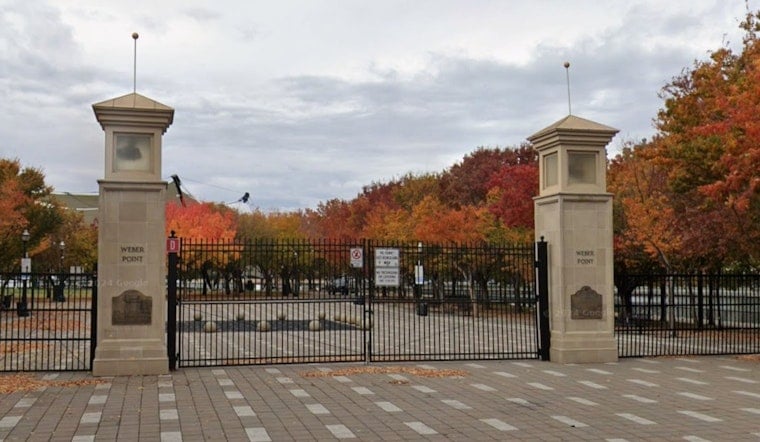
Stockton's waterfront turned into a celebration of Filipino food, music and dance Saturday as the 54th Annual Barrio Fiesta filled Weber Point Events Center from 10 a.m. to 8 p.m. The free, family-friendly festival brought food vendors, traditional performances and community activities to the downtown venue at 221 N. Center Street, drawing residents from across San Joaquin County for a full day along the water.
The event was organized as a free public gathering, according to the Downtown Stockton Alliance, which noted the festival's mix of authentic food vendors, traditional dance performances and family activities along the waterfront. Saturday's celebration was also documented by the City of Stockton, which invited residents to join the cultural festival honoring Filipino history through food, music and performances.
Behind the scenes, this year's fiesta was run by Friends of Barrio Fiesta Stockton, a tax-exempt 501(c)(3) public charity that manages and funds the event's cultural programming through community donations and corporate sponsorships. The nonprofit's role in staging and permitting the festival reflects just how much grassroots organizing goes into keeping a five-decade tradition alive year after year.
A Festival Born From Loss
Barrio Fiesta didn't start as just a summer party. The tradition dates back to 1972, when it was established to mark the opening of the Stockton Filipino Center downtown following a wave of community redevelopment, according to reporting from Stocktonia. That redevelopment era reshaped much of the city's historic core, and the festival emerged in part as a response to those changes.
The deeper history runs through Stockton's Little Manila district, which from the 1920s to the 1960s was home to the largest population of Filipinos in the world outside the Philippines, according to ABC10. By 1930, an estimated 25,000 Filipino workers were employed in San Joaquin County agriculture, forming the backbone of a community that built its own institutions downtown.
Much of that neighborhood was later destroyed. Construction of the Crosstown Freeway in the 1970s bisected Little Manila and demolished homes and businesses, according to Little Manila Rising. In 2003, the National Trust for Historic Preservation designated what remained of Little Manila one of America's 11 Most Endangered Historic Places after the freeway construction, per the same account.
Getting There and Getting Involved
To help attendees avoid parking hassles along the waterfront, San Joaquin Regional Transit District provided direct bus access on Route 545 to Weber Point Events Center on Saturday, offering a transit alternative for festivalgoers heading downtown.
Local businesses also pitched in ahead of the event. In July, Dream Ice Cream partnered with festival organizers to launch three custom Filipino-inspired flavors — Coco Pandan, Calamansi Sorbet and Ube Crinkle Cookie — donating a portion of sales to help fund festival operations, according to Friends of Barrio Fiesta Stockton.
Stockton's Legacy Reaches the Smithsonian
Stockton's Filipino American history now extends well beyond the Central Valley. Artifacts from the community, including historical lodge trunks from Little Manila's Daguhoy Lodge, are on display at the Smithsonian's National Museum of American History in Washington, D.C., through November 2027, as reported by Stocktonia. The pieces illuminate the lives of early 20th-century Filipino agricultural laborers who helped build the region's farms.
Stockton's standing as a hub for Filipino American history was further cemented in 1994, when it was chosen as the permanent national site for the Filipino American National Historical Society Museum, which opened downtown in 2015, according to the organization's national website. The city was selected because of its foundational role in Filipino labor and community history.
That legacy is reflected in the region's demographics today. San Joaquin County had nearly 800,000 residents in 2024, with foreign-born residents making up more than a quarter of the population, according to Data USA. Asian Americans represent the county's third-largest racial group, underscoring how deeply immigrant communities have shaped the area since the era that gave rise to Little Manila.
For Stockton, Barrio Fiesta remains more than a single day of festivities. It stands as a living link between the city's downtown waterfront and a history that stretches from the farm fields of the 1920s to a museum case in the nation's capital.



