

























































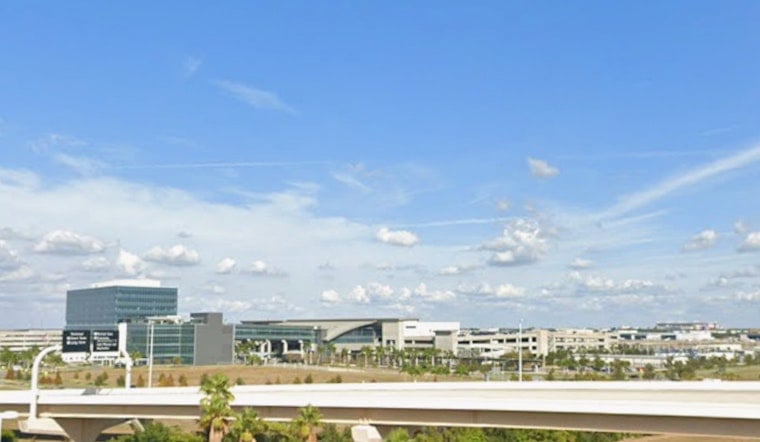
Tampa International Airport has dropped its plan to privatize the airport's security operations, walking away from a program that would have handed screening equipment and personnel over to a private contractor. The reversal comes after weeks of backlash from a federal union, a local congresswoman, and now the Transportation Security Administration itself, which scrapped the underlying program nationwide the same day.
A Program Abandoned On Both Ends
According to the Tampa Bay Times, Tampa International Airport dropped its plans to join TSA Gold+, a program that would have privatized both the airport's security equipment and its screening workforce. The timing was not a coincidence: the Transportation Security Administration announced on Sunday that it was discontinuing the Gold+ privatization effort altogether, per the same reporting. TSA Administrator David P. Cummins framed the shift as part of a broader Horizon 25 Strategy, according to a Transportation Security Administration press release, which replaces Gold+ with an evolved version of the agency's older Screening Partnership Program built around checkpoint modernization rather than full workforce privatization.
That distinction matters. The Tampa Bay Times reports that TSA Gold+ differed from the agency's original 2004 Screening Partnership Program because it would have required private contractors to manage both checkpoint technology and screening personnel, rather than privatizing the workforce alone. Under the older SPP model, only about 20 of the nation's 430 commercial airports use privatized security screening, including nearby Sarasota-Bradenton International Airport, which switched to private screeners back in 2014, as reported by WUSF.
Union Lawsuit And Congressional Pressure
TPA's privatization push had already drawn fire well before the TSA's announcement. The American Federation of Government Employees sued the federal government in Washington, D.C., alleging the TSA developed and promoted the Gold+ privatization model in secret without required statutory disclosures, according to WUSF. The lawsuit, filed August 5, added legal weight to what had already become a politically charged local fight.
U.S. Representative Kathy Castor had urged Tampa International Airport leadership to reverse course on joining TSA Gold+ in an August 4 statement, warning that replacing more than 700 federal security officers with private contractors could compromise safety and community economic security. Castor's letter, sent to airport CEO Michael Stephens and aviation board chair Chip Diehl per the Office of U.S. Representative Kathy Castor, became a rallying point for opponents worried about job losses among the airport's screening workforce. Per the Post and Courier, TSA had notified union officials in late July that Tampa International, Charleston International, and Des Moines International were the first three airports slated for the initial Gold+ rollout, making TPA's decision to drop out a blow to the pilot program's early momentum.
Leadership And Long-Range Growth Plans
Michael Stephens, who evaluated the Gold+ proposal for TPA, became the airport's CEO in 2025 as the first Black chief executive in its history, according to the St. Pete Catalyst. He rose to the role after serving as the airport's general counsel. The security decision arrives as Tampa International updates its long-range master plan for expansion and growth, a plan that potentially includes a new runway and a new airside terminal, with updated passenger projections expected to shape its final scope.
That master plan work sits alongside the airport's already underway $1.528 billion Airside D project, a 16-gate terminal slated to open in 2029 to help handle an expected rise to 35 million annual passengers by 2037, according to Routes. Hoodline previously reported on a separate overhaul of the airport's 1970s-era ticket counters, part of a push to expand self-service kiosks through late 2029. Construction crews at the Airside D site have also been testing a four-legged robotic dog named Astro since May, using it for 3D data mapping and routine site inspections as part of a pilot program with general contractor Hensel Phelps, Hoodline reported.
For now, the security screeners who staff TPA's checkpoints will remain federal employees rather than private contractors, following the outcome the union and Castor had pushed for. The bigger question of how the airport's runway, terminal, and passenger-capacity plans will take final shape remains tied to those still-evolving passenger projections.





