

























































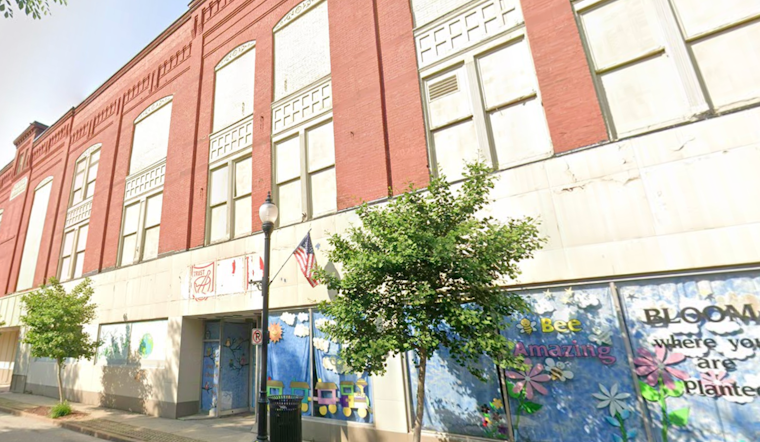
A chunk of Tarentum's history came crashing down Wednesday night when the long-vacant Tarentum Opera House building at 411 Corbet St. suffered a partial collapse around 7:30 p.m., blowing out windows and scattering brick and glass across the street. No one was injured, and fewer than four residents living in apartments in the neighboring building were unharmed, but the 140-year-old landmark now sits behind an indefinite perimeter of road closures in the heart of downtown Tarentum.
The collapse tore a gaping hole into the third floor of the building and created a pressure differential forceful enough to blow out multiple first-floor windows, sending glass across the adjacent sidewalk and street, according to TribLIVE. First responders reported that the falling brick debris collapsed inward rather than striking the neighboring Wesley Family Services building. As CBS News Pittsburgh reported, the partial collapse claimed a major piece of Tarentum's history in an instant.
Police, public works crews, firefighters, and EMS all responded simultaneously to secure the scene, per the same TribLIVE account. Eureka Fire-Rescue Chief Brad James said structural engineers who evaluated the building afterward determined that its internal steel skeleton is preventing a total collapse, even though the deteriorating brick facade remains an active falling hazard.
A Landmark Left Vacant for Years
The building traces back to 1886, when it opened as the Oppenheimer Building with a second-floor opera house and vaudeville stage, a first-floor retail space, and a rear roller-skating rink and dance hall, according to CinemaTour. Over the following decades, it cycled through uses as a furniture store and a shoe store before becoming a Rite Aid pharmacy, its last active occupant. That pharmacy officially closed its doors on February 28, 2018, leaving the building fully vacant for more than eight years before Wednesday's collapse.
Local historian Cindy Homburg told CBS News Pittsburgh that the building had sat vacant for years, and that chronic roof leaks had already been sending water streaming down interior walls along Fifth Avenue even while Rite Aid was still open. Recent heavy rainfall in early August is cited as a key catalyst behind the collapse.
Downtown Streets and Transit Disrupted
Tarentum Borough officials have instituted indefinite road closures around the 400 block of Corbet Street and adjacent sections of East Fourth and Fifth avenues, according to the TribLIVE report. Emergency responders blocked off three blocks surrounding the nearby railroad tracks. The closures have forced Pittsburgh Regional Transit to reroute bus routes and prompted Norfolk Southern to instruct its train crews to travel at reduced speeds through the corridor.
Borough officials have given the property owner a limited window to stabilize the exterior brick facade, while borough inspectors continue on-site monitoring and engineering assessments, per CBS News Pittsburgh. Borough Manager Dwight Boddorf indicated that long-term decisions about the building's fate depend on complete structural evaluations still to come.
Part of a Broader Pattern of Blight
The opera house's collapse fits into Tarentum's wider, ongoing struggle with aging and abandoned buildings. As part of a municipal campaign against urban blight, Tarentum Borough demolished 66 blighted or abandoned properties between 2019 and June 2025, drawing on county recovery programs to remediate abandoned parcels throughout the borough.
The opera house's water-related failure also echoes a similar incident in neighboring New Kensington, where heavy summer rain caused a partial roof collapse at Reclamation Church in June 2026, pooling on a flat roof and causing roughly $35,000 in damage. Both incidents involved historic Allegheny Valley masonry buildings undone by water infiltration, underscoring a regional pattern as summer storms continue to test the region's aging stock of historic structures.
For now, the fate of the Tarentum Opera House remains unresolved. Whether the property owner can meet the borough's deadline to stabilize the facade, or whether the landmark will ultimately face demolition despite its intact steel frame, is a question borough officials say hinges on the structural evaluations still underway.





