

























































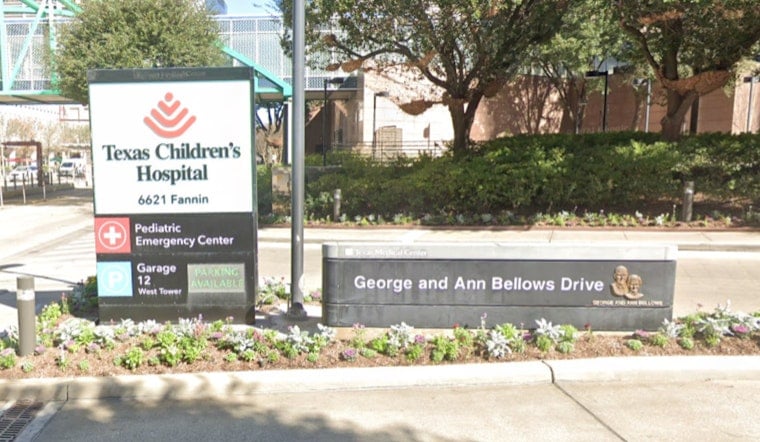
Texas children's hospitals say a proposed federal rule rewriting how Medicaid pays for their care could drain up to $2.5 billion a year from their budgets, putting neonatal intensive care units, labor and delivery wards, and pediatric mental health programs squarely in the crosshairs. The estimate comes from the Children's Hospital Association of Texas, which has been sounding alarms since the rule was published for public comment earlier this year.
The rule at the center of the fight, known as CMS-2449-P, was published by the Centers for Medicare & Medicaid Services on May 22, 2026, in the Federal Register to implement Section 71116 of the One Big Beautiful Bill Act, according to the Federal Register. The agency projects the rule could generate up to $774.8 billion in federal Medicaid savings over 10 years by capping state-directed payment rates against Medicare benchmarks. As reported by the Houston Chronicle, Texas Children's Hospital has said the proposed rule would significantly affect funding used to provide high-quality treatment, and the hospital submitted a letter to federal officials outlining its concerns.
Those state-directed payments are not a minor line item for pediatric hospitals. Medicaid covers less than 80% of children's hospitals' healthcare costs overall, per the Chronicle's reporting, and more than half of patients at children's hospitals are covered by Medicaid — a rate more than double the average for acute-care hospitals nationwide. Katherine Hempstead said children's hospitals rely so heavily on state-directed payments precisely because broader support systems for pediatric Medicaid funding remain inadequate, the outlet reported.
A Dispute Over How Big the Cuts Really Are
The scale of the cuts is itself contested. CMS projected the rule would result in about $510 billion in reductions to state-directed payment programs over 10 years, according to the Chronicle, while the agency's own Federal Register filing cites a larger $774.8 billion figure. Both numbers dwarf the $149 billion in state-directed payment cuts the Congressional Budget Office projected before the One Big Beautiful Bill Act passed. Alice Burns said the $510 billion and $149 billion projections used different data over different time frames, the Chronicle noted, while an independent analysis from Children's HealthWatch put the gap even higher, estimating the rule's true 10-year reduction at $515 billion — more than three times the CBO's original $149 billion statutory projection. Researchers with that group argued the discrepancy shows administrative rulemaking has significantly outpaced what Congress intended when it passed the law. The $149 billion projection also excluded state-directed payment programs that CMS had approved but not yet listed on its website by early 2025, the Chronicle reported.
President Donald Trump signed the broader spending bill containing roughly $1 trillion in Medicaid cuts into law, shifting some of the financial burden from the federal government onto states and healthcare providers, according to the Chronicle. Most states, including Texas, use state-directed payment programs to steer additional Medicaid dollars to providers, and those payments help bridge the gap between standard Medicaid reimbursement rates and the actual cost of highly specialized pediatric care.
What The Cuts Could Mean for Texas Specifically
A state-level analysis released in July 2026 by Texans Care for Children calculated that the proposed federal rule would cut Texas Medicaid state-directed payment funding by $15.9 billion over 10 years. The group's math shows the cuts phasing in as a 34% reduction by year four and escalating to a 65% reduction by year 10 — a timeline advocates say leaves little room for hospitals to adjust. A coalition of 20 Texas health and policy organizations, including the Texas Medical Association and Texas Hospital Association, formally warned federal regulators in July that the payment cuts threaten NICUs, labor and delivery wards, and pediatric mental health services statewide.
In Texas, supplemental Medicaid payments to children's hospitals flow primarily through the Comprehensive Hospital Increase Reimbursement Program, or CHIRP, a state-administered directed payment program that the Texas Health and Human Services Commission had approved for its eighth year as of September 2024, providing uniform rate increases for inpatient and outpatient care. Local governments help fund that system too: Brazos County and other Texas counties use Local Provider Participation Funds to authorize intergovernmental transfers of up to $22 million semi-annually to HHSC, generating the non-federal share needed to draw down federal matching dollars for CHIRP reimbursements.
A History of Friction Between Texas and Federal Regulators
This is not the first clash between Texas health officials and CMS over Medicaid financing. The Texas Health and Human Services Commission filed a federal lawsuit against the U.S. Department of Health and Human Services in Austin District Court in December 2024, seeking to stop CMS from recovering $83 million in historical Medicaid payments made to local hospital providers, according to Husch Blackwell. That dispute reflected a broader pattern of Texas shifting away from public-private funding models toward provider-tax models to keep federal dollars flowing to hospitals.
The financial squeeze also isn't new for Texas's flagship pediatric system. Texas Children's Hospital eliminated 5% of its workforce — roughly 1,000 clinical and non-clinical positions — in August 2024 amid operating deficits, as Hoodline reported at the time. That round of cuts came well before the current federal rule was even proposed, underscoring how thin the margins already were at Houston-area pediatric facilities.
Why Texas Kids Are Especially Exposed
Children treated at children's hospitals tend to be sicker and have more complex healthcare needs than the typical patient, and that specialized, long-term care raises overall costs. Children's hospitals represent just 5% of hospitals across the United States, according to the Chronicle, meaning the burden of covering the most complicated pediatric cases falls on a small slice of the national hospital system. Freestanding children's hospitals in Texas treat families from 241 of the state's 254 counties, per 2025 data from the Children's Hospital Association of Texas, and Medicaid covers an average of 60% of all inpatient bed days at those facilities — with almost no offsetting Medicare revenue to cushion the blow.
Roughly 40% of all children in Texas are enrolled in Medicaid as of July 2026, according to Every Texan, even as the state maintains the highest child uninsured rate in the nation at 11.2% — more than double the 5.5% national average. Advocates say that combination makes pediatric safety-net funding especially critical in a state with a growing child population.
Hospitals Ask CMS to Slow Down and Reconsider
Texas and nationwide children's hospitals have asked CMS to scale back its proposed rule on state-directed payments, and specifically to reconsider aspects of it and potentially exempt children's hospitals from its most burdensome changes. Christina Hoppe said children's hospitals would be forced to make hard decisions and argued Texas should invest more in healthcare, according to the Chronicle's reporting. She asked CMS to take a more measured approach to the depth and timing of the cuts and said she hoped regulators would finalize rules without disproportionately affecting children's hospitals.
Children's hospitals have also asked for more time to prepare for state-directed payment cuts, warning that the proposed rule would quicken the pace of reductions beyond what current systems can absorb. Supporters of an exemption argue it would help maintain access to pediatric healthcare without significantly increasing overall federal Medicaid costs, since children's hospitals represent such a small share of the national hospital landscape. Without changes, hospitals say they would need to find alternative funding sources to avoid disruptions in care, though some states could offer support if a children's hospital found itself struggling. Hoppe said fewer future resources to care for children would be very concerning.





