

























































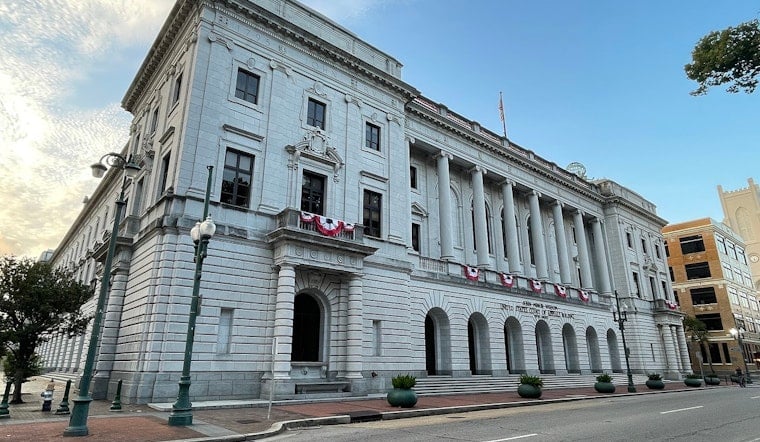
The full U.S. Court of Appeals for the 5th Circuit ruled Wednesday that it lacked jurisdiction to hear Planned Parenthood's appeal in a Texas Medicaid fraud case, sending a lawsuit seeking $1.8 billion in payments and penalties back to a federal district court in Amarillo. The ruling vacates a 2025 decision by a three-judge panel that had found Planned Parenthood immune from the claims, reviving a case the organization says could force it to shut down its Texas operations entirely.
According to Reuters, the en banc court held that Planned Parenthood was not entitled to an immediate appeal because resolving the question of attorney immunity would not conclusively determine a separable legal issue in a way that meaningfully advances the litigation. Chief Judge Jennifer Walker Elrod wrote the opinion, which LifeNews.com reports found that attorney immunity functions more as an affirmative defense than as true immunity from being sued at all. Judge James Graves joined the full opinion, and the ruling determined the 5th Circuit panel had acted prematurely when it reversed the lower court in 2025.
The case, formally titled United States ex rel. Doe v. Planned Parenthood Federation of America, now returns to U.S. District Judge Matthew Kacsmaryk, an appointee of President Donald Trump whose Amarillo court hears all federal cases filed there, per Reuters. Kacsmaryk had already ruled in 2023 that Planned Parenthood needed to return money it received while Medicaid terminations were under appeal, a decision the case is now positioned to revisit at the trial level.
How a 2015 Video Sparked a Six-Year Billing Dispute
The dispute traces back to 2015, when undercover video footage purportedly showing Planned Parenthood staff discussing the sale of fetal tissue prompted Texas and Louisiana to open investigations and move to terminate the organization's Medicaid provider status, according to Reuters. The anonymous plaintiff behind the lawsuit identified himself as the person who released that footage. He filed the case under seal in federal court in Amarillo in February 2021 under the qui tam provisions of the False Claims Act, which let private citizens sue on behalf of the government and collect up to 30 percent of any funds recovered, as detailed by CaseMine.
Texas joined the lawsuit, though Louisiana did not, Reuters reports. Even after the 2015 termination notices, federal court injunctions kept Planned Parenthood in Texas's Medicaid network for years, and the state did not finalize the removal until March 2021, according to The Texas Tribune. Appeals courts did not allow the terminations to become final until 2023, after years of legal challenges, per Reuters. Planned Parenthood continued billing and collecting Medicaid payments during that period and says doing so while termination decisions were paused by courts was entirely legal.
The Money at Stake and Who Is Suing
Ken Paxton, the Republican Texas Attorney General, and the anonymous plaintiff are seeking to force Planned Parenthood to return money allegedly collected from Texas and Louisiana Medicaid programs after the terminations took effect, Reuters reports. The $1.8 billion figure comes from the False Claims Act's formula for trebling damages, applied to an estimated $17 million in Medicaid reimbursements collected between 2017 and 2021, on top of civil penalties of up to $11,000 for each individual claim submitted, according to the same account. Paxton's office has staffed up for this kind of fight: in 2024, he promoted veteran litigator Amy Hilton to Chief of the Healthcare Program Enforcement Division after she helped lead the state's legal actions against Planned Parenthood.
Planned Parenthood maintains that the disputed claims paid exclusively for non-abortion preventive care, including contraception, cancer screenings and STI testing, since state and federal funds cannot be used for abortion services, according to the Planned Parenthood Federation of America. The organization also argues national Planned Parenthood lawyers advised local affiliates on billing during the litigation, and that it cannot be held liable because it was relying on that legal advice rather than acting with fraudulent intent.
Supreme Court Precedent Shaped the Timeline
Kacsmaryk stayed the lawsuit in February 2023 to await a U.S. Supreme Court ruling on False Claims Act intent standards, resuming the case in June 2023 after the justices ruled in U.S. ex rel. Schutte v. SuperValu Inc. that liability turns on a defendant's subjective belief about whether its claims were false, per CaseMine. That standard could prove central once the case returns to the district court, since Planned Parenthood's defense rests on its stated belief that billing during the appeal period was lawful.
Susan Baker Manning, an attorney for Planned Parenthood, called the case politically motivated and meritless, and said the organization provides care to more than 2 million people nationwide each year, according to Reuters. Planned Parenthood is represented by Anton Metlitsky, Danny Ashby and Leah Godesky of O'Melveny & Myers, while Texas is represented by William Peterson of the Texas Attorney General's office and the plaintiff is represented by Heather Hacker and Andrew Stephens of Hacker Stephens, per Reuters.
Clinics Already Strained by Lost Funding
The financial stakes are not hypothetical for Texas patients. Planned Parenthood affiliates in the state served more than 100,000 patients annually before their Medicaid exclusion, in a state where fewer than half of licensed physicians accept Medicaid recipients, according to Planned Parenthood of Greater Texas. Planned Parenthood Gulf Coast already closed two Houston clinics in early 2026 after two years of roughly $16 million in operating losses tied largely to the Medicaid cutoff, consolidating its remaining sites into Planned Parenthood of Greater Texas.
A New England Journal of Medicine study on an earlier, similar Texas exclusion of Planned Parenthood from the state's family planning program found a sharp decline in claims for long-acting contraception and a corresponding rise in births among Medicaid recipients, according to Retraction Watch. Planned Parenthood says it would shut down its Texas operations entirely if the state prevails in the current case, a warning that now looms over whatever comes next in Kacsmaryk's Amarillo courtroom.





