

























































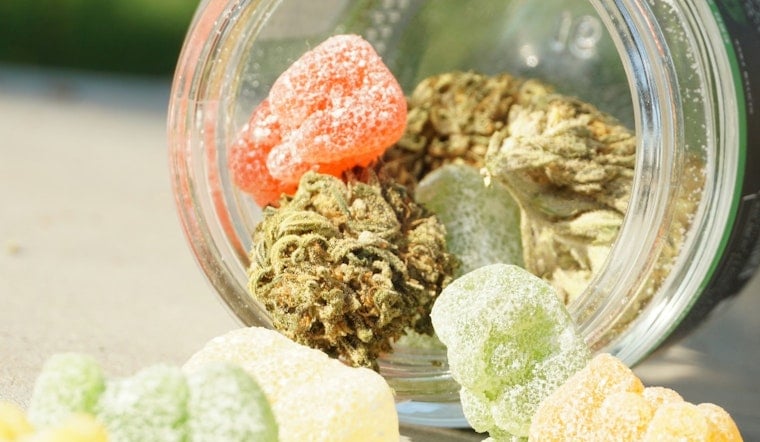
Texas hemp businesses filed a lawsuit against the Texas Department of State Health Services on Wednesday, arguing that a new testing standard for THC products contradicts the state's own hemp law. The suit, filed in Travis County District Court, asks a judge to force DSHS to follow the Delta-9 THC standard written into state statute rather than a broader testing method the agency adopted this year.
According to KXAN Austin, the plaintiffs say DSHS's laboratory methodology looks at the total amount of all tetrahydrocannabinols in a product rather than measuring Delta-9 THC concentration on a dry-weight basis, which the lawsuit says is the actual statutory standard. That standard traces back to Texas House Bill 1325, which set legal hemp product standards based on the Delta-9 THC amount when lawmakers passed it in 2019, codifying Chapter 443 of the Texas Health and Safety Code with a cap of 0.3% Delta-9 THC on a dry-weight basis.
The hemp businesses argue that lawmakers never gave DSHS the authority to redefine hemp or to erase the statutory line between lawful hemp and prohibited marijuana, per the lawsuit's claims as reported by KXAN. Plaintiff attorneys argued that DSHS exceeded its constitutional authority in making the hemp product-testing rules, and the businesses are asking the court to order the agency to follow the statutory standard rather than the total-THC formula it has been applying.
What the Lawsuit Does and Doesn't Challenge
Notably, the lawsuit does not challenge a separate and much larger legal defeat hemp retailers suffered earlier this year, according to the plaintiff attorneys. In May, the Texas Supreme Court ruled in DSHS v. Sky Marketing Corp. that DSHS acted within its statutory authority under the Texas Controlled Substances Act when classifying manufactured Delta-8 THC as a Schedule I controlled substance, upholding the agency's scheduling decision and overturning a trial court injunction that had protected Delta-8 sales since 2021.
That ruling cleared the way for DSHS to act. The agency reinstated and republished its Schedule I controlled-substance language in July, and the reclassification led to recently implemented state penalties for manufactured Delta-8, Delta-10, THCP and other non-Delta-9 isomers. This week's lawsuit is a separate fight, focused specifically on how DSHS tests and defines legal hemp products rather than on the Schedule I classification itself.
Agency Response and What Comes Next
A Texas DSHS spokesperson said the department would file a response in court, while the agency declined to comment further on the litigation when contacted by KXAN. Texas hemp businesses claim the agency's product-testing rules conflict with state law, setting up a courtroom fight over how much regulatory latitude an executive agency has when lawmakers have already written a specific numerical standard into statute.
The dispute lands at a moment when Texas hemp regulation has become a tangle of competing legal tracks. Governor Greg Abbott vetoed Senate Bill 3 in 2025, a bill that would have legislatively banned intoxicating hemp-derived cannabinoids outright, according to Floral Beverages. That veto left DSHS administrative rulemaking, rather than legislation, as the primary battleground for regulating the industry, a dynamic now playing out in dueling court challenges over both scheduling authority and testing methodology.
An Industry Under Mounting Pressure
The stakes for Texas retailers are considerable. An economic impact study by Whitney Economics found the state's consumable hemp industry generated $5.5 billion in annual retail and wholesale sales and supported 53,300 jobs in 2025, according to a report distributed via GlobeNewswire. Edibles, THCA flower and vape products together accounted for more than three-quarters of retail revenue that year, per data reported by Shanken News Daily, meaning the product categories most affected by DSHS's tightening rules are also the ones driving the bulk of industry sales.
DSHS's regulatory reach has also grown more expensive for retailers separate from this week's testing dispute. Consumable hemp rules adopted earlier this year raised annual retail registration fees from $150 to $5,000 per location, as reported by the Texas Tribune. Hoodline previously reported on how Austin-area smoke shops adjusted inventory amid the rollout of that total-THC testing standard in earlier coverage of DSHS's testing rules, and a separate Travis County lawsuit filed by medical cannabis operator Texas Original in June accused unregulated hemp vendors of selling products that exceeded legal Delta-9 limits.
Whether this week's filing succeeds may hinge on how a Travis County judge interprets the boundary between legislative intent and agency discretion. For now, the core question raised by the hemp businesses remains unresolved in court: whether DSHS had the legal authority to swap the dry-weight Delta-9 standard lawmakers wrote into HB 1325 for the total-THC formula the agency has been enforcing.



