

























































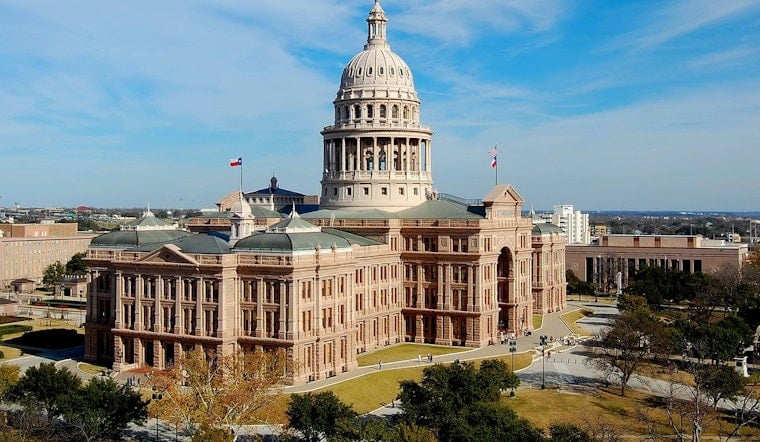
Texas built a statewide alert system meant to help find veterans missing during a mental health crisis, and in four years it never issued a single alert. Known as the Camo Alert, the program quietly expired on September 1, 2023, after only 24 veterans statewide ever enrolled in it, leaving families and advocates asking why a state with more veterans than any other in the country couldn't get more people signed up before tragedy struck.
The Texas Legislature created the Camo Alert through House Bill 833, which took effect in 2019, according to WOAI. The program was designed to assist current or former armed-forces members, including National Guard, reserve and auxiliary units, who went missing during a mental health crisis tied to conditions like post-traumatic stress disorder or traumatic brain injury. But the law required veterans to enroll before any crisis ever happened, with a witness signing off on the registration, and law enforcement agencies still had to verify that a missing veteran had a qualifying condition and faced a credible threat to health or safety before the Texas Department of Public Safety could confirm the information and issue an alert to media outlets and other partners.
That pre-registration requirement turned out to be the program's fatal flaw. State Representative Josey Garcia, a San Antonio Democrat, said combat veterans are unlikely to volunteer for a government registry disclosing PTSD or other struggles, and she didn't mince words about the outcome: “the state of Texas failed,” she said, per the same WOAI report. Garcia took office in early 2023 and is an Air Force veteran who served from 1995 to 2014, representing House District 124, often called Military City, USA.
A Program Few Veterans Ever Knew Existed
Steven Price, a veteran and leader of Voices for Our Veterans in Bexar County, said he had never heard of the Camo Alert at all. Former State Senator José Menéndez, an original backer of the 2019 Camo Alert law, said the program was not well known and may not have been adequately publicized. Between the low enrollment and the complete absence of alerts ever issued, the program's track record suggested it never reached the veteran community it was designed to protect, the station's report notes.
Jason Allen, who told lawmakers about the need for such an alert back in 2017 and helped create the Camo Alert idea, described the on-the-ground problem families faced before the law existed: they could only post on Facebook because their missing veteran had not yet been gone 24 or 48 hours, the threshold typically required for standard missing-person alerts. That gap is exactly what Wisconsin lawmakers set out to close a year earlier when they passed the nation's first veteran missing-person alert system, the Corey Adams Searchlight Act, after Milwaukee Air Force veteran Corey Adams went missing in 2017 and was found dead 18 days later, according to Air Force Times. Delaware followed months later with its own Green Alert system that let officers use specialized de-escalation techniques with missing combat veterans experiencing PTSD, per Delaware Public Media. Texas became the third state in the nation to adopt such a system when Governor Greg Abbott signed the Camo Alert bill into law in 2019, according to 92.9 NIN, though the bill carried a five-year pilot sunset clause that ultimately ended the program.
Privacy Fears Undercut Enrollment
The tension behind the low sign-up numbers has been documented since the law's early days. Texas Public Radio reported in 2019 that public veteran alerts present a double-edged sword, weighing urgent search assistance against veterans' fears of having private mental health conditions broadcast on billboards and in media coverage, with some veterans saying they felt violated when their struggles were made public. That resistance to disclosure appears to be exactly what kept enrollment near zero for four straight years.
The Texas Department of Public Safety has since updated its Statewide Alert Programs portal to list the Camo Alert as no longer operational following its expiration date. The agency still administers seven other alert categories, including AMBER, Silver, Blue, Endangered Missing Persons, CLEAR, Power Outage and Active Shooter alerts, all meant to issue urgent public-safety warnings that generate tips and leads. The CLEAR Alert, also created by the Legislature in 2019, helps locate missing or abducted adults ages 18 to 64 who face imminent danger of injury or death, but it was not built with veterans' specific crisis needs in mind.
A New Bill Would Drop the Registry
Garcia now plans to file legislation reviving the Camo Alert with substantial changes. She said families need to be able to contact law enforcement immediately rather than waiting on a pre-existing registration, and she argues Texas veterans deserve an individualized alert system that actually functions. Under the proposed changes, immediate family members, mental health professionals and other trusted people could report a veteran in crisis directly to law enforcement, without requiring the veteran to have signed up in advance.
Menéndez, who backed the original 2019 law, agrees with that shift, saying an immediate family member should have the same right to report someone missing as that person would have to report themselves. The scale of what's at stake is stark: Texas is home to roughly 1.53 million veterans, more than any other state in the country, according to the Texas Economic Development Corporation. The U.S. Department of Veterans Affairs recorded 581 veteran suicides in Texas in 2023 alone, out of 6,398 nationwide, as reported by KSAT 12.
Where Veterans Can Get Help Now
With no state alert system currently active, veterans and families in Bexar County still have several direct resources available. The Veterans Crisis Line can be reached by calling or texting 988 and pressing 1. The VA South Texas Health Care System can be reached at 210-617-5300, the Bexar County Military and Veterans Services Center at 210-335-6775, and the Texas Veterans Commission at 1-800-252-VETS (8387).
At the federal level, U.S. Representative Gwen Moore introduced legislation in May 2018 called the Corey Adams Searchlight Act, aiming to expand Green Alert-style programs into a nationwide network for missing at-risk veterans, drawing on Wisconsin's early success. Whether Texas lawmakers can craft a version that avoids the registration barrier that doomed the original Camo Alert remains to be seen, but for veterans like Price who never even knew the program existed, any functioning replacement would be a step forward.





