

























































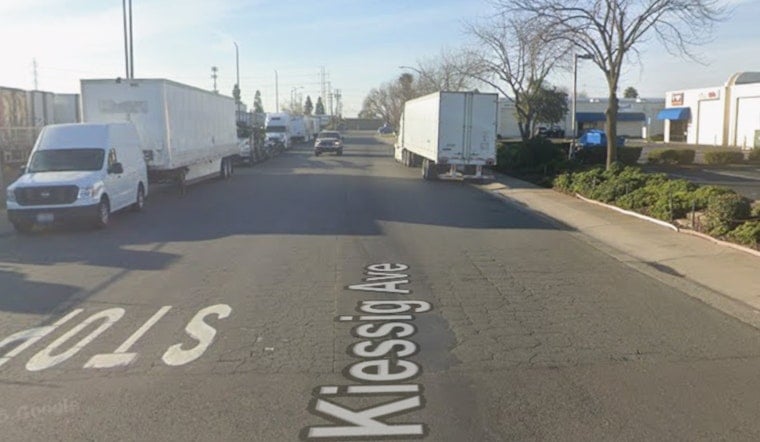
A semi-truck trailer packed with toy lithium batteries caught fire just before 8 p.m. Tuesday at an industrial park on the 3510 block of Kiessig Avenue near 47th Avenue, sending toxic smoke over the Parkway area of Sacramento County and prompting a hazardous materials response. The intersection of 47th Avenue and Franklin Boulevard was closed as of 10 p.m. as crews worked the scene.
Sacramento Fire Department crews were dispatched to the property on Kiessig Avenue, west of Franklin Boulevard, according to FOX40 News. Officials said the lithium-ion battery fire led to road closures throughout the Parkway area as firefighters assessed the risk to nearby buildings and residents.
Justin Silva said the fire department was concerned about toxic smoke floating in the area, per the same report. That concern quickly reshaped the response: firefighters declared a hazardous materials incident and put every crew member on self-contained breathing apparatus air rather than risk lingering fumes, according to CBS Sacramento.
Crews Held a Safe Perimeter as the Trailer Burned
Firefighters kept a safe perimeter around the burning trailer and managed to contain the blaze without letting it spread to an adjacent building, CBS Sacramento reports. Nearby roads reopened Wednesday morning once the scene was cleared, and the fire caused no lasting road blockages or building damage, the station's report notes.
The industrial park sits in an area that houses commercial warehouses and logistics operations, the outlet adds, which is part of why officials moved so cautiously once they learned the cargo was lithium batteries rather than an ordinary vehicle or trash fire.
Why Sacramento Firefighters No Longer Take Chances With Battery Smoke
The strict use of breathing gear on Tuesday traces back to a painful lesson for the department. Four Sacramento firefighters underwent experimental IV-infused therapy in 2025 and 2026 to pull heavy metals from their lungs and bloodstreams after they removed their breathing gear during cleanup of an electric vehicle battery fire, believing the fire was already out, only to be enveloped by a low-lying chemical cloud, according to Firehouse. It marked the first time department personnel were sidelined by battery fire exposure, per that account.
Battery smoke carries a specific chemical danger. Research from the National Fire Protection Association shows that lithium-ion thermal runaway releases hydrogen fluoride gas, which combines with atmospheric moisture to form corrosive hydrofluoric acid capable of causing deep tissue damage and systemic toxicity in first responders.
A Regional Pattern of Battery Fires in Trucks and Trash
Tuesday's fire fits a pattern Sacramento Fire officials have been warning about all year. In May, a crushed lithium-ion battery ignited inside a Roseville garbage truck, the fourth such incident in that city in 2026, prompting regional warnings about violent chain reactions and toxic gas clouds when batteries rupture, as CBS Sacramento reported at the time. Similar incidents have hit the region repeatedly: Hoodline previously covered a lithium battery rig fire that shut down a highway for hours, an industrial salvage yard blaze in Rancho Cordova, and a residential battery storage fire in West Roseville that forced 18 homes to shelter in place.
State Rules Tighten as Battery Volumes Grow
California has been steadily expanding oversight of lithium batteries as these incidents accumulate. Under the state's Responsible Battery Recycling Act of 2022, battery producers must fund statewide collection and recycling programs, with civil penalties reaching $50,000 per day for intentional violations, according to LegiScan. Lawmakers introduced Senate Bill 501 this year to extend that stewardship mandate to medium-format batteries weighing 11 to 25 pounds, the kind used in e-bikes and lawn equipment, per Resource Recycling.
Separately, the California Fire Code requires commercial facilities storing more than 15 cubic feet of lithium-ion batteries to hold an operational permit and maintain an approved fire safety and evacuation plan, per UpCodes. As of January 1, owners of larger stationary battery storage systems must also submit hazard mitigation analyses evaluating early thermal runaway detection to local fire officials, according to Code Red Consultants. Federal workplace rules add another layer, with OSHA guidelines requiring facilities that store or transport lithium-ion batteries to enforce temperature controls and equip employees with protective gear under 29 CFR 1910, per the ICC Compliance Center.
No injuries were reported from Tuesday's fire, and the trailer's owner or shipping operator has not been publicly identified. The cause of the ignition remains unclear.



