

























































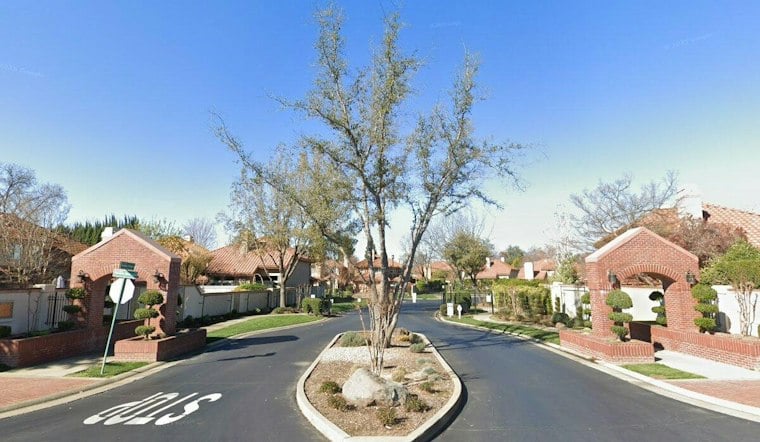
Eight. That's how many homes in Folsom's 95630 ZIP code relied on California's FAIR Plan, the state's fire insurance of last resort, back in 2021. By June of this year, that number had climbed to 300 — a snapshot of how quickly the insurance landscape has shifted in the growing Sacramento County suburb.
The jump in Folsom mirrors a broader surge across Sacramento County, where FAIR Plan coverage has increased more than fivefold since 2021, rising to about 1,820 residential policies, according to Abridged, PBS KVIE's news outlet, in reporting by Phillip Reese. The biggest increases are concentrated in the eastern part of the county, particularly around Folsom and Sloughhouse, though the outlet also found growth in parts of Elk Grove and unincorporated Florin. Nearly all of that net increase happened between 2022 and 2025, with a small decrease in Sacramento County policies from September 2025 through this past June.
Folsom, a city of about 95,000 residents, sits at the edge of large, hilly grassland areas often dotted with oaks — terrain the state has flagged as fire-prone. State Fire Marshal hazard maps classify a large portion of Sacramento County as moderate wildfire hazard, with large swaths of the eastern county, including areas near Folsom, rated high hazard. The city also plans to add thousands of new homes on grassland south of U.S. 50, even as insurers grow warier of the area.
A Real Estate Agent's Premiums Triple
Steve Heard, a real estate agent living in Folsom's Willow Creek Estates neighborhood, told the outlet his own insurance premiums essentially tripled a couple of years ago, prompting him to switch carriers. Folsom residents more broadly have reported trouble finding coverage, with some saying their insurance companies dropped them altogether, per the same report. Heard said he has not personally seen anyone unable to buy or sell a house because of the FAIR Plan, but he fears that could change if its use keeps growing.
Folsom Fire Chief Jason Solak, who bought a home in Empire Ranch in 2001, put the shift in stark terms: fires that seemed unimaginable 25 years ago are now happening every year in California, he said. Folsom fire officials say they will partner with local and state agencies to reduce wildfire fuels around parks and the American River Canyon, and they are encouraging residents in higher-risk areas to maintain defensible space around their homes.
The Numbers Behind the FAIR Plan Squeeze
Sacramento County's trend is part of a much larger statewide pattern. The number of FAIR Plan policies statewide more than doubled between 2022 and 2026, and as of June 2026 the plan had 696,562 dwelling and commercial policies in force — an 8% increase since September 2025 and a 157% increase since September 2022, according to the California FAIR Plan's own data. Total exposure reached $768 billion, up 250% since September 2022, while total written premium hit $2.04 billion, up 212% over the same period.
That growth is now colliding with a steep rate hike. The FAIR Plan is raising its average rates by 29.1% for more than 675,000 customers beginning October 15, as reported by KQED. Some homeowners in high wildfire-risk areas could see their premiums double, and that's on top of coverage that is usually less comprehensive than traditional insurance and typically excludes liability protection. Half of homes in some high-risk communities — including Truckee, Nevada City, Malibu and Lake Arrowhead — are already insured through the FAIR Plan, KQED reported, and new FAIR Plan business this year is down 25% from last year even as overall enrollment keeps climbing.
Why Insurers Are Pulling Back
Joel Laucher, a preparedness advocate for United Policyholders, said climate change and unexpected wildfires have made insurers more wary of covering Sacramento County homes. “The FAIR Plan is meant to be the backstop of our admitted insurance industry, and so we're very fortunate to have one,” Laucher said, according to the Abridged report. He advised homeowners shopping for coverage to contact multiple insurers, including reputable non-admitted carriers, noting that once they have their property details in hand, they can submit them to agents one after another. Laucher added that insurance companies are now being very cautious, and FAIR Plan claims can involve bureaucratic difficulty when homeowners try to get paid out after a home is damaged or destroyed.
There are signs the market may be loosening elsewhere. State Insurance Commissioner Ricardo Lara announced in September that State Farm and Allstate had filed plans to resume writing new residential policies in California, though neither insurer is currently accepting new business and both plans remain subject to review by the California Department of Insurance, which oversees the FAIR Plan under state law, as Yahoo Finance reported. State leaders have overhauled some insurance regulations over the past two years in an effort to coax private insurers back into the market, and private-market options are becoming available again for some homeowners, per CBS News.
Fire History Looms Large in Eastern Sacramento County
The region's fire history helps explain the nervousness among insurers. In 2020, the Grant Fire burned around 5,000 acres between Sloughhouse and Folsom, and decades earlier, in 1981, the Meiss Fire burned around 14,000 acres near Herald. Those local blazes sit alongside the memory of the 2025 Eaton and Palisades wildfires, which destroyed more than 16,000 structures in Los Angeles County — a disaster that rattled insurers statewide even though it struck hundreds of miles away.
Sacramento County's experience also fits a pattern playing out elsewhere in California. Near Menifee, FAIR Plan policies grew fivefold from 2024 to this June, and across the valley in Hemet the plan grew by 660%, with more than 1,100 new policies from a single ZIP code, according to the Los Angeles Times. Surplus-lines carriers, meanwhile, now account for 7% of California's home insurance market, up from just 1% in 2021. In some high-risk ZIP codes, the reliance on last-resort coverage is even more extreme: nearly 60% of homes in a northern Napa County ZIP code were insured by the FAIR Plan, according to the San Francisco Chronicle, while the plan covers an estimated 79% of residences in the San Bernardino County community of Cedarpines Park and about 28% of residences in the ZIP code overlapping Paradise.





