

























































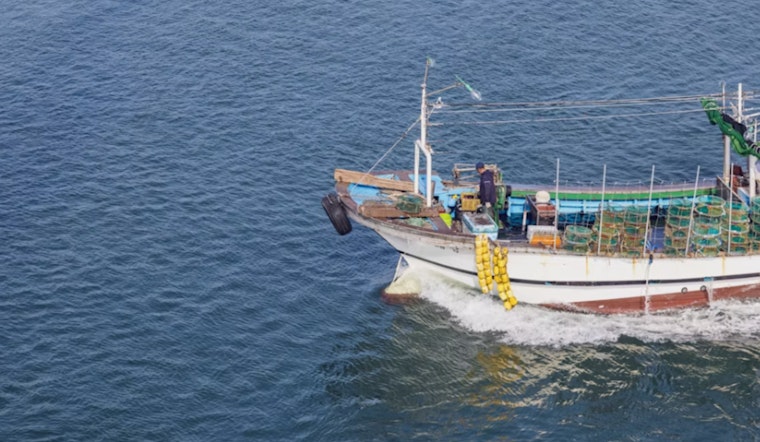
The U.S. Treasury Department has imposed sanctions on an Ecuador-based cocaine trafficking network accused of using commercial fishing vessels to move thousands of kilograms of cocaine each month toward Mexico. The network, operating from the vicinity of the coastal city of Manta, allegedly relied on ostensibly legitimate fishing businesses as cover for refueling, resupplying, and even providing medical care to go-fast boats hauling drugs north through the Eastern Pacific.
The Treasury's Office of Foreign Assets Control designated 15 individuals and entities and identified 10 Ecuador-based fishing vessels as blocked property, according to the Miami Herald, which first reported the sanctions. At the center of the network is Jimmy Leonidas Alarcon Holguin, who owns or controls six Ecuadorian companies — five marine fishing firms and one construction supply firm — that officials say helped coordinate refueling operations for cocaine boats.
Those companies, named in the Treasury Department's August 20 designation, include Alho Fish S.A., JAH-HMH S.A.S., Negocios Jimar S.A.S., Proyectos Neyzoa S.A.S. and Soisamar S.A.S., along with the construction supplier Globaldistrial S.A.S. Treasury officials say Manta-based fishing crews routinely exploited Ecuadorian government-subsidized fuel to maintain mid-ocean refueling stations, supply drops, and medical assistance for go-fast boats heading toward Mexico.
A Family Fishing Business At The Center Of The Network
Another firm, Arcasdenoe S.A., is described as an Ecuadorian family fishing business that allegedly helped smuggle thousands of kilograms of cocaine from South America to Mexico while providing refueling services for go-fast boats transporting drugs. The Herald reports the company was operated by Alfonso Mero Mero and his sons, Roberth Alfonso Mero Arcentales and Edwar Alexis Mero Arcentales.
Vessels tied to the network — identified by Treasury as Conquista, Siempre Mi Arca, Rey de Arca, Costa Marlin, Solo Es Mejor, Todos Vuelven, Arca de Noe III, Arca de Noe III Jr, Arca de Noe IV and Arca de Noe V — allegedly rendezvoused at sea with smaller go-fast boats carrying cocaine north through the Eastern Pacific corridor. Larger fishing vessels in the network reportedly provided fuel, food and medical assistance to the smaller boats, and helped crews detect and monitor law-enforcement vessels, per the same reporting. Todos Vuelven was specifically accused of transporting multi-ton quantities of cocaine.
Several individuals named in the sanctions are accused of direct coordination roles. Julio Javier Mero Franco allegedly coordinated the transportation of roughly 30 to 40 tons of cocaine per month from Ecuador to Central America and Mexico while supporting Los Choneros. Jhonny Francisco Vera Laz allegedly moved thousands of kilograms of cocaine per month from Ecuador's coast to Mexico, while Milton Edixon Martinez Mendoza allegedly coordinated transportation of thousands of kilograms aboard go-fast vessels toward Mexico while supporting both Los Lobos and Los Choneros. Byron Aldino Mero Bermello is accused of coordinating refueling operations for cocaine boats, and Edwar Mero Arcentales allegedly conducted drug-trafficking activities in coordination with Los Choneros.
Two Ecuadorian Gangs Feeding Mexican Cartels
Los Choneros and Los Lobos, the two Ecuadorian gangs described as affiliated with the sanctioned network members, were designated foreign terrorist organizations and specially designated global terrorists by the State Department in September 2025. Los Lobos emerged as a splinter organization from Los Choneros, and both are accused of helping control cocaine routes running from South America through Mexico into the United States. Los Choneros reportedly developed partnerships with the Sinaloa cartel and other Mexican organizations, while Los Lobos established routes into Mexico through relationships with the Cartel de Jalisco Nueva Generación and other groups.
The Sinaloa cartel, the Cartel de Jalisco Nueva Generación and other Mexican organizations allegedly helped move the cocaine onward toward the United States once it reached Mexican territory, with cocaine trafficking generating billions of dollars in annual revenue for the cartels involved. The United States has designated the Cartel de Jalisco Nueva Generación as a foreign terrorist organization as well. Ecuador itself does not produce cocaine but has emerged over the last half-decade as a major departure point for shipments, with the Eastern Pacific serving as a principal corridor for moving drugs north, according to the Treasury Department.
Under Executive Order 14059, the sanctions freeze the property and financial interests of designated parties within U.S. jurisdiction or under the control of U.S. persons, and most transactions involving the sanctioned parties are prohibited without Treasury authorization, according to CBS News. Companies that are 50 percent or more owned by a sanctioned individual are generally blocked as well, and foreign financial institutions risk secondary sanctions if they facilitate transactions on behalf of designated parties.
Part Of A Broader Federal Crackdown
The action is the latest in a sustained campaign: the Treasury Department has taken nearly 30 actions against more than 300 individuals and entities since the beginning of 2025 tied to transnational drug cartels and narco-terrorist networks. The investigation into the Manta network drew support from Joint Interagency Task Force-South, the Drug Enforcement Administration, the Florida National Guard Counterdrug Program, U.S. Southern Command, the Office of Naval Intelligence, the Coast Guard, and Homeland Security Task Force-Tampa.
The sanctions also connect to a longer thread of enforcement against Ecuador's coastal gangs. In July 2025, Ecuadorian authorities extradited José Adolfo Macías Villamar, known as “Fito,” the top leader of Los Choneros who had escaped from a Guayaquil prison in early 2024, to face federal drug charges in the United States, according to the Office of the Director of National Intelligence. Wilmer Chavarria, the Los Lobos leader whom Treasury had already sanctioned as “Pipo” in June 2024, was separately arrested in Spain in November 2025.
Coast Guard's Pacific Viper Nets Record Seizures
The Coast Guard launched Operation Pacific Viper in August 2025, deploying additional cutters, aircraft and tactical teams to intercept narcotics shipments across the Eastern Pacific. Between the operation's launch and June 2026, the Coast Guard seized more than 225,000 pounds — roughly 112 tons — of cocaine in the region, an amount the Department of Homeland Security says represents an estimated 93 million potentially lethal doses.
South America remains the source of global cocaine production, and the UNODC World Drug Report 2026 found that global potential pure cocaine production hit an all-time record of approximately 4,100 metric tons in 2024, with Ecuador serving as a primary Pacific logistics hub despite not producing the drug itself, per IntelliNews. The surge in trafficking has come at a steep domestic cost: UNODC data shows Ecuador suffered a 407 percent increase in homicides between 2016 and 2022 amid gang competition over trafficking corridors, prompting President Daniel Noboa to declare an internal armed conflict in January 2024 and designate 22 domestic gangs as terrorist organizations.
Human Rights Watch and regional news outlets reported in mid-2026 that coastal gangs including Los Choneros and Los Lobos systematically coerce local Ecuadorian fishermen in Manta into drug-smuggling operations, exploiting their sea navigation skills. Local fishermen, the reporting notes, are increasingly pursued by Ecuadorian gangs seeking drug transport and Pacific navigation expertise — a dynamic that raises open questions about how effectively sanctions targeting corporate fronts can disrupt trafficking networks built on coercion of ordinary maritime workers.



