

























































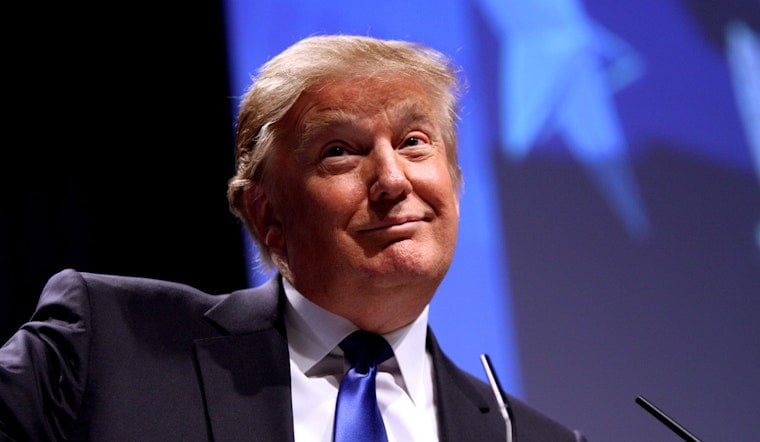
President Trump announced Friday that the United States has entered what he called the biggest oil deal in world history, a 100-year concession granting a private joint venture control over 17 Venezuelan oil fields holding an estimated 65 billion barrels of crude — with the U.S. government holding a 55% controlling stake in the venture's effective output through equity and rights to purchase oil at cost.
Trump wrote that the United States of America has just entered into an agreement with the country of Venezuela on, the biggest oil deal in world history, according to NBC Los Angeles. The deal was negotiated by Secretary of State Marco Rubio, Defense Secretary Pete Hegseth, and Venezuelan interim President Delcy Rodríguez, per the outlet's report. A U.S. official told CBS News the venture would become the world's second-largest corporate holder of proven oil reserves, trailing only Saudi Aramco.
A Massive Reserve, A Massive Price Tag
Rodríguez and Rubio have projected that the 17-field agreement will draw nearly $100 billion in private investment into Venezuela's energy sector and generate more than $209 billion in tax revenues for the country, according to statements reported by MercoPress. That infusion arrives as Venezuela tries to rebuild energy infrastructure that has been left severely dilapidated, the outlet noted. The scale of the reserves at stake is striking on its own: the 65 billion barrels covered by the deal exceed the entire domestic proved crude oil endowment of the United States, which stands at roughly 48 billion barrels, per the same MercoPress reporting.
Venezuela's broader reserves are even larger. The country holds an estimated 303 billion barrels of crude oil in total, and its oil sector accounts for about 17% of the world's supply. Yet Venezuela currently produces only about 1% of the world's oil due to its dilapidated infrastructure, according to the NBC Los Angeles report — a gap that underscores just how much work stands between signing paperwork and pumping barrels.
Why Washington Needs the Oil Now
The deal lands amid an unmistakable domestic energy squeeze. U.S. Strategic Petroleum Reserve crude inventories fell to 289.7 million barrels for the week ending August 21, their lowest level since November 1982, after drawdowns totaling 172 million barrels, according to U.S. Energy Information Administration data reported by Trading Economics. The reserve had already fallen below 300 million barrels in early August and has declined by more than 100 million barrels since the start of the year, per NBC Los Angeles. Some of the crude from the new Venezuelan venture is intended in part to help refill that depleted reserve and supply the U.S. military, Trading Economics reported.
Consumers are feeling the pinch too. AAA reported that the national average price for regular gasoline stood at $4.09 per gallon as of last Thursday, marking the first time in history that national pump prices remained above $4 every single day of August. Elevated prices have been fueled in part by ongoing Persian Gulf supply disruptions tied to the war in Iran, which reached a six-month milestone this week with no conclusion in sight, according to NBC Los Angeles.
A Broker Under Investigation
The primary Venezuelan private-sector partner in the deal is 46-year-old energy investor Alejandro Betancourt, head of North American Blue Energy Partners, according to The Washington Post. Betancourt faces an arrest warrant in Switzerland and ongoing law-enforcement investigations in multiple countries over alleged money laundering, the paper reported. His company already pumps roughly 200,000 barrels per day from Venezuela's Lake Maracaibo and Orinoco Belt regions, the Post noted — meaning he is not a newcomer to the country's oil patch, but a figure whose legal troubles now sit at the center of a marquee U.S. foreign-policy announcement.
Constitutional Questions Loom Over a 100-Year Bet
Legal experts have flagged a fundamental problem with locking in a century-long concession. Article 12 of Venezuela's Constitution mandates that all mineral and hydrocarbon resources remain inalienable public domain property, according to Venezuelanalysis, creating legal vulnerabilities that could invalidate long-term foreign ownership concessions absent constitutional reform. Analysts cited by the outlet note that a future U.S. or Venezuelan administration could simply refuse to honor the 100-year contract down the line.
The legal framework enabling the deal traces back to January, when Rodríguez signed a legislative reform bill that opened Venezuela's nationalized oil sector to increased privatization, slashed state royalties, and permitted foreign joint ventures, according to Al Jazeera. That law passed weeks after U.S. forces removed Nicolás Maduro from power. Trump had floated the idea of U.S. oil companies returning to Venezuela to tap its reserves that same month, per NBC Los Angeles, and Maduro now faces federal narcoterrorism and drug trafficking charges in the United States following his capture.
Echoes of an Earlier Nationalization
Trump has argued that Venezuela effectively stole U.S. oil decades ago, pointing to Hugo Chavez's nationalization of hundreds of foreign-owned assets — including holdings owned by American oil companies — in the late 1980s, according to NBC Los Angeles. That history has shaped how the current deal is being framed in Washington, even as Venezuelan officials describe it as a mutually beneficial investment partnership rather than a reversal of past grievances.
Industry data published by Energy News Beat shows Venezuelan crude production has recovered to roughly 1.1 to 1.25 million barrels per day in mid-2026, up from 2020 lows of 350,000 barrels per day but still far below the late-1990s peak of more than 3 million barrels per day. That recovery followed Washington's decision to ease export blockades and allow companies including Chevron, Vitol, and Trafigura to export Venezuelan crude, the outlet reported — a reminder that even with 65 billion barrels now nominally under U.S.-linked control, turning that paper reserve into real supply at U.S. refineries will require years of infrastructure investment.
A Rare Kind of Sovereign Arrangement
The structure of the deal — a government holding a direct controlling stake in a foreign nation's oil fields through a private corporate vehicle — has drawn comparisons to an earlier era of energy geopolitics. The Japan Times noted that such direct state-backed corporate ownership over foreign oil fields mirrors early 20th-century interventions, including the British government's controlling stake in Iranian oil fields and the post-World War I division of Iraqi petroleum assets. Analysts cited by the outlet cautioned that these kinds of arrangements carry significant geopolitical and sovereign-risk challenges, a warning that will likely hang over the venture as it moves from announcement to implementation.
Trump waved after arriving off Air Force One at Joint Base Andrews, Maryland, on Friday as news of the agreement broke, according to NBC Los Angeles. For now, the deal remains a sweeping declaration of intent — one that promises to reshape U.S. energy security and Venezuela's economy alike, but whose durability may ultimately hinge on constitutional fights, a broker's legal exposure, and the slow grind of rebuilding an oil industry that has spent years in decline.





