

























































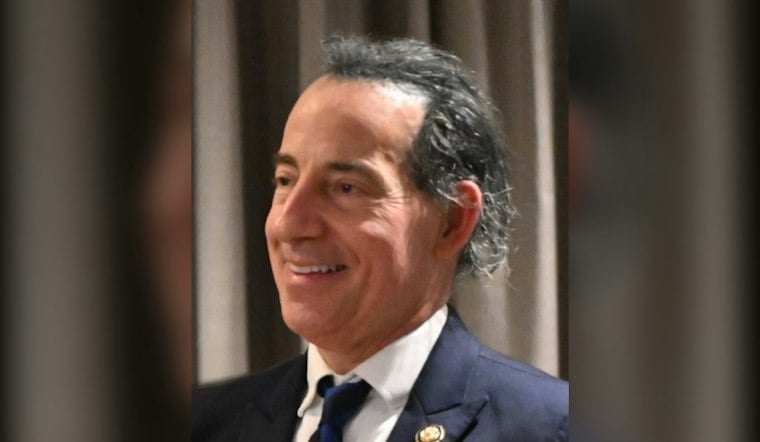
Maryland Rep. Jamie Raskin has joined Hawaii Sen. Brian Schatz in introducing a congressional resolution marking Banned Books Week, renewing a years-long effort to push back against what the lawmakers describe as a surge in attempts to limit what students can read in American schools. The resolution lands as Maryland wrestles with its own library disputes, including a Somerset County policy that remains frozen while state officials review an appeal.
A Resolution With a Familiar Warning
Raskin and Schatz have taken similar action in prior years, and this time their resolution explicitly references states including Texas and Florida, where school districts have restricted access to thousands of books, according to The Baltimore Banner. The measure calls on local governments and school districts to follow best practices when books are challenged, aiming to protect the rights of students to learn and the ability of educators and librarians to teach, as reported by Publishers Weekly. It also calls for students to have the opportunity to read a wide array of books reflecting the full breadth and diversity of viewpoints and perspectives, per that same outlet.
According to the Banner, Raskin warned that attempts are being made to limit what students are allowed to read, and argued that people who dislike a particular book, magazine or newspaper should simply choose not to read it rather than use government power to ban or censor it for everyone else. Award-winning classics and books addressing racism and homophobia have been targeted across the country, the Banner reports, a pattern the resolution's sponsors say is accelerating.
Somerset County's Policy Remains on Hold
Maryland has its own book-banning disputes closer to home. In Somerset County, the local school board tried to bar students under 18 from reading young-adult literature in school libraries, a policy that requires all YA books be placed in an adult section and prohibited for any student under that age, according to Maryland Matters. Critics said the policy, known as Policy 500-19, could put books like “The Diary of Anne Frank” or “To Kill a Mockingbird” off limits, while the school board maintained it had not banned titles such as Harry Potter or directed libraries to pull books based on an author's identity or protected characteristics, Maryland Matters reported.
The Maryland State Superintendent put Somerset County's policy on hold, and that pause has now been extended indefinitely. On Sept. 2, the Maryland State Board of Education received an appeal challenging Policy 500-19, and the case remains in the briefing stage, according to WMDT. The station reported that the stay will remain in place until a decision is handed down, meaning the policy cannot be enforced in the meantime.
Montgomery County's Supreme Court Battle
Maryland's book disputes have already reached the nation's highest court. The Montgomery County case centered on religious parents seeking to opt their children out of lessons containing storybooks with LGBTQ+ themes, and the dispute went all the way to the Supreme Court. The justices held that parents challenging the Montgomery County Board of Education's introduction of certain LGBTQ+-inclusive storybooks, along with the board's decision to withhold parental opt-outs from that instruction, were entitled to a preliminary injunction, according to court documents cited by SCOTUSblog.
A National Surge Driven by AI Tools
The Maryland fights are playing out against a backdrop of record-breaking numbers nationally. PEN America recorded 11,982 cases of book bans affecting 7,370 individual works during the 2025–26 school year, with more than 4,500 titles appearing on its list for the first time, according to NBC News. That marks the highest total since the organization began tracking censorship in 2021, and the number of districts enacting bans rose from 87 the prior year to 114 in 2025–26, per Publishers Weekly.
Themes of race, racism, sexuality and gender identity remained the most common reasons books were challenged, NBC News reported. The outlet also noted that school district administrators are increasingly relying on artificial intelligence to determine which books should be pulled, with Publishers Weekly adding that PEN America believes AI tools have likely facilitated the sharp increase by generating lists of titles flagged for allegedly indecent or profane content.
Texas and Florida accounted for the vast majority of bans tracked in the latest report, with Texas alone recording more than 8,100 removals, making it the nation's top book-banning state, according to Publishers Weekly. NBC News similarly reported that many of the bans took place in Florida and Texas amid restrictive state laws and organized advocacy for removals.





