

























































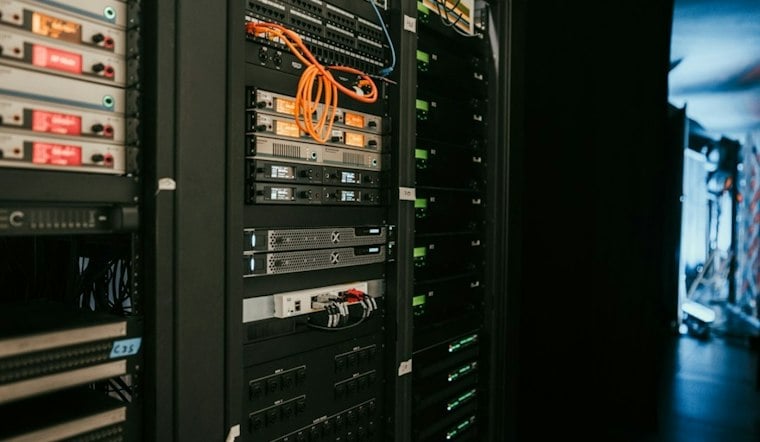
Greg Pirio can see a data center from his front door in Loudoun County, Virginia — just 150 to 200 yards away. He says the facility runs diesel generators and natural gas turbines around the clock, and the constant humming, along with air and light pollution, has disrupted his sleep, affected local wildlife and worsened his neighbors' health. Pirio has lived in the county for 14 years, and he is far from alone in his frustration as the data center boom collides with this year's midterm elections.
Data center growth has become a political flashpoint ahead of the 2026 midterms, according to WYFF. The rapid build-out of these facilities has prompted frustrated neighbors like Pirio to plead for a pause, even as elected officials weigh the economic gains against potential political fallout. On Election Day, thousands of Americans will vote on data center-related ballot measures, and NPR reports voters in more than 40 cities and towns across eight states will decide measures on bans, moratoriums and resident approval requirements.
Loudoun County has earned a reputation as the data center capital of the world. The county's exact facility count is disputed: NBC Washington reported the county is home to 233 data centers, the largest concentration in the United States, while the BBC cited a figure of 199 data centers, and a WSET investigation put the number at 233 buildings in operation with another 171 planned. WYFF's own reporting describes the county as having over 200 data centers in operation. Nationally, the United States has more than 4,000 data center facilities as of April statistics from Baxtel, and Virginia alone has more than 720 planned or operational, per the same WYFF report.
A Neighbor's Case for Slowing Down
Pirio argues the power grid cannot continue to support more data centers and that construction should stop. He says communities need to understand how these facilities are powered and what noise and quality-of-life impacts they bring before approving them. Based on what his community has experienced, he says, the impacts can be horrific, and he's urging others to slow development and make sure residents are protected before more projects break ground.
His experience isn't isolated. The push for pauses has already produced results elsewhere in Loudoun County: the Board of Supervisors voted to pause new data center applications, directing staff to draft a resolution that would halt new applications for 12 months, according to NBC Washington. Thirty-seven days later, Amazon scrapped its own plan to build data centers on the site of George Washington University's Northern Virginia campus after reaching an agreement with local officials amid widespread resident opposition, the Washington Post reported.
The Money Side of the Ledger
Officials counter that data center revenue has balanced local government budgets, lowered property tax rates and brought direct investment to communities. Loudoun County gained $1.3 billion in tax revenue last year, money officials say helped fund and build a new recreation center. Data center revenue estimates for the county vary depending on the source: WSET reported data centers contributed $1.2 billion, or 39%, to the county government's 2026 budget, while a county fact sheet projected $1.3 billion in data center revenue, representing 40% of the total budget. WSET also reported that data centers support more than 17,000 direct and indirect jobs in Loudoun County specifically, while a state audit cited by the BBC found the industry generates about 74,000 jobs and $5.5 billion in labor income for Virginia overall.
Some state lawmakers are pushing to direct part of that revenue toward mitigating the downsides for people like Pirio. Delegate David Reid, who represents District 28 in Loudoun County, says data centers have the money to fund mitigation and that revenue could pay for additional sound barriers and more aesthetically pleasing trees to screen the facilities from nearby homes.
A National Political Whiplash
The fight in Loudoun County mirrors a broader national reckoning. President Donald Trump has supported data center growth, emphasizing its economic benefits and the need for the United States to beat China in the race to lead on artificial intelligence. But political analysts warn his messaging is running up against growing voter unease. University of Virginia political scientist Larry Sabato said Trump's pro-data-center message is not what people believe or want to hear, and that the president is making the Republican Party bear political whiplash by repeatedly promoting data centers as beneficial and wealth-generating.
The numbers back up that tension. NPR reports 70% of Americans now say they have serious reservations about data centers, and half said they would not want to live next to one. A separate figure cited by The Guardian put opposition even higher, at three-quarters of Americans.
Power Lines and Costs Beyond Virginia's Borders
The fallout extends well past Loudoun County's borders. CNN reported on a proposed Valley Link transmission line that would stretch 260 miles across West Virginia, Virginia and Maryland, using 160-foot towers to carry electricity generated far from the data centers that need it.
South Carolina has seen a wave of similar pushback: one-third of the state's counties have approved or are considering temporary data center moratoriums, according to a report from WYFF. Spartanburg County Council approved a one-year moratorium on nearly all data center developments, and similar one-year pauses followed in Laurens, Greenwood and Newberry counties and the city of Asheville, along with a six-month moratorium in Anderson County.
For officials nationwide, the choice now facing them is the same one playing out on Pirio's street: embrace the jobs and tax windfall data centers promise, or respond to the mounting frustration of voters who live beside the humming, light-drenched reality of the AI build-out. With an estimated $7 trillion in global spending on new facilities projected by 2030, that choice isn't going away after this Election Day.





