

























































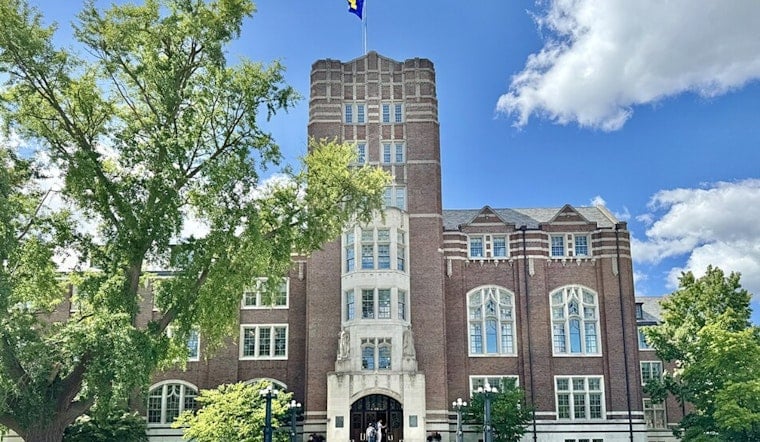
The University of Michigan has unveiled Wolverine Village, a five-building, $649 million dorm complex that can house up to 2,300 students on Central Campus. It is the university's first residential complex built specifically for first-year students on Central Campus since Oxford Houses opened in 1963.
The scale of the project reflects a housing crunch that had been building for two decades, according to CBS News Detroit. University data compiled by the University of Michigan Architecture, Engineering and Construction shows the undergraduate student-to-bed ratio fell from 40% in 2004 to 28% in 2023, a decline that left more than 2,300 students turned away from university housing in the fall of 2022 alone. Wolverine Village's new beds increase undergraduate housing capacity by 25%.
Among the five buildings is Dr. E. Royster Harper Hall, named for the university's former vice president for student life. Per The University Record, the U-M Board of Regents voted in September 2023 to attach Harper's name to Building 5, making it the first building on campus named for a Black woman. Harper served as vice president for student life for 18 years before retiring in 2019.
A Complex Built With Student Input
Wolverine Village also includes a new dining hall capable of serving up to 800 people, according to the seed reporting from CBS News Detroit. The dining facility and residential buildings were shaped around a Great Lakes-inspired theme, referred to as H.O.M.E.S., that runs through common spaces across all five halls, as detailed by CBS News. More than 2,600 undergraduate students took part in surveys, town halls, and design sessions that informed room layouts and shared spaces, the outlet reports.
The project's environmental ambitions also stand out. The living-learning community is designed to be all-electric and is targeting LEED Platinum certification, using rooftop solar panels and a geothermal exchange system to heat and cool the dining hall — among the first academic dining structures in the country to run on that combination, per the same CBS News account.
A Public-Private Build That Reshaped Central Campus
U-M developed Wolverine Village through a public-private partnership with American Campus Communities, working with design architect Robert A.M. Stern Architects, interior architect Elkus Manfredi Architects, and construction manager The Christman Co., according to Engineering News-Record. The trade publication reported the arrangement was cited as the largest third-party project in the student housing sector at the time it was signed.
Building on the site required relocating Elbel Field, the marching band's longtime practice ground, and constructing a new practice facility for the Michigan Marching Band one block north, between Hoover Avenue and Hill Street, Engineering News-Record reported.
More Growth Already in the Pipeline
Wolverine Village is not the end of U-M's Central Campus housing push. In May 2023, the Board of Regents approved a $75 million purchase of 49 private properties north of Elbel Field to secure land for a second phase of residential expansion, according to WEMU-FM. The station reported that Regent Ron Weiser acquired the parcels and resold them to the university at cost.
The university's enrollment growth has rippled beyond its own construction sites. In March, the Ann Arbor City Council voted unanimously to rezone land near Central Campus for The Dean, a proposed 14-story private student housing tower, citing mounting university enrollment as a driver, as Hoodline previously reported. The following month, U-M committed more than $32 million toward Ann Arbor municipal infrastructure, including co-funding a sewer trunkline upgrade at First and Washington streets specifically designed to support the new Central Campus housing beds.
Together, the projects illustrate how a single dorm complex has pulled city utility crews, private developers, and university planners into a shared, multi-year effort to keep pace with Central Campus growth. Phase 2's land acquisitions suggest the university's residential expansion is far from finished, even as Wolverine Village opens its doors to its first residents this fall.



