

























































Editor's Note: This article has been updated to clarify the role of the California Office of Youth and Community Restoration (OYCR) in relation to Less Restrictive Programs.
A 20-year-old woman who moved from juvenile custody into a UC Davis dormitory as part of a court-ordered step-down program was arrested in her dorm room seven months later, accused of dealing drugs and stockpiling ammunition she was legally barred from possessing. The arrest has unraveled what California officials had held up as a rehabilitation success story, and it has exposed how little the state actually tracks once young offenders leave secure custody for college campuses.
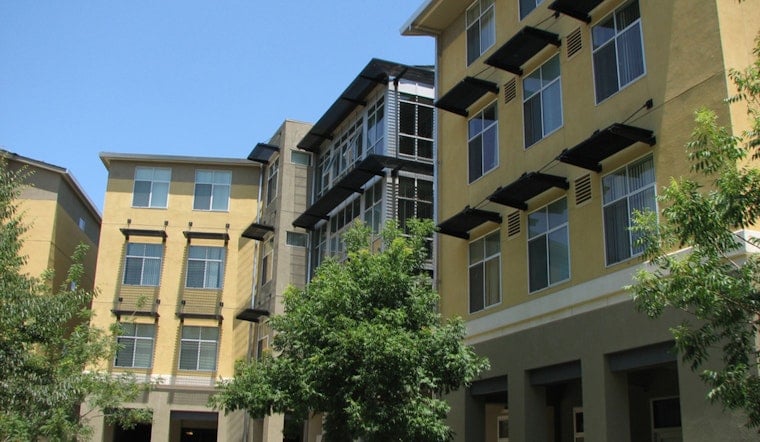
The woman had been placed on juvenile probation in Sacramento County for killing 15-year-old Omari Lowery when she was 15 years old, according to CBS News. She served roughly three years in secure juvenile custody before a Sacramento County judge found she had made enough progress to warrant a less restrictive placement, moving her into UC Davis campus housing in December 2025. UC Davis said she joined the school's Underground Scholars Program that same month, met all program requirements, and was monitored by the courts throughout her time on campus.
Her release conditions required weekly meetings with Underground Scholars director Gunner Johnson and barred her from possessing items like weapons, ammunition, or drugs. Those conditions unraveled when a probation officer searched her dorm room and reported finding marijuana, vape cartridges, a digital scale, drug-sale text messages, a price list, cash, and ammunition. Officers separately reported finding live ammunition hidden in a sock, more than 100 plastic baggies, and $4,121 in cash, per the same account.
Charges Split Across Two Counties
The case has since split into two separate legal tracks. Yolo County charged her as an adult with felony possession of ammunition by a prohibited person, along with misdemeanor possession of marijuana for sale and misdemeanor possession of ammunition on school grounds. That criminal case is separate from a concurrent juvenile probation violation proceeding now underway in Sacramento County juvenile court, the outlet reports.
She was arraigned on the Yolo County charges on July 31 and posted a $25,000 bail bond, pleading not guilty. Because she was a minor at the time of the original offense, CBS California withheld her name throughout its reporting.
From Dorm Room to State Advisory Board
Before her arrest, the woman had become something of a public face for California's juvenile justice realignment. She worked 10 hours a week as a paid peer mentor, traveled to speak on juvenile justice issues, and served on the youth advisory board of the state's Office of Youth and Community Restoration since 2025 — a role OYCR confirmed. Earlier in 2026, the state featured her as a youth advocate in an official presentation, holding her up as a success story of its less restrictive programming.
That programming stems from Welfare and Institutions Code Section 875, which authorizes juvenile courts to transfer committed youth out of secure treatment facilities into less restrictive community settings before their sentence is complete. The framework grew out of Senate Bill 823, the 2020 juvenile justice realignment law that shut down all state Division of Juvenile Justice facilities by July 2023 and shifted custody of high-needs youth to county probation departments, according to the California Office of Youth and Community Restoration.
A Pipeline With No Central Tracking
UC Davis's Underground Scholars Program is one of three state-supported pathways into California higher education for incarcerated and formerly incarcerated students, alongside the Cal State system's Project Rebound and the community college system's Rising Scholars Network. Underground Scholars was founded by formerly incarcerated students at UC Berkeley in 2013-2014 and secured statewide budget funding in 2016 with help from former state Sen. Loni Hancock, per the Underground Scholars Initiative. UC Davis opened its own campus program in Winter 2024 after running a student chapter since 2019.
UC Davis reported that its Underground Scholars Program enrolled 92 students and celebrated 14 graduates in 2026, operating on university resources rather than direct OYCR grant funding. That distinction matters because OYCR's public list of partner campuses does not include UC Davis at all. Under California law, Less Restrictive Programs are county-administered: placement decisions are made by juvenile courts, youth are supervised by county probation departments, and counties are responsible for tracking enrollment, location, and funding — not OYCR. OYCR's role is to provide technical assistance, guidance, and promote best practices to counties through its Stepping Home Model framework, and the agency told CBS News it could not provide enrollment, school-location, or state-funding data for these programs, noting that collecting such data centrally falls outside its authority.
CBS California said it could not find a comparable enrollment count for Underground Scholars across other UC campuses, and filed multiple public records requests for program contracts, funding records, and enrollment data as part of its ongoing investigation. The outlet said it plans to contact every campus running one of the three programs. Sacramento State, meanwhile, did not confirm enrollment for a different woman connected to a separate case, citing privacy.
A Second Case Raises Similar Questions
Critics of early release into college programs have pointed to a separate 2021 Fresno County case. A 17-year-old girl was convicted that year of murdering Fresno State student Sergio Bonboster, whose body was dismembered, burned, and dumped in a canal. She was released under Project Rebound after serving two years of what had been a four-year sentence, according to CBS News, and Bonboster's family publicly protested her early release. That woman was reportedly enrolled at Sacramento State. Project Rebound, founded in 1967 at San Francisco State University by formerly incarcerated sociologist John Irwin, expanded into a statewide consortium of 20 CSU campuses in 2016 and enrolled 1,522 students statewide last year, according to California State University program records.
The costs of these community-based placements can run high. Los Angeles County approved $1.2 million in 2025 to house nine young adults through a private vendor under the Juvenile Justice Realignment Block Grant that funds county-level programming under SB 823, according to the Los Angeles County Board of Supervisors. California's less restrictive programming system spans roughly 20 CSU campuses, eight or more UC campuses, and dozens of community colleges statewide.
Oversight Bill Stalls in Sacramento
Lawmakers have taken notice of the transparency gaps. The California Senate passed a bill intended to increase transparency in the less restrictive programming system by a 37-1 vote in May 2026. But the Assembly Appropriations Committee, chaired by Buffy Wicks, held the oversight bill in its suspense file on August 13 and did not advance it to a floor vote.
UC Davis said the woman was attending summer school, nearing completion of her degree, at the time of her arrest. Whether the broader network of college programs meant to rehabilitate high-needs youth can be meaningfully monitored — by campuses, county probation departments, or the state — remains an open question that CBS California's continuing investigation is still trying to answer.





